

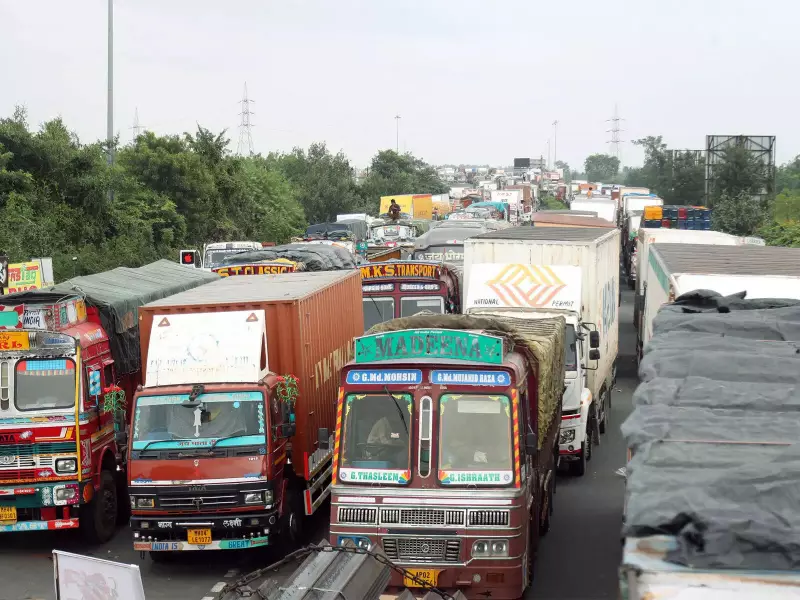
India's medium and heavy commercial vehicle (M&HCV) sector is gearing up for a significant growth phase, according to a new analysis by global financial firm Nomura. After a period of modest expansion, the industry is now entering what appears to be the next upcycle, with robust year-on-year volume growth projected for the coming financial years.
Strong Growth Forecast and Driving Factors
Nomura's report provides an optimistic forecast for the trucking industry. It estimates that industry volumes will grow by approximately 8 per cent in the financial year 2025-26 (FY26). The momentum is expected to accelerate further, with growth reaching around 10 per cent in FY27. This positive shift follows a phase of slower expansion, signalling a revitalised demand environment.
The analysis identifies several key factors converging to create this favourable outlook. A primary driver is the high average age of the existing truck fleet, which is currently estimated to be around 10 years. This ageing fleet is fuelling a strong wave of replacement demand, which Nomura expects to peak particularly during FY27 and FY28.

Furthermore, the economics for fleet operators are improving markedly. Rising freight rates are boosting revenues, while the implementation of the Goods and Services Tax (GST) has led to cost efficiencies and improved affordability for new vehicle purchases. These elements are collectively enhancing cash flows for operators, giving them the confidence and financial ability to invest in new trucks.
Early Stages of Recovery with Room to Grow
Nomura emphasises that the industry is still in the early stages of this commercial vehicle upcycle. A clear indicator of this is that current industry volumes have not yet surpassed the peak levels achieved back in FY19. This suggests there is substantial headroom for growth as the cycle progresses.
The report remains decidedly positive on the sector's prospects, citing strong potential for a cyclical upturn and increasingly clear demand visibility. The recovery could gain even more strength if broader economic growth accelerates, supported by higher consumption and potentially lower interest rates in the future.
Limited Impact from Dedicated Freight Corridor
Addressing a common concern within the logistics sector, the report assesses the potential impact of India's massive Dedicated Freight Corridor (DFC) project on road transport demand. Nomura concludes that the demand risks from the DFC remain limited for the overall M&HCV industry.
While the Eastern and Western DFCs are now about 96 per cent operational, a significant portion of freight—nearly 30 per cent classified as non-bulk cargo—continues to depend heavily on the flexibility and reach of road transportation. Given the large, diversified, and often last-mile nature of freight moved by trucks, the report does not foresee a significant dent in overall truck demand.
However, Nomura does caution that some normalisation is expected in specific sub-segments. For instance, tractor-trailers, which directly compete with rail for bulk movement, have seen their share in the industry mix surge from roughly 9 per cent in FY21 to 22 per cent in FY25. This segment might experience some adjustment as rail efficiency improves.
In conclusion, the report underscores that structural drivers like replacement demand, improving fleet operator profitability, and supportive macroeconomic conditions are aligning to position the Indian M&HCV industry for a sustained recovery in the coming years.






