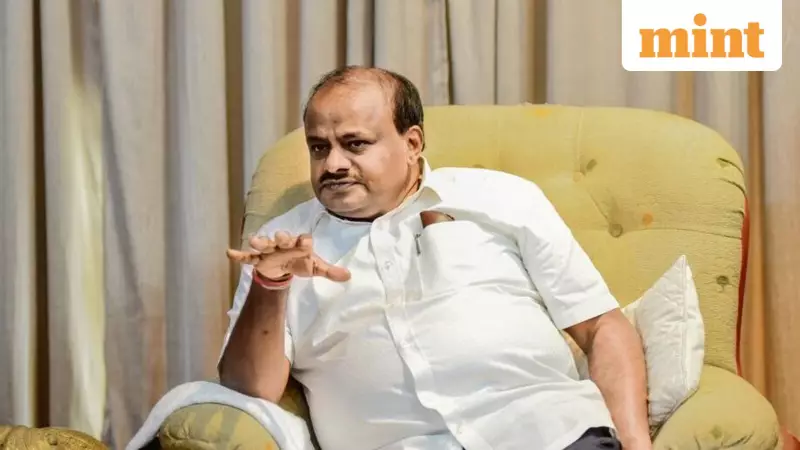
In a significant move to reduce import dependence, Union Heavy Industries Minister H.D. Kumaraswamy on Monday led a crucial stakeholder consultation with over 20 companies on India's ambitious ₹7,280-crore scheme to incentivize the manufacturing of sintered rare earth magnets. This initiative is a cornerstone of India's strategy to build a self-reliant supply chain for these critical components, essential for electric vehicles (EVs), renewable energy systems, and advanced defence equipment.
Government Assures Raw Material Security
The meeting, held in New Delhi, provided a platform for detailed discussions on the scheme's guidelines, which were officially notified on 15 December. A primary concern from the industry revolved around the security of raw material supply. Addressing this, the government assured participants that the state-run India Rare Earths Ltd (IREL) will supply 500 tonnes of neodymium-praseodymium (NdPr) oxide annually to selected beneficiaries under the scheme.
"To strengthen raw material security, it was highlighted that IREL will supply 500 MT of NdPr oxide per annum to selected beneficiaries," Kumaraswamy stated in a post on X (formerly Twitter). The ministry's statement further reinforced confidence by noting that international suppliers were also present and offered guaranteed supply assurances.

Building a Complete Domestic Ecosystem
The incentive scheme, which received Union Cabinet approval in late November, aims to establish a robust midstream industry. It targets creating a manufacturing capacity of 6,000 tonnes of rare earth magnets over seven years. The plan includes ₹750 crore in capital incentives for setting up five manufacturing plants, followed by sales-linked incentives.
The first two years are designated as a gestation period for plant setup, with sales incentives to be disbursed over the subsequent five years. This structured approach is designed to nurture a full-fledged industry that converts refined rare earth oxides into powerful magnets for sectors like defence, electronics, and clean energy.
Strategic Response to Global Dynamics
India's push comes against the backdrop of global supply chain vulnerabilities, highlighted when China—which controls about 60% of global rare earth mining and 90% of processing—began restricting exports of specific rare earth magnets earlier in 2023. The scheme is a direct strategic response to secure India's technological and economic sovereignty.
Currently, IREL, India's sole producer, has an annual capacity of about 400 tonnes of rare earth oxides, which can be processed into roughly 1,200 tonnes of magnets. The company also holds a stockpile of around 500 tonnes of oxides, providing immediate support for the initial phase of the scheme. The government is now finalizing the Request for Proposal (RFP) to officially kickstart the selection process for beneficiaries, marking a concrete step towards a self-sufficient future in this critical high-tech domain.