India Poised to Drive 35% of Global Energy Demand Growth Over Next Two Decades
Union Minister for Petroleum and Natural Gas Hardeep Singh Puri made a significant announcement on Tuesday, projecting that India's share of increased global energy demand will rise to as much as 35% over the next twenty years. This forecast positions India as a central player in the worldwide energy landscape during a period of substantial transformation.
India Energy Week 2026 Inauguration in Goa
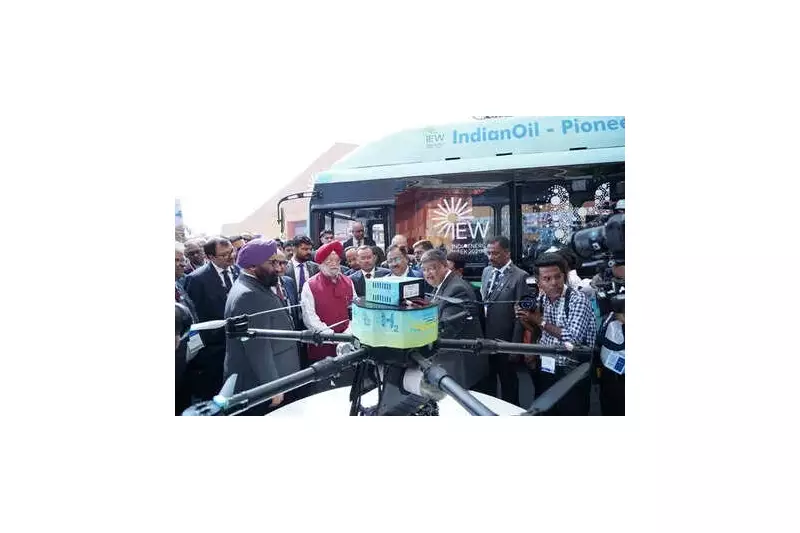
Speaking at the inaugural ceremony of the fourth India Energy Week (IEW) 2026 in Goa, Minister Puri emphasized India's dual role as the world's third-largest energy consumer and one of the fastest-growing major economies. The event, which attracted over 75,000 energy professionals, featured more than 700 exhibiting companies and delegates from 120 countries, underscoring its international significance.
During the ceremony, Puri inaugurated the Hydrogen Zone, highlighting India's growing commitment to clean and low-carbon energy solutions. He was joined by Goa Chief Minister Pramod Sawant and UAE Minister of Industry and Advanced Technology Sultan Ahmed Al Jaber, reflecting the global partnerships shaping India's energy future.

Balancing Growth with Responsibility
Despite this projected surge in energy demand, Puri noted that India's per capita energy consumption remains at only about 40% of the global average. This statistic makes India's growth trajectory both necessary and responsible, according to the minister. Our energy demand will continue to expand, with all sources set to grow, Puri stated, acknowledging the complex balance between development and sustainability.
The minister outlined several key points about India's energy position:
- India stands at the heart of global energy transformation
- Conventional energy will remain essential alongside renewable sources
- Nearly 80% of incremental global energy demand comes from emerging economies
- Close to 60% originates specifically in developing Asia
$5 Billion Maritime Investment Opportunity
In a major development announcement, Puri revealed an immediate investment opportunity of approximately $5 billion for around 60 vessels needed for India's oil and gas trade sector. This initiative is supported by the government's $8 billion package to boost shipbuilding and maritime infrastructure.
Every job created in a shipyard generates an additional 6 to 7 jobs across the associated supply chain, Puri emphasized, highlighting the multiplier effect of such investments. The oil and gas sector accounts for nearly 28% of India's trade basket by volume, making it the country's largest commodity group handled at ports.
Policy Reforms and Price Stability
Puri outlined recent legislative reforms strengthening India's energy sector, including the Oilfields (Regulation and Development) Amendment Act, 2025. This legislation introduced single petroleum leases and time-bound approvals, streamlining regulatory processes for energy development.
The minister also emphasized India's success in shielding citizens from global fuel price volatility. Despite significant price increases in many major economies after 2021, fuel prices in Delhi in 2025 remained lower than 2021 levels, demonstrating effective policy management.
The Energy Addition Principle
Addressing the transition to cleaner energy, Puri presented what he called the energy addition principle. The history of energy has never been about replacement alone. It has been about addition, he explained. New sources have consistently complemented existing ones, allowing systems to expand and adapt.
This perspective acknowledges that while India is investing heavily in renewable energy and hydrogen technology, conventional energy sources will continue to play a crucial role in meeting the country's growing needs.
Global Energy Access Challenges
Puri concluded by highlighting persistent global energy challenges that India's growth must help address. Approximately 730 million people worldwide still live without access to electricity, while nearly 2 billion people continue to rely on cooking methods harmful to human health.

As India's energy demand expands to potentially account for 35% of global growth, the country faces both tremendous opportunity and significant responsibility in shaping a more equitable and sustainable energy future for all.