

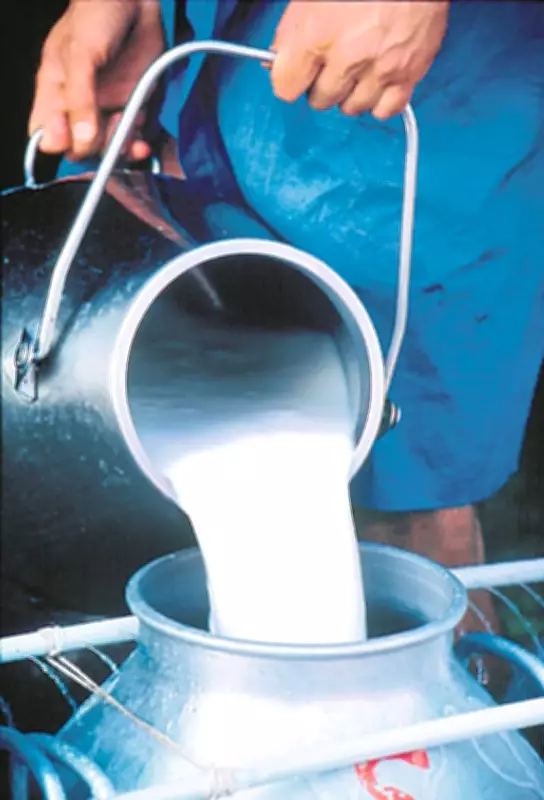
India's Dairy Sector Achieves Remarkable Growth with Milk Production Reaching 247 Million Tonnes
In a significant development for India's agricultural landscape, official data reveals that the country's milk production has experienced an extraordinary surge, climbing from 17 million tonnes in 1950 to an impressive 247 million tonnes in 2025. This remarkable growth trajectory underscores the dairy sector's pivotal role within the broader livestock industry, which is valued at approximately Rs 17.25 lakh crore.
Key Contributions and Regional Leadership
According to ML Jat, Secretary of the Department of Agricultural Research and Education (DARE) and Director General of the Indian Council of Agricultural Research (ICAR), the dairy sector now contributes a substantial 65 per cent of the total livestock output. Furthermore, it drives 16 per cent of India's gross value added (GVA) and supports an estimated 46.1 per cent of the population, highlighting its critical economic and social importance.
Regional production highlights include:

- Uttar Pradesh has emerged as the leading state in overall milk production.
- Punjab and Haryana have achieved the highest yields per animal, showcasing advanced dairy farming practices.
Breakdown of Milk Production by Animal Type
The National Dairy Research Institute (NDRI) release provides detailed insights into the sources of milk production across different animal categories:
- Indigenous buffaloes lead with a 31.18 per cent share.
- Crossbred cattle follow closely at 30.80 per cent.
- Indigenous cattle contribute 11.20 per cent.
- Non-descript buffaloes account for 11.97 per cent.
- Non-descript cattle provide 9.64 per cent.
- Goats contribute 3.32 per cent.
- Exotic cattle make up 1.89 per cent of total production.
Government Initiatives and Future Projections
Addressing the 22nd convocation of ICAR-NDRI in Karnal, Haryana, Jat emphasized the government's commitment to strengthening the dairy sector. The Union Budget has allocated Rs 6,153 crore for animal husbandry, marking a 16 per cent increase. This funding is earmarked for several strategic initiatives:
- Recruitment of 20,000 veterinarians to enhance animal healthcare services.
- Subsidies for agricultural colleges and laboratories to boost research and education.
- Tax relief measures for dairy cooperatives to support grassroots operations.
These efforts are aligned with the broader Viksit Bharat vision for 2047, aiming to build a developed and self-reliant India. In line with this vision, NITI Aayog projects that India's milk demand will escalate significantly, reaching between 480 and 606 million tonnes by 2047. This projection underscores the need for continued investment and innovation in the dairy sector to meet future nutritional requirements and sustain economic growth.
The sustained growth in milk production not only reflects advancements in animal husbandry and breeding techniques but also highlights the sector's resilience and adaptability. As India progresses towards its development goals, the dairy industry remains a cornerstone of agricultural prosperity and food security.






