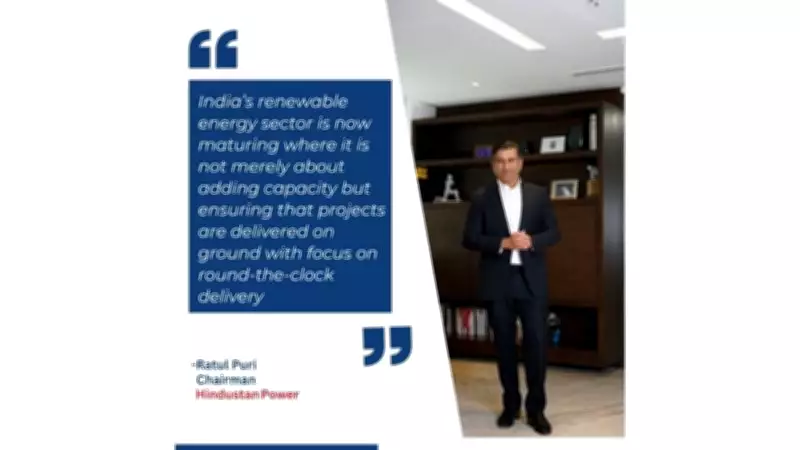
India's renewable energy sector is undergoing a significant transformation, shifting from a phase of rapid expansion to one focused on execution-led growth, according to Ratul Puri, Chairman of Hindustan Powerprojects. In a recent interview, Puri emphasized that the country's renewable energy journey is now entering a more mature stage, where the emphasis is on efficiently executing projects and integrating them into the grid.
From Expansion to Execution
Puri noted that the initial phase of India's renewable energy push was characterized by aggressive capacity additions, driven by favorable policies and ambitious targets. However, the current focus has shifted towards ensuring that these projects are executed effectively, with attention to quality, reliability, and cost-efficiency. This transition is crucial for sustaining the momentum of India's clean energy transition.
Key Drivers of Change
Several factors are driving this shift. First, the government's commitment to achieving 500 GW of non-fossil fuel capacity by 2030 requires not just adding capacity but also ensuring that projects are completed on time and within budget. Second, the integration of renewable energy into the grid poses technical challenges that demand better execution and planning. Third, the need to attract private investment hinges on the sector's ability to deliver consistent returns, which depends on efficient execution.

Infrastructure and Policy Support
Puri highlighted the importance of strengthening infrastructure, such as transmission lines and energy storage systems, to support the growing share of renewables. He also called for continued policy support, including streamlined approvals and tariff structures that reflect the true cost of renewable energy. These measures will help bridge the gap between ambitious targets and on-ground reality.
The Role of Private Sector
The private sector, according to Puri, will play a pivotal role in this execution-led phase. Companies like Hindustan Powerprojects are focusing on innovation, operational efficiency, and strategic partnerships to deliver projects successfully. Puri stressed that the sector's future depends on its ability to adapt to changing market dynamics and regulatory frameworks.
Challenges Ahead
Despite the progress, challenges remain. Land acquisition, financing, and grid stability are ongoing issues that require collaborative efforts between the government and industry. Puri expressed optimism that with a concerted focus on execution, India can overcome these hurdles and emerge as a global leader in renewable energy.
In conclusion, Ratul Puri's insights underscore a pivotal moment for India's renewable energy sector. The shift from rapid expansion to execution-led growth is not just a strategic move but a necessity to achieve long-term sustainability and energy security. With the right policies, infrastructure, and private sector participation, India is well-positioned to meet its ambitious clean energy goals.