Indore Coal Prices Experience Sharp 20-22% Increase in Just Over Two Weeks
The coal market in the Indore region has witnessed a dramatic price spike, with rates for Indian coal jumping by 20–22% in a span of just over two weeks. This significant increase is attributed to a complex interplay of global geopolitical tensions, heightened electricity production, and a severe local shortage of commercial LPG cylinders.
Geopolitical Tensions and Supply Chain Disruptions Drive Up Costs
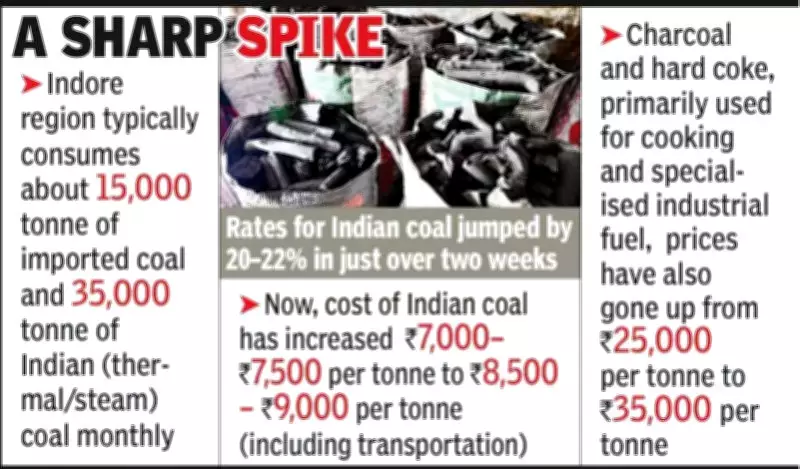
According to Gaurav Garg, president of the Prantiya Coal Traders and Consumers Association, the Indore region typically consumes approximately 15,000 tonnes of imported coal and 35,000 tonnes of Indian thermal or steam coal each month. However, ongoing geopolitical conflicts, particularly involving nations like Israel and Iran, have severely choked the supply of imported coal. This disruption has forced large power plants, which previously relied heavily on imports, to aggressively source Indian coal as a substitute.
"This sudden shift in demand has pushed the cost of Indian coal from a range of Rs 7,000–Rs 7,500 per tonne to Rs 8,500–Rs 9,000 per tonne, including transportation expenses," Garg explained. He further warned that if the global supply chain for imported coal does not stabilise soon, prices may continue to climb throughout the summer season.

LPG Shortage Forces Eateries to Revert to Coal-Fired Ovens
The crisis in the coal market is being compounded by a severe shortage of commercial LPG cylinders in the region. This shortage has forced numerous small eateries, dhabas, and restaurants on the outskirts of Indore and along major highways to revert to traditional coal and wood-fired ovens, known locally as 'bhattis'.
Coal trader Mahesh Choukse noted that demand has increased noticeably in the last few days. While many restaurants had previously transitioned to LPG to avoid issues with smoke and ash, the current scarcity of gas cylinders is compelling them to return to coal to remain operational. "Not all hotels can make this shift because their kitchen ventilation systems are not designed to support coal burning," a local trader mentioned, adding that only establishments with open or semi-open kitchens are able to make this temporary switch.
Increased Electricity Demand Further Tightens Coal Market
The effects of the LPG crisis are also reverberating through the power sector. Siddhartha Mehta, owner of Ashok Coal Corporation, highlighted that as residents switch to induction stoves due to gas shortages, electricity consumption has soared. "Higher power demand during the summer months, compounded by the shift to electric cooking, means that power plants must burn more coal, further tightening the market," Mehta stated.
This increased demand for electricity is placing additional pressure on coal supplies, exacerbating the price hike. The situation is creating a feedback loop where energy needs are driving up coal consumption and costs simultaneously.
Price Hike Extends Beyond Thermal Coal to Charcoal and Hard Coke
The price increase is not limited to thermal coal alone. Charcoal and hard coke, which are primarily used for cooking and as specialised industrial fuels, have also seen significant price rises. According to Gaurav Garg, prices for these materials have escalated from approximately Rs 25,000 per tonne to around Rs 35,000 per tonne.
This broader increase indicates that the market pressures are affecting various segments of the coal industry, impacting both domestic and commercial users across different sectors.
In summary, the Indore coal market is facing a perfect storm of supply chain disruptions, geopolitical instability, and shifting local energy consumption patterns. Traders and consumers alike are bracing for potential further increases as the summer progresses, highlighting the interconnected nature of global events and local economic conditions.