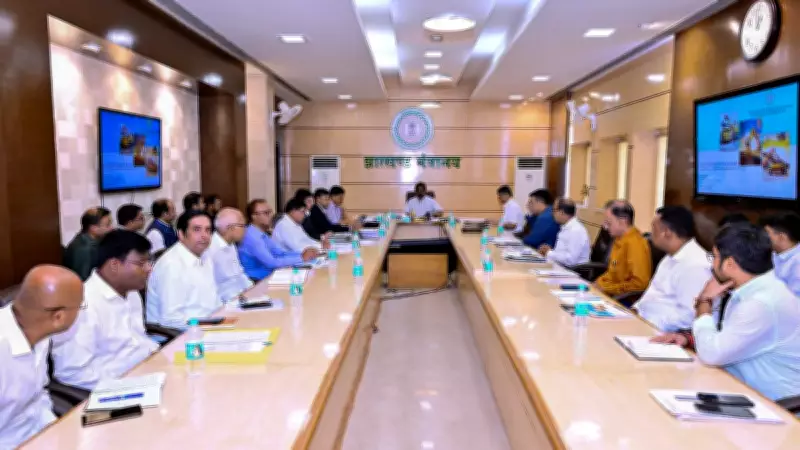
The Jharkhand government has unveiled new industrial and textile policies aimed at accelerating investment and job creation in the state. The policies were announced by Chief Minister Hemant Soren during a press conference in Ranchi on July 5, 2026.
Key Features of the Industrial Policy
The new industrial policy targets attracting ₹1 lakh crore in investment and creating 5 lakh jobs by 2030. It offers a range of incentives including capital investment subsidy, interest subsidy, and exemption from electricity duty for new units. The policy also provides special incentives for micro, small, and medium enterprises (MSMEs), including a 50% subsidy on patent registration and reimbursement of expenses for quality certification.
Focus on Textile Sector
The textile policy aims to make Jharkhand a hub for textile manufacturing. It includes a special package for setting up textile parks, with the government providing up to 40% capital subsidy for common infrastructure. The policy also offers a 10% interest subsidy on loans for textile units and a 100% exemption from stamp duty for land purchases for textile projects.

Job Creation and Skill Development
Both policies emphasize job creation and skill development. The government plans to set up skill development centers in each district to train youth for jobs in the industrial and textile sectors. According to the Chief Minister, these centers will train at least 1 lakh youth over the next five years. The policies also mandate that at least 70% of jobs in new units be reserved for local residents.
Reactions from Industry
Industry bodies have welcomed the policies. President of the Jharkhand Chamber of Commerce, Ravi Shankar, said, "These policies are a game-changer for the state. The incentives are competitive and will attract major investments." However, some experts have raised concerns about the implementation and the need for infrastructure development.
Impact on Economy
The policies are expected to boost Jharkhand's economy, which has traditionally been reliant on mining and agriculture. The government hopes to diversify the industrial base and reduce unemployment. The textile policy, in particular, is seen as a step towards utilizing the state's abundant raw materials like cotton and silk.
Chief Minister Soren said, "Our goal is to make Jharkhand a preferred destination for investment. These policies will create a conducive environment for businesses and generate employment for our youth." The government will also set up a single-window clearance system to simplify the process of setting up industries.