Kanpur KVK Educates Students on Crop Residue Management
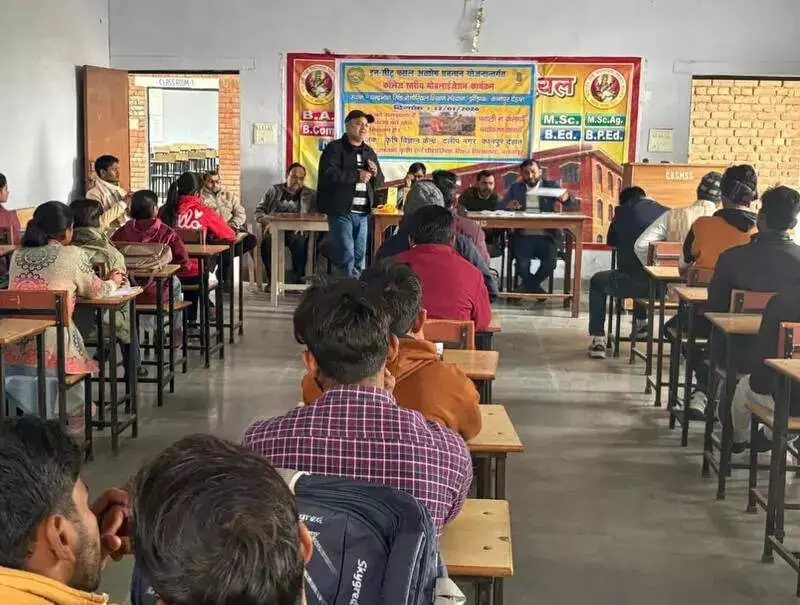
Krishi Vigyan Kendra Dilip Nagar organized an important awareness program on crop residue management. The event took place at Chandrabhan Singh Memorial Shikshan Sansthan in Jhinjhak, Kanpur Dehat. This KVK operates under Chandra Shekhar Azad University of Agriculture and Technology in Kanpur.
More than 250 students participated actively in the competition focused on crop residue management. Experts shared valuable information about the benefits of proper crop residue management. They explained how it improves soil fertility and protects the environment.
Experts Explain Crop Residue Management Benefits
Extension Scientist Rajesh Rai addressed the students during the program. He described Crop Residue Management as a strategic approach. This strategy reduces the frequency and intensity of tillage operations. It increases the amount of residue left from previous crops in the fields.

Rai emphasized that the goal of this management practice is clear. It provides several ecological and economic benefits while conserving soil and water quality. Farmers find crop residue management appropriate in most situations. They experience higher yields and save on fuel and electricity costs. The practice also reduces the need for expensive inputs like synthetic pesticides and chemical fertilisers.
Soil Expert Discusses Environmental Factors
Soil expert Khalil Khan provided additional insights to the students. He explained that several factors influence how beneficial crop residue management becomes for the environment. These factors include crop and soil type, local climate conditions, and specific farming methods used.
Khan noted that plant material left in fields can serve multiple purposes. It might become breeding grounds for pests and disease vectors in some cases. However, it also acts as a nutrient supply and provides shelter for weed growth. Understanding these dynamics helps farmers make better decisions.
Animal Husbandry and Horticulture Applications
Animal husbandry scientist Shashikant spoke about other important uses of crop residues. He told students that materials like straw and stalks play a crucial role in animal husbandry. These residues provide cheap and accessible fodder for farm animals.
Shashikant further explained that crop residues benefit horticulture significantly. They increase soil fertility naturally and help prevent erosion. The residues conserve moisture in the soil and control weed growth effectively. They add valuable organic matter to the soil, which reduces the need for chemical fertilisers. This improvement in soil health creates better growing conditions for plants.
College founder Santosh Singh Gaur attended the program along with manager Shashibala Singh Gaur. Their presence highlighted the institutional support for such agricultural awareness initiatives.