

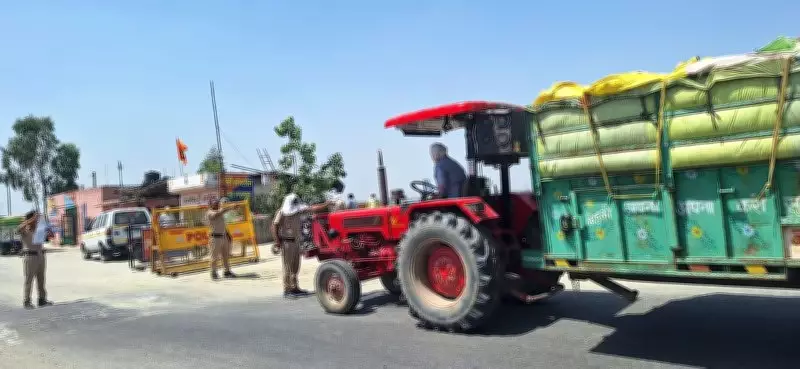
Karnal Arhtiyas Decry Haryana-UP Border Closure Aimed at Blocking Wheat Entry
Commission agents, locally known as arhtiyas, in the Karnal district of Haryana are raising strong objections to the state government's recent move to seal the border with Uttar Pradesh. This drastic measure has been implemented with the explicit purpose of preventing the entry of wheat from the neighboring state, a decision that the arhtiyas claim is causing significant financial hardship and crippling their traditional trade operations.
Financial Strain and Operational Disruption
The border closure, which effectively halts the cross-state movement of wheat, has thrown the local agricultural market into disarray. Arhtiyas, who play a crucial intermediary role in procuring and selling agricultural produce, report that their businesses have come to a standstill. This disruption is not merely logistical but translates into direct monetary losses, as they are unable to facilitate transactions that form the backbone of their livelihood. Many agents have highlighted that this action by the Haryana government undermines the free flow of goods and violates established trade practices that have sustained the regional economy for decades.
Government Rationale and Trader Backlash
Authorities in Haryana have justified the border sealing as a necessary step to control the supply and pricing of wheat within the state, potentially aiming to stabilize local markets or enforce procurement policies. However, the arhtiyas argue that this approach is overly restrictive and fails to consider the broader economic implications. They contend that such barriers disrupt not only wheat trade but also the symbiotic economic relationship between Haryana and Uttar Pradesh, affecting farmers, transporters, and other stakeholders dependent on interstate commerce. The protest underscores a growing tension between state-level regulatory actions and the interests of local trade communities.

Broader Implications for Agricultural Trade
This incident sheds light on larger issues within India's agricultural sector, where interstate barriers can lead to market fragmentation and inefficiencies. The arhtiyas' outcry points to the need for more nuanced policies that balance regulatory goals with the realities of cross-border trade. As the situation unfolds, it remains to be seen whether the Haryana government will reconsider its stance or offer compensatory measures to affected traders. The outcome could set a precedent for how similar disputes are handled in other regions, impacting the future of agricultural commerce across state lines.






