Karnataka's Agricultural Crisis: Unscientific Irrigation Practices Damage Over 70,000 Hectares
Unscientific flood irrigation practices have created a severe agricultural crisis in Karnataka, leading to widespread soil salinity and alkalinity. This phenomenon, where salts in the soil rise to damage crops, has affected more than 70,000 hectares of cultivable land across the state, with the majority concentrated in northern regions.
Geographic Spread and Government Response
More than 57,000 hectares of affected land are spread across 13 districts of north Karnataka, highlighting the regional concentration of this agricultural challenge. Over the nine-year period from 2016-17 to 2025-26, the government has allocated Rs 31 crore under the centrally sponsored Rashtriya Krishi Vikas Yojana specifically to address this growing problem.
Despite this significant investment, the issue continues to plague farmers. The state has even sought an additional Rs 4 crore grant from the Centre this year, indicating the persistent nature of the crisis and the need for continued financial support.

The Science Behind Soil Degradation
Manju AC, deputy director of agriculture, explained that salinity builds up primarily due to prolonged flood irrigation practices. "This is particularly common in areas with canal-based irrigation systems, especially those located around dams," he stated. "The more frequently soil is flooded, the higher the probability of salts rising to the surface and causing significant crop damage."
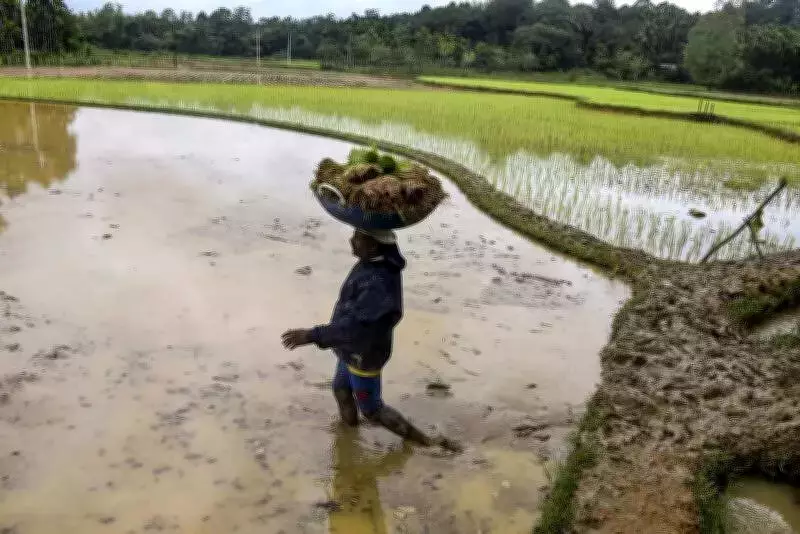
According to agricultural experts, sugarcane and paddy crops are among the most vulnerable to these soil conditions, putting two of Karnataka's important agricultural sectors at risk.
Technical Solutions and Implementation Challenges
Soil scientist PK Basavaraja, a governor-nominated board member of Keladi Shivappa Nayaka University of Agricultural and Horticultural Sciences, identified farm drainage systems as a crucial solution to curb this menace. However, he emphasized that scientific implementation remains a major obstacle.
"Drainage lines need to be installed at least three feet deep to be effective," Basavaraja explained. "Unfortunately, they are often laid at only 1.5-2 feet, which is insufficient for proper soil management."
The scientist detailed the scientific process: "When land is flooded up to two feet, capillary action brings salts to the surface through micro-pores in the soil. Once the water evaporates, these salts remain behind, forming a distinctive white crust on dry fields that renders the land less productive."
Historical Uses and Modern Solutions
An explainer video from the University of Agricultural Sciences reveals that such uncultivable soil had traditional uses before modern agricultural challenges emerged. The saline soil was historically used to wash hair and clothes because it cannot retain much water, while another variety of uncultivable soil was applied on thatched roofs to facilitate rainwater runoff.
Basavaraja further explained the fertilizer dynamics: "Farmers typically flood fields with fertilizers, and these water-soluble salts get washed out through shallow drains. If proper drains are installed at three feet depth, fertilizers can percolate effectively into the soil while excess water is safely discharged into ponds."
Success Stories and Alternative Methods
Farmers participating in a pilot project launched by UAS and Rashtriya Krishi Vikas Yojana in Tyavanagi village, Davanagere district, have reported encouraging results. Gangadhar, one participant, shared his experience: "I used gypsum to dissolve sodium carbonate in my field over two days, drained the water properly, and then fertilized and sowed seeds. After installing perforated PVC pipes as part of the drainage system, my rice yield increased dramatically from 25 bags per acre to 40 bags."

Meanwhile, agricultural officials have sanctioned research on alternate wetting and drying methods for paddy cultivation. These innovative approaches use water more judiciously than traditional flood irrigation techniques. Early results appear promising, suggesting this method could offer a viable, sustainable alternative to current practices that contribute to soil degradation.
The Path Forward
The combination of proper drainage infrastructure, scientific farming techniques, and continued research into alternative irrigation methods represents Karnataka's multi-pronged approach to addressing this agricultural crisis. As the state continues to invest in solutions and seek additional funding, the experiences of farmers like Gangadhar demonstrate that with proper implementation of scientific methods, productivity can be restored to affected lands.