

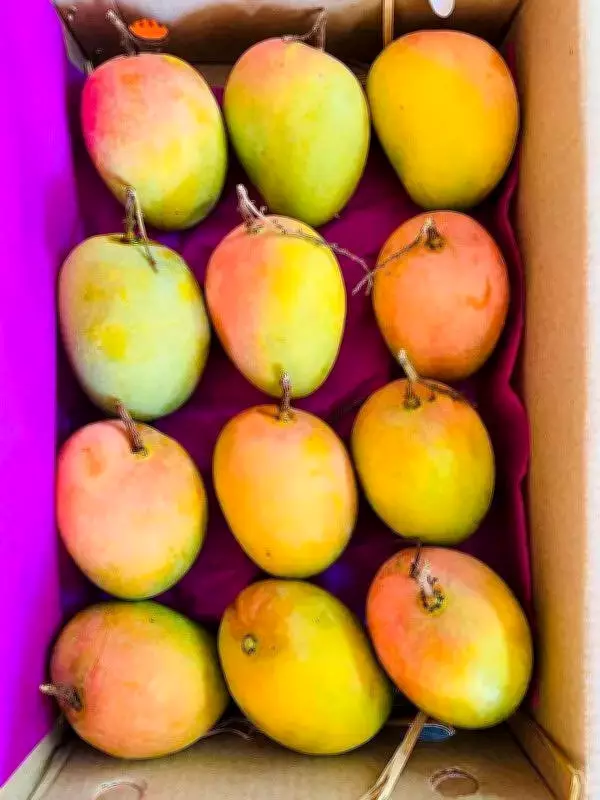
Karnataka's Mango Production Faces Sharp Decline, Prices Set to Spike
Bengaluru: The beloved mango, a summer staple across India, is turning increasingly sour for both consumers and cultivators in Karnataka. Persistent agricultural challenges have triggered a dramatic reduction in production, leading to inevitable price hikes that will impact markets nationwide.
Production Plummets by Nearly 40%
According to the Karnataka State Mango Development and Marketing Corporation Ltd, commonly known as the mango board, this year's yield is projected to drop to just 10-11 lakh tonnes. This represents a severe decline from the typical 16 lakh tonnes harvested across the state's 1.4 lakh hectares of mango orchards in productive years. The anticipated shortfall of approximately 5 lakh tonnes represents one of the most significant production drops in recent memory.
"Initial flowering showed promise this season, and weather conditions appeared favorable at first," explained Vedamurthy RT, managing director of the mango board. "However, temperatures unexpectedly plunged below 10°C, severely disrupting both flowering and fruiting cycles. We observed a concerning imbalance with fewer hermaphrodite flowers, which are crucial for reproduction, compared to male flowers, directly resulting in diminished yield."

Compounding the weather-related issues, a widespread outbreak of powdery mildew—a destructive fungal disease—caused substantial flower drop, further decimating potential harvest volumes.
Recurring Problems and Funding Shortfalls
For approximately five consecutive years, the mango board has documented similar patterns of declining production, citing consistent environmental and biological factors. Despite repeated warnings, effective countermeasures remain unimplemented, primarily due to chronic financial constraints.
Internal sources within the board reveal that governmental funding allocations have been insufficient over the past two years, leaving farmers without crucial support systems. "The mango board frequently references fund shortages," stated Neelaturu Chinnappa Reddy, president of the Kolar district mango growers' association. "But securing adequate resources for farmers should be the board's fundamental responsibility. This institution was established through persistent advocacy by growers themselves, yet they continue to receive minimal practical assistance."
Horticulture Minister SS Mallikarjun has acknowledged these concerns, promising immediate intervention. "I was previously unaware of the funding crisis, as allocations typically follow budgetary procedures," the minister stated. "I will promptly organize a meeting with mango board authorities to ensure necessary funds are released if deficiencies exist."
Market Dynamics and Pricing Projections
The production collapse has already begun influencing market dynamics. The mango season has been delayed, with significant arrivals now expected only by late April. However, the harvesting period is likely to extend through August this year.
Current market prices reflect the emerging scarcity. Raspuri mangoes from Ramanagara and adjacent regions are already commanding approximately Rs 150 per kilogram. The prized Badami (often marketed as Alphonso) variety is anticipated to enter markets shortly, with initial prices projected between Rs 106 and Rs 150 per kg.
"Given the extraordinarily low production volumes this year, Badami prices could potentially escalate to Rs 200-250 per kilogram," cautioned Vedamurthy, highlighting the severe economic implications for consumers.
Export Outlook Amid Global Uncertainties
Karnataka, a significant contributor to India's mango exports, is monitoring international developments carefully amidst ongoing geopolitical tensions. The state primarily exports fresh mangoes to European and American markets, while mango pulp—especially from the Totapuri variety—constitutes major shipments to Gulf nations.

"We currently anticipate exporting 1,000-1,500 tonnes to Europe and roughly 500 tonnes to the United States without major disruptions," Vedamurthy noted. "Our crucial mango pulp exports to Gulf countries typically occur in June, and we expect conditions to stabilize by that period."
The confluence of climatic adversity, institutional challenges, and market pressures has created a perfect storm for Karnataka's mango industry. Without substantial intervention and sustainable solutions, both the economic viability for growers and the accessibility for consumers remain under serious threat.





