

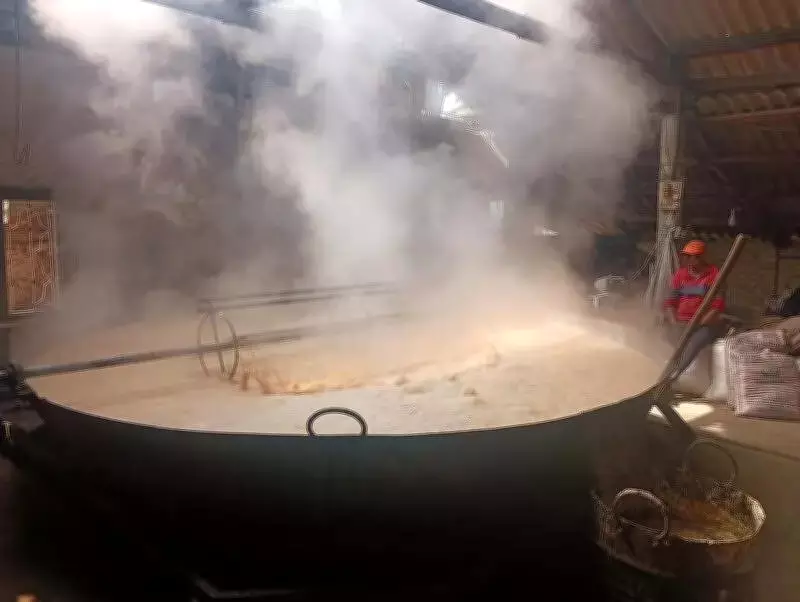
Kolhapur APMC Implements Strict Jaggery Testing Protocol After FDA Findings
The Agriculture Produce Market Committee (APMC) in Kolhapur has announced a decisive move to ensure the purity of jaggery sold through its markets. In response to recent contamination concerns, the committee has mandated that all jaggery brought by farmers must undergo rigorous laboratory testing for synthetic colors, chemicals, and artificial sweeteners.
New Testing Requirements and QR Code System
Starting April 24, jaggery producers have agreed to get their produce tested before bringing it to the APMC for auction. This proactive measure aims to prevent contaminated products from entering the market. Additionally, farmers and traders are being encouraged to adopt a QR code system. When scanned by consumers, this code will provide detailed information about the product's source and laboratory test results, enhancing transparency and trust.
Triggered by Gujarat FDA Investigation
This initiative follows a test conducted by the Gujarat Food and Drug Administration (FDA) on jaggery samples purchased from Kolhapur. The lab results revealed the presence of chemical or synthetic colors, prompting the FDA to issue a notice to the involved trader. Consequently, jaggery purchases from Kolhapur APMC were temporarily halted from Monday, highlighting the urgency of the situation.

The Kolhapur APMC has also issued a show-cause notice to the trader whose sample tested positive. An APMC official explained to TOI that the trader is uncertain whether the jaggery originated from Kolhapur district or elsewhere. "Some farmers vehemently opposed the accusations, stating that jaggery brought to Kolhapur APMC from other places, such as parts of Karnataka, has been using chemicals, inorganic colors, and even high sugar content," the official noted.
Commitment to Quality and FDA Guidelines
Ramchandra Dhashte, head of the jaggery division at Kolhapur APMC, emphasized the collective decision made in meetings between traders and farmers. "It has been decided to test jaggery samples before bringing the lot to APMC for auctioning. This will ensure that chemical or synthetic colors have not been used and that FDA guidelines are followed," he stated. This step is crucial for maintaining the reputation of Kolhapuri jaggery, known for its traditional quality.
Economic Impact and Market Dynamics
The jaggery trade at Kolhapur APMC is significant, with auction values rising from approximately Rs 251 crore last year to around Rs 300 crore currently. However, farmers report that traders often prefer jaggery with added colors and sugar, claiming customer demand drives this preference. This has adversely impacted traditional jaggery making, with very few farmers now producing organic jaggery.
A farmer explained, "In some parts of Karnataka where crushing is delayed, the natural sugar content is lower. Therefore, artificial sweeteners and colors are added to make the produce look and taste like Kolhapuri Jaggery."
Proposed Measures to Protect Authenticity
Ram Patil, a jaggery producer from Karveer tehsil in Kolhapur, proposed stopping jaggery auctions at the APMC after the crushing season ends. "This will make customers aware that jaggery bought off-season is not authentic Kolhapuri Jaggery. Also, traders are not ready to buy organic jaggery, citing customer preferences," he said. This measure aims to educate consumers and preserve the integrity of the local product.
The new testing and traceability measures represent a critical step toward safeguarding consumer health and restoring confidence in Kolhapur's jaggery market, ensuring that only pure, high-quality products reach buyers.






