

Kolkata Auto LPG Sales Spike 5-Fold Amid Route Cuts, Fuel Diversion Suspected
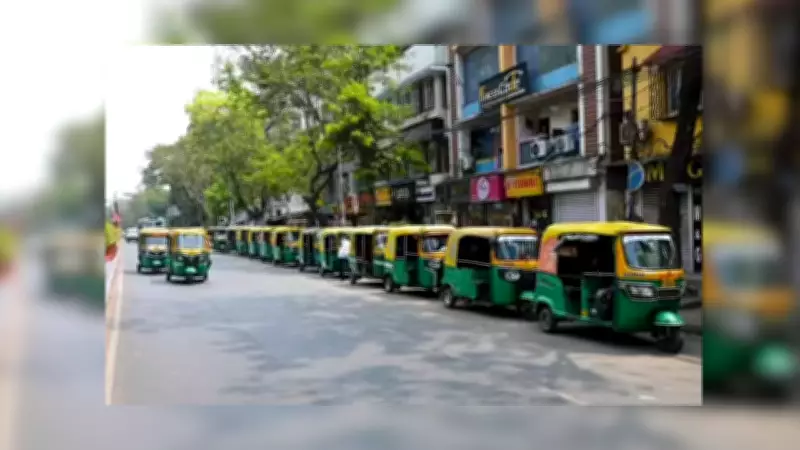
A dramatic and nearly five-fold increase in auto LPG sales in Kolkata over the past ten days, coinciding with the curtailment of several autorickshaw routes, has triggered serious concerns among oil marketing companies (OMCs). Officials suspect illegal diversion of the subsidized vehicle fuel to commercial establishments that are reeling under a severe supply crunch exacerbated by the ongoing conflict in West Asia.
Investigating the Unprecedented Surge
Officials at major oil companies have confirmed they are actively investigating the sudden spurt in sales. This surge comes amid widespread reports of fuel stations running dry and follows a government order issued approximately two weeks ago. That order suspended fresh LPG bookings for non-priority commercial sectors to manage a crisis triggered by the war in West Asia.
According to detailed figures shared by officials from Indian Oil Corporation and Hindustan Petroleum Corporation Limited—which together operate around 20 auto LPG stations in and around the city—sales skyrocketed to 47.6 tonnes on March 16 and 47.5 tonnes the following day. This represents a staggering rise from the daily average of just 10.4 tonnes recorded throughout January and February.

Timing Points to Potential Misuse
The timing of this surge is particularly alarming, according to an OMC official who spoke on the condition of anonymity. "Auto LPG sales have spiked dramatically since March 11," the official stated. "Interestingly, by that time, fresh bookings for non-priority commercial sectors had already been suspended. Given this precise timing, the possibility of misuse cannot be ruled out. We are thoroughly probing the reasons behind this spike."
Another official highlighted the statistical anomaly, noting, "Before the war, auto LPG typically accounted for only about 3.5% of commercial LPG consumption in West Bengal. That figure has now jumped to nearly 15%, which is highly unusual and warrants immediate scrutiny."
Sources within the oil marketing companies indicated that if illegal diversion is confirmed, they may introduce stricter verification checks and monitoring protocols at dispensing stations.
Fuel Meant for Vehicles Diverted to Kitchens?
Auto LPG is a subsidized fuel intended strictly for use in vehicles. However, industry insiders now fear that a significant portion may be illicitly finding its way into restaurants, eateries, and small commercial kitchens. These businesses have been grappling with acute supply disruptions since the government's suspension order.
The coincidence of the sales spike with the curtailment of routes by many auto operators—a move prompted by a recent rise in auto LPG prices—has only intensified suspicions of systematic diversion.
Ground Reports: Queues and Denials
Auto driver Rajesh Kumar, who refuels daily, described an unusual and frustrating rush at dispensing stations. "Earlier, there was virtually no waiting time. Now, we are forced to queue for three to four hours, and even then, there is no guarantee that we will actually get the fuel," he lamented.
Meanwhile, food business operators admit to being under tremendous pressure due to the supply shortage but firmly deny any involvement in wrongdoing. Sunita Sharma, who runs a small roadside eatery near Esplanade, said, "We have received no fresh supply of commercial cylinders for nearly two weeks. We are somehow managing with whatever dwindling stock we had left."
Industry Associations Voice Concerns
Restaurant associations have echoed these concerns, highlighting the broader impact on the hospitality sector. Sudesh Poddar, president of the Hotel & Restaurant Association of Eastern India, stated, "We are receiving much less than what we actually need to operate our kitchens efficiently."

Sagar Daryani, national president of the National Restaurants Association of India, provided a slight update, noting that the allocation of cylinders has resumed following their formal letter to the government. However, he emphasized that supplies remain severely limited. "The allocation has restarted, but only in very limited numbers. The scarcity persists, and it is a major operational challenge," Daryani explained.
A Delicate Balancing Act for Authorities
With West Bengal's total commercial LPG consumption hovering around 320 tonnes per day, state authorities are walking a regulatory tightrope. They must balance strict enforcement to prevent fuel misuse while simultaneously ensuring that both transport operators and legitimate businesses are not left completely stranded without essential supplies.
For now, this sudden and unexplained surge in auto LPG sales has exposed deeper cracks in an already strained supply chain. Both transporters and small businesses are bearing the brunt of the resulting uncertainty, caught between scarcity, suspicion, and the urgent need for a reliable fuel supply.





