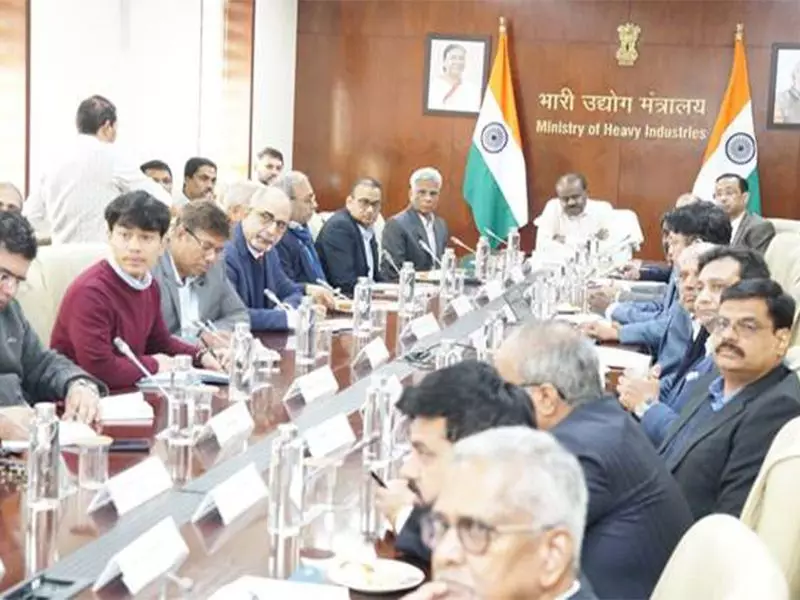
Union Minister for Heavy Industries, HD Kumaraswamy, spearheaded a pivotal stakeholder consultation meeting in New Delhi on Friday, focusing on the formulation of a Production Linked Incentive (PLI) scheme for the manufacturing of rare earth magnets. This initiative is a cornerstone of the government's strategy to achieve self-sufficiency in critical components vital for electric vehicles (EVs), defense, and green energy technologies.
Driving Self-Reliance in Critical Components
The proposed scheme, with a substantial outlay of Rs 5,000 crore, is designed to catalyze domestic production of rare earth permanent magnets. These powerful magnets are indispensable for a wide array of modern applications. Neodymium Iron Boron (NdFeB) magnets, a primary focus, are crucial for the motors that power electric vehicles, wind turbine generators, consumer electronics like smartphones and hard disk drives, and various defense systems.
During the high-level meeting, Minister Kumaraswamy emphasized the strategic importance of this sector. He highlighted that reducing import dependency for these critical materials is essential for bolstering India's national security and economic sovereignty. The minister actively sought detailed inputs from industry leaders, experts, and other stakeholders to ensure the final scheme is robust, practical, and capable of attracting significant investment into the sector.

Stakeholder Inputs and Strategic Discussions
The consultation saw participation from a diverse group of stakeholders, including representatives from industry associations, potential manufacturers, and technical experts. Discussions revolved around several key aspects necessary to build a competitive domestic ecosystem. A major point of deliberation was securing a consistent and cost-effective supply of rare earth elements, the raw materials required for magnet production.
Other critical topics included:
- Identifying the appropriate incentive structure and financial support mechanisms under the PLI framework.
- Addressing the need for advanced research and development (R&D) to improve manufacturing processes and magnet grades.
- Developing the necessary skilled workforce and technical know-how within the country.
- Creating a roadmap for integrating domestic magnet production with downstream industries, particularly the booming electric vehicle and renewable energy sectors.
The Ministry of Heavy Industries is now tasked with synthesizing these inputs to draft a comprehensive cabinet note. The goal is to present a finalized proposal for the PLI scheme on rare earth magnets to the Union Cabinet for approval in the near future.
Implications for India's Green and Strategic Future
The successful implementation of this PLI scheme is poised to have far-reaching consequences for India's industrial and technological landscape. By establishing a homegrown manufacturing base for rare earth magnets, India aims to:
Strengthen its EV ambitions: A reliable domestic supply of high-performance magnets will lower costs and secure the supply chain for EV manufacturers, supporting the nation's transition to clean mobility.
Boost defense indigenization: Reducing reliance on foreign sources for these strategically sensitive components is critical for defense applications, enhancing the country's self-reliance in defense manufacturing.
Catalyze green technology: The scheme will directly benefit the wind energy sector and other green technologies that depend on these efficient magnets, aligning with India's climate goals.
Attract global investment: A well-structured PLI scheme is expected to draw investments from both domestic and international players, positioning India as a potential global hub for magnet manufacturing outside of China.
The stakeholder meeting chaired by HD Kumaraswamy marks a decisive step forward in translating policy intent into actionable strategy. As the Ministry of Heavy Industries moves to finalize the scheme, the industry awaits a transformative policy that could redefine India's position in the global value chain for advanced materials and clean technology.