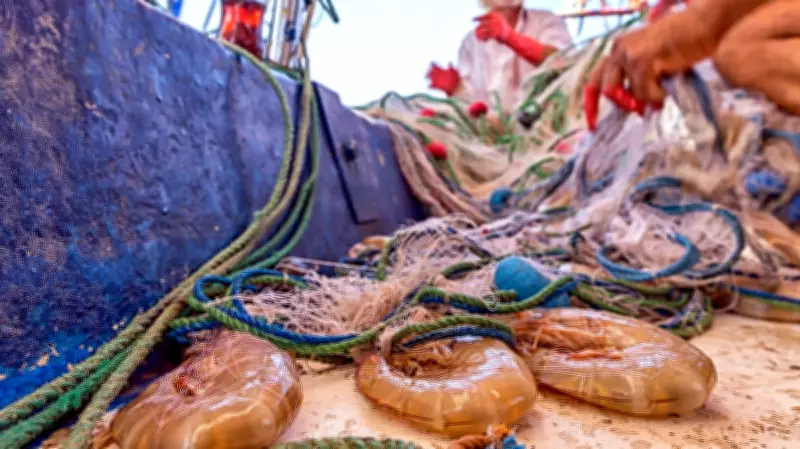
Shrimp farmers in Andhra Pradesh are facing a severe squeeze as falling prices and rising input costs erode their profitability. According to industry sources, the price of 100-count shrimp has dropped from Rs 275 per kilogram to just Rs 225, while 50-count shrimp has fallen to Rs 285 from previous levels, and 30-count shrimp now sells at Rs 425, down from earlier highs.
Price decline wipes out margins
The price drop has been sharp over the past year. Farmers who once earned comfortable profits now struggle to break even. A farmer from the West Godavari district told reporters, “The cost of feed, electricity, and labor has gone up by nearly 20 percent, but we are getting 15-20 percent less for our produce. It’s becoming unsustainable.”
The situation is particularly acute for small-scale farmers who lack the financial buffers to absorb losses. Many have reduced the area under cultivation or shifted to alternative crops.

Rising input costs compound the problem
Feed prices, which account for about 60 percent of total production costs, have risen due to higher import duties on key ingredients like fishmeal and soybean meal. Electricity tariffs have also increased, adding to the burden. Farmers report that diesel costs for running pumps have gone up by 25 percent over the last two years.
“The government needs to step in with subsidies or price support mechanisms,” said M. Venkateswara Rao, president of the Andhra Pradesh Aqua Farmers Association. “Otherwise, many farmers will be forced out of business.”
Impact on exports and livelihoods
Andhra Pradesh accounts for nearly 70 percent of India’s shrimp exports, which are a major source of foreign exchange. The current crisis could affect export volumes if farmers reduce production. The state government has announced some relief measures, including a 10 percent subsidy on feed, but farmers say it is insufficient.
“We need a minimum support price or a floor price for shrimp,” said another farmer from Nellore. “We cannot continue like this.”
Outlook remains uncertain
With global demand for shrimp facing headwinds from inflation in key markets like the US and Europe, prices are unlikely to recover soon. Farmers are calling for urgent policy intervention to prevent a collapse of the sector.