

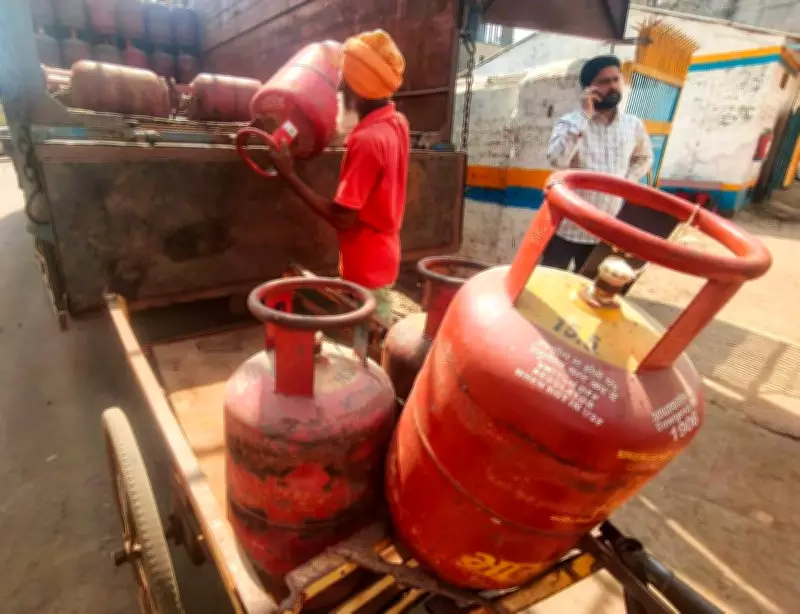
LPG Supply Crunch Enters Third Week, Commercial Users Face Continued Rationing
India's liquefied petroleum gas (LPG) supply crunch has persisted for the third consecutive week, with ongoing disruptions primarily affecting commercial consumers such as hotels and restaurants. While there are early signs of easing in domestic refill bookings, the situation remains tense due to supply restrictions imposed in response to the West Asia conflict.
Impact of West Asia Conflict on LPG Imports
The conflict in the Middle East, triggered by attacks involving the US and Israel on Iran, has led to the shutdown of the Strait of Hormuz. This critical shipping lane is responsible for transporting approximately 60 percent of India's LPG imports. The sudden loss of such a significant volume of imports forced the government to implement emergency measures, prioritizing supplies to domestic households over commercial establishments.
Initially, supplies to commercial users were completely halted, but they have since been partially restored to about one-fifth of their usual requirements. This rationing has sparked concerns among businesses reliant on LPG for their operations.

Domestic Panic Buying and Government Response
The supply restrictions triggered a wave of panic buying among domestic consumers, who feared that their own access to LPG cylinders might be curtailed. Panic bookings peaked at 87.7 lakh on March 13 but have since declined. According to Sujata Sharma, Joint Secretary at the Ministry of Petroleum and Natural Gas, bookings dropped to around 55 lakh on March 19, down from 57 lakh the previous day. Pre-war averages typically ranged between 50 to 55 lakh bookings per day.
"Panic booking is coming down," Sharma stated during a media briefing. She emphasized that the government continues to prioritize available LPG supplies for domestic households. However, she acknowledged that the overall LPG supply situation remains worrisome, though no distributor has reported a complete dry-out.
Efforts to Stabilize Supply and Combat Black Marketing
In response to the crisis, domestic LPG production has been ramped up by over 40 percent in the last two weeks. The three public sector oil marketing companies have resumed daily deliveries of LPG refills at pre-war levels. "LPG cylinder delivery continues to be normal," Sharma assured.
To prevent black marketing and hoarding, authorities have intensified enforcement actions. On a recent Friday, 4,500 raids were conducted, along with 1,800 surprise inspections of petrol pumps and LPG distributorships by oil companies. State governments have been instructed to establish monitoring and enforcement mechanisms to ensure fair distribution.
Promotion of Alternative Fuels and Long-Term Solutions
The government is actively encouraging consumers to explore alternative fuels to alleviate pressure on LPG supplies. Customers located near city gas networks are being urged to switch to piped natural gas (PNG), which offers a continuous supply without the need for refill bookings. So far, in 15 geographical areas, 13,700 PNG connections have been issued, with 7,000 consumers making the transition from LPG.
Additionally, other alternatives such as kerosene are being promoted. Commercial LPG stocks have been allocated to states for distribution based on priority lists. Sharma reiterated, "Situation is still worrisome, but we are maintaining supplies at a normal level for domestic users." She advised consumers to patiently await home deliveries after booking refills and to consider adopting alternative energy sources where feasible.
As the LPG supply crunch continues, the focus remains on balancing domestic needs with commercial demands while navigating the challenges posed by international conflicts and supply chain disruptions.






