LPG Supply Curbs Disrupt Dairy Operations Across Madhya Pradesh
In a significant blow to the dairy sector in Madhya Pradesh, restrictions on commercial LPG supplies have severely disrupted processing operations, leading to a sharp decline in milk procurement from farmers and a reduction in the production of value-added by-products. Industry representatives report that dairy units, which heavily rely on gas for boiling, processing, and preparing milk-based items, are struggling to maintain normal operations amidst the fuel shortage.
Indore Sees Drastic Drop in Milk Collection
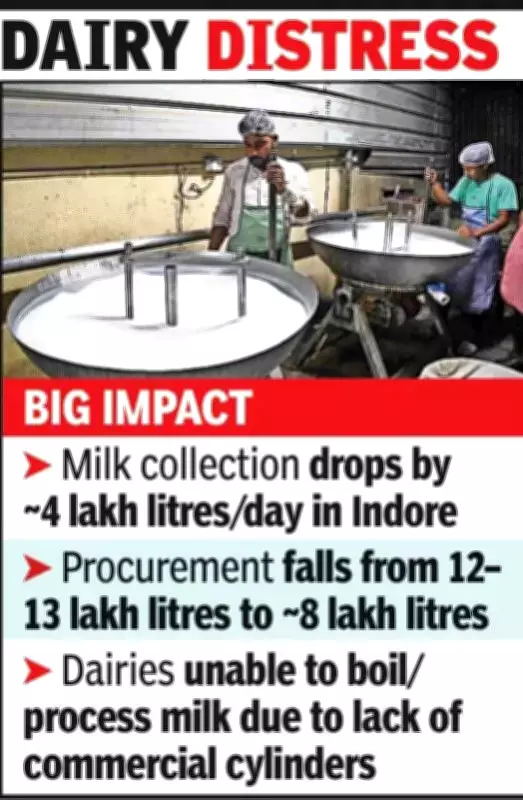
Indore, the state's largest milk trading hub, has been hit particularly hard. According to the Dairy and Milk Suppliers Association, average daily milk procurement has fallen from approximately 12–13 lakh litres to nearly 8 lakh litres, marking a decline of about 4 lakh litres. Bharat Mathurawala, president of the Indore Dudgh Vikreta Sangh, explained the dire situation: "We have cut down purchase of milk by at least 4 lakh litres because there is not sufficient arrangement for boiling milk and making by-products due to restrictions on the supply of commercial cylinders."
Total daily milk sales in Indore, including supplies to home consumers and dairy operators, typically range between 12.5 and 13 lakh litres, with collection usually hovering around 12 to 12.5 lakh litres. However, with dairies scaling back, production of popular items like mawa, paneer, sweets, and lassi has dropped sharply as processing capacity is curtailed.

Ujjain and Other Districts Face Similar Challenges
A similar trend is observed in Ujjain, where daily milk collection from farmers stands at around 5 lakh litres, but has also slipped recently. Mohan Waswani, president of the Dudgh Vikreta Sangh in Ujjain, noted that operations continue at reduced capacity: "We cannot stop production completely, but as cylinders are not available, we have cut down production. We are also paying higher prices for cylinders, which has increased our input costs."
Suppliers indicate that milk collection has been affected in several other districts, including Neemuch, Badwah, and Bhopal, as dairy operators across the state adjust procurement in line with reduced processing capabilities. In response, many are prioritizing the supply of liquid milk to urban consumers while cutting back on value-added products that require prolonged heating and higher fuel consumption.
Bhopal Businesses Adapt with Electric Alternatives
In contrast, some food businesses in the Bhopal region are adapting by shifting to electric appliances to keep operations running. Kush Harwani, managing partner at a food chain outlet in Bhopal, shared their strategy: "We have contracts with milk vendors to get daily supplies. We cannot reduce the quantity and have to procure it. Our factory runs on boilers and PNG so regular consumption continues, but for restaurant operations we have shifted to induction cooktops."
This move to induction-based cooking helps mitigate the impact of LPG shortages, allowing businesses to maintain their milk procurement and processing activities without significant disruptions.
Industry Calls for Urgent Solutions
The ongoing restrictions, reportedly introduced to prioritize domestic household supplies amid broader geopolitical tensions, have left the dairy industry in a precarious position. Operators are urging authorities to address the commercial LGP supply issues promptly to prevent further economic losses and ensure the stability of milk and dairy product supplies across the region.