

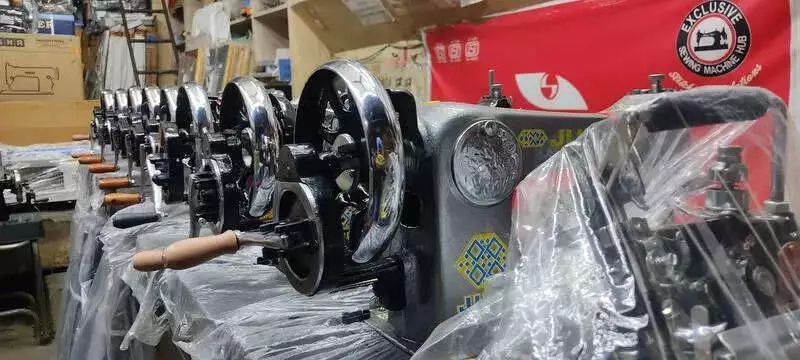
Ludhiana's once-thriving sewing machine manufacturing sector, renowned for its skilled workforce and domestic dominance, is now fighting for its survival. The industry is grappling with a severe and worsening shortage of trained labour while simultaneously facing an onslaught of competition from Chinese products.
A Dual Crisis: Vanishing Skills and Foreign Flood
The heart of the problem lies in a rapidly shrinking pool of experienced workers. Rajat Chawla of Parvin Machines highlights the stark change, noting that while labour was previously available and training was manageable, the number of skilled labourers has been in steady decline for several years. This skilled labour crisis is crippling an industry already under intense pressure.
The pressure comes from aggressive imports. Chinese sewing machines, especially white sewing machines, have captured a dominant share of the Indian market. To make matters worse, reassembled second-hand machines imported from China at throwaway prices are undercutting local manufacturers even further.

"The competition from China is not just about price, but also scale," explains Sunny, a local manufacturer. He points out the cruel irony: while Indian units struggle to find skilled hands to maintain quality and meet production deadlines, Chinese factories are flooding the market with cheaper alternatives. This manpower deficit makes it extremely difficult for domestic manufacturers to compete.
Operating at Reduced Capacity
The combined effect of these challenges is eroding the competitiveness of Ludhiana's units. A senior manufacturer revealed that many small and medium enterprises are now operating at reduced capacity solely due to the labour shortage. Skilled fitters, assemblers, and technicians are becoming increasingly rare as their numbers diminish annually.
Industry voices warn that if this situation is not addressed promptly, it could have devastating wider implications for Ludhiana's entire industrial ecosystem. The crisis threatens not just individual businesses but the foundational strength of the city's manufacturing landscape.
Plea for Government Intervention: R&D and Training
Faced with this existential threat, industrialists are calling for concrete government support. They argue that a revival plan must include government investment in research and development (R&D) specifically for sewing machines. However, they stress that this must be accompanied by parallel skill development programmes and the establishment of industry-specific training centres to impart advanced manufacturing skills.
Unfortunately, their appeals have largely gone unheard. Jagbir Singh Sokhi, chairman of the Sewing Machine Industry Association, expressed frustration that repeated requests to start dedicated courses for the sector have fallen on deaf ears. He emphasised the huge scope for skilling in areas critical to the industry's supply chain, such as melters, moulders, and crane men for foundries. Despite the clear need, no such courses have been initiated, leaving the skills gap to widen.
The message from Ludhiana's sewing machine hub is clear: without immediate action to build a skilled workforce and level the playing field against imports, an iconic Indian industry risks fading away.






