

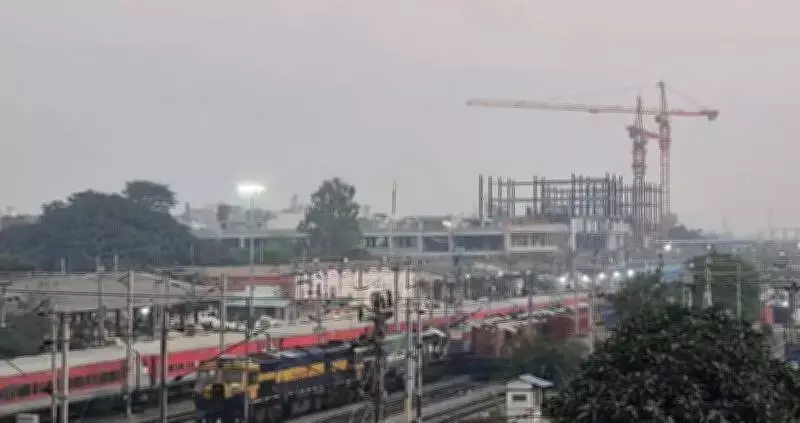
Ludhiana Railway Station Redevelopment Cripples Local Dhaba Businesses
The ambitious redevelopment project at Ludhiana railway station, intended to modernize this crucial transportation hub, has created an unintended economic crisis for the surrounding community. Local dhabas and small eateries that have long depended on passenger traffic are reporting a severe and sustained decline in business, with many operators struggling to survive after three years of dwindling footfall and restricted accessibility.
Structural Changes Disrupt Traditional Customer Flow
Owners of these establishments attribute the dramatic business slump to several fundamental changes in station operations and layout. The diversion of numerous trains away from Ludhiana station has significantly reduced the number of potential customers, while complicated access points have made it increasingly difficult for remaining passengers to reach external food vendors.
"Our entire livelihood depends on long-distance passengers who typically exit the station for quick, affordable meals," explained one dhaba operator who requested anonymity. "With fewer trains halting here and the current station layout proving cumbersome, that essential customer base has virtually evaporated."

The current construction phase has placed the connecting flyover far from traditional entry points, while outside gate access remains severely limited. Consequently, passengers now prefer to stay within the station premises rather than navigate the long, confusing distances required to reach external eateries.
Accessibility Barriers Create Operational Nightmares
The physical barriers erected during construction have made it increasingly inconvenient for travelers to explore nearby food options. Tara Singh, a local dhaba owner with decades of experience, emphasized that sales have plummeted because passengers now systematically avoid coming outside due to the sheer inconvenience of walking around extensive construction zones.
Manoj, another vendor operating near the station, provided crucial historical context: "Passengers could previously exit directly from any platform via a collective footover bridge that connected everything. That convenient path no longer exists. The only remaining bridge is situated far from the main entry and exit points, effectively isolating our businesses from potential customers."
The situation has created a perfect storm of challenges: reduced train frequency, complicated navigation routes, and physical barriers that discourage passenger movement beyond station boundaries.
Prolonged Timeline Damages Business Morale
The extended duration of the redevelopment project has further damaged vendor morale and financial stability. "We were initially hopeful that the construction would be completed by 2025, but it now appears the project will require significantly more time," said Vinod Singh, expressing a sentiment shared by many local business owners.
While acknowledging that station redevelopment is necessary for modernization, Singh and others argue that the delays and poor planning regarding business impact are inexcusable. The operational shift has hit particularly hard, with many trains that once regularly stopped at Ludhiana now being routed through Dhandari instead.
With only three platforms currently operational at Ludhiana station, Ramesh Rana of a nearby eatery noted a dramatic drop in passenger movement, leaving the area unusually quiet and the local business community in a state of deep uncertainty about their future survival.
The contrast between the promised modernization benefits and the current reality for small businesses surrounding the station could not be more stark. As construction continues with no clear end in sight, Ludhiana's dhaba owners face an existential threat to their livelihoods, caught between development progress and economic survival.






