

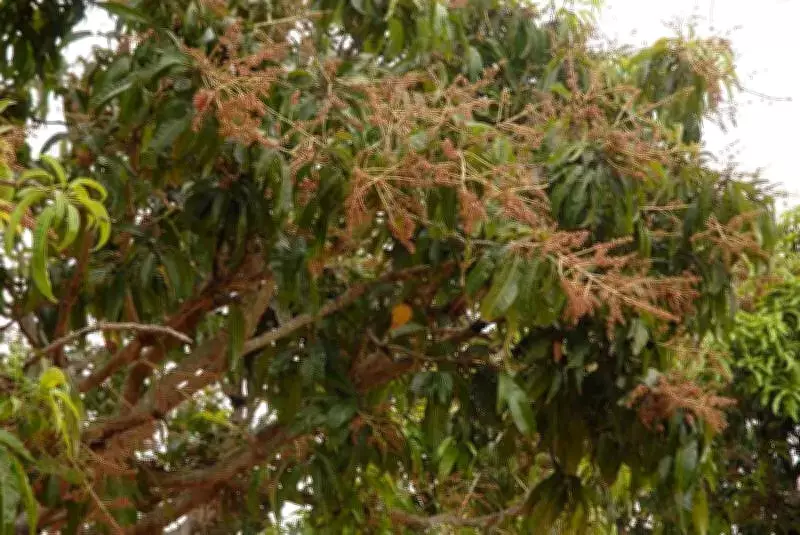
Malihabad Mango Orchards Devastated by Unseasonal Weather Events
In a severe blow to one of India's premier mango-growing regions, heavy and sudden rainfall accompanied by high-velocity winds on Saturday has resulted in an estimated 40% loss of the mango crop in Malihabad, Lucknow. The full extent of the damage is still being assessed, with a precise evaluation expected in the coming days.
Threat of Virus Attacks and Further Fruit Drop
The untimely precipitation poses additional risks beyond immediate physical damage. Experts warn that the rain may trigger virus attacks on the fruits, which are currently very tiny in size. If the adverse weather conditions persist, the early fruit set on the upper branches of mango trees could experience increased dropping, exacerbating the losses.
The impact is not limited to Malihabad alone. Other mango-growing regions across Uttar Pradesh are likely facing similar challenges, as the growth cycle of mangoes is synchronized statewide. This year, the crucial months of February and March witnessed abrupt and erratic weather patterns that have severely disrupted the crop.

Erratic Weather Disrupts Pollination and Flowering Cycles
Mango entrepreneur Naseeb Khan from Malihabad explained the sequence of events: "At the end of February, temperatures soared to 32 degrees Celsius, a condition that persisted until mid-March. This caused flowers to open rapidly but also led to their premature dropping due to the excessive heat. Consequently, pollination was adversely affected, resulting in fewer flowers successfully converting into fruits."
The synchronized flowering induced by the high temperatures also attracted a higher concentration of pests, such as gall midges, which further damaged the freshly opened flowers. This compounded the challenges for farmers already grappling with climatic instability.
Off-Year Cycle Amplifies Production Woes
Mango trees typically follow an alternate-year bearing pattern, with productive 'on-years' followed by less fruitful 'off-years.' The Malihabad belt was already in an off-year cycle this season, meaning approximately 40% of orchard trees that did not yield well last year were expected to be the primary producers this time. However, the sudden weather changes have now jeopardized even this reduced production potential.
Three-Stage Flowering Process Hampered
Mango flowering occurs in three distinct stages. The initial panicles, known locally as 'baur,' appear on the top branches exposed to direct sunlight, usually by mid-February as temperatures begin to rise gradually. Flowering on the middle and lower branches completes by mid-March. "A gradual weather transition during this period is ideal for the crop," noted Khan.
Unfortunately, in recent years, sudden weather fluctuations between February and April have become commonplace. Upendra Singh, another mango entrepreneur, highlighted the broader implications: "This period is critical for early mango varieties like Dussehri. The erratic weather in February, March, and now April has already inflicted significant damage, with Malihabad likely experiencing a 40% loss so far."
The cumulative effect of temperature spikes, pest infestations, and unseasonal rains underscores the growing vulnerability of agricultural systems to climate variability, threatening both livelihoods and the beloved mango harvest.






