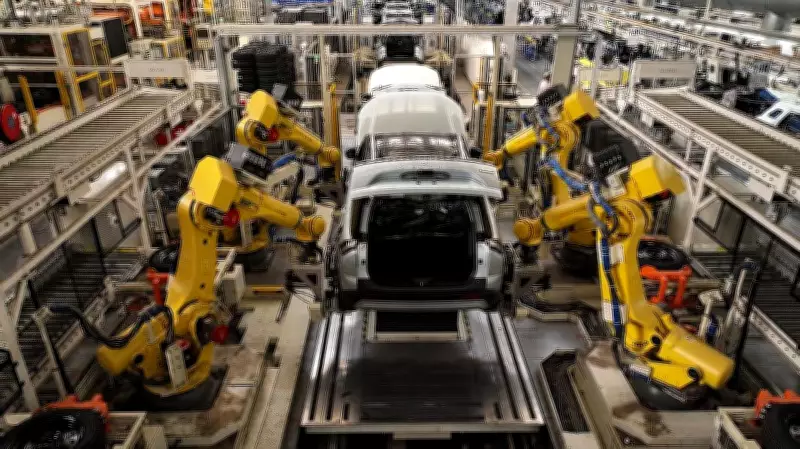
Maruti Suzuki India Limited has inaugurated a mega manufacturing plant in Kharkhoda, Haryana, as part of its ambitious expansion plan to achieve an annual production capacity of 4 million vehicles. The new facility, developed as a 'Suzuki Smart Factory', incorporates advanced digital technologies to enhance efficiency and quality.
Plant Details and Capacity
The Kharkhoda plant is set to significantly boost Maruti Suzuki's production capabilities. Initially, the plant will add 250,000 units per year, with plans to scale up to 1 million units annually in phases. The overall target of 4 million units per year includes contributions from existing plants in Gurugram and Manesar, as well as the new facility. According to company officials, this expansion aligns with India's growing automotive market and the government's push for self-reliance in manufacturing.
Suzuki Smart Factory Features
The plant is equipped with cutting-edge digital technologies, including artificial intelligence, Internet of Things (IoT) sensors, and automated robotics. These systems enable real-time monitoring of production lines, predictive maintenance, and quality control. The 'Suzuki Smart Factory' concept aims to reduce waste, improve energy efficiency, and shorten production cycles. Maruti Suzuki's managing director stated, "This facility represents a leap forward in manufacturing excellence, leveraging digital transformation to deliver world-class vehicles."

Economic and Employment Impact
The Kharkhoda plant is expected to create over 10,000 direct jobs and thousands more in ancillary industries. Haryana Chief Minister Manohar Lal Khattar, who attended the inauguration, highlighted the plant's role in boosting the state's economy. "This investment will make Haryana a hub for automotive manufacturing, attracting further investments and generating employment," he said. The plant will also support local suppliers and small businesses, contributing to the region's development.
Strategic Importance for Maruti Suzuki
Maruti Suzuki, India's largest carmaker, has been expanding capacity to meet rising demand for passenger vehicles, particularly in the compact SUV segment. The new plant will produce models based on the company's modular platform, including upcoming electric vehicles (EVs). The company plans to launch its first EV in India by 2027, and the Kharkhoda plant will play a key role in EV production. This expansion also positions Maruti Suzuki to export vehicles to markets in Africa, Latin America, and Southeast Asia.
Environmental and Sustainability Measures
The plant incorporates green technologies, such as solar power generation, rainwater harvesting, and zero liquid discharge systems. Maruti Suzuki aims to reduce carbon emissions by 50% by 2030 compared to 2018 levels. The Kharkhoda facility will use 100% renewable electricity for its operations, sourced from solar and wind energy. The company has also planted over 50,000 trees in and around the plant to enhance the local ecosystem.