Migrant Workers Flock to Guntur for Chilli Harvest Amid Regional Economic Disparities
As the chilli harvesting season accelerates in Guntur, Andhra Pradesh, hundreds of migrant families from Kurnool, Anantapur, and other parts of the Rayalaseema region are arriving in search of livelihood opportunities. With little agricultural work available during the Rabi season in their home areas, these farmers are compelled to migrate to sustain their families.
Guntur's Dependence on Migrant Labour for Chilli Cultivation
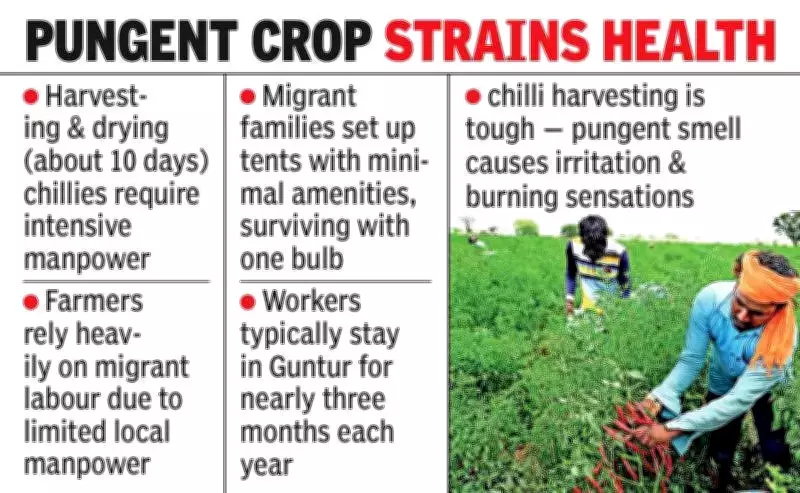
Guntur, renowned as a hub of chilli cultivation with robust domestic and international demand, relies heavily on migrant labour to meet its agricultural needs. The harvesting, drying, and preparation of chillies for storage or market is a labour-intensive process that spans nearly 10 days, and local manpower is scarce, making these workers essential to the region's economy.
Challenging Living Conditions and Seasonal Migration Patterns
Across the fields, rows of makeshift tents have emerged as families arrive with basic utensils and clothes, living under difficult conditions with minimal amenities. K Siddappa, a migrant worker, explained that they spend approximately three months in Guntur each year. "In Rayalaseema, work is uncertain. If crops fail, wages collapse. Here, at least we earn enough to support our families," he said, noting that only able-bodied members migrate while others stay behind.

Health Risks and Farmer Perspectives on Labour Shortages
Farmers acknowledge their critical reliance on migrant labour, citing the tough nature of chilli harvesting. Shivanagi Reddy, a farmer from Mandapadu, highlighted the challenges: "Chilli harvesting is tough. The pungent smell causes irritation, and workers often suffer burning sensations in their hands and feet. Local labour is scarce, so these workers have become essential." This underscores the health risks faced by workers in this demanding agricultural sector.
Economic Disparities and Resilience of Migrant Workers
The migration trend not only highlights economic disparities between regions but also underscores the resilience of workers who travel hundreds of kilometres annually, enduring hardships to sustain their livelihoods. This annual movement reflects broader issues of rural employment and regional economic imbalances in Andhra Pradesh.
This situation draws attention to the vital role migrant labour plays in India's agricultural supply chains, particularly in high-demand crops like chillies, while raising questions about labour rights and regional development policies.