

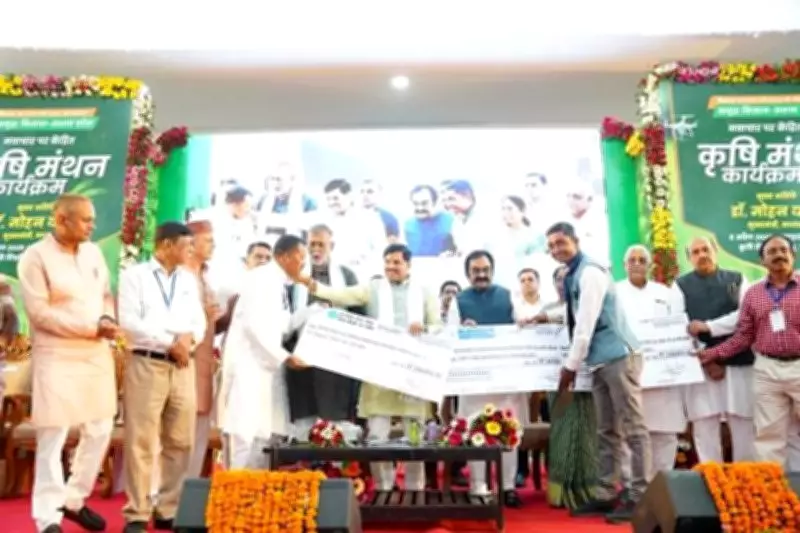
Madhya Pradesh Rises as India's Premier Agricultural Hub
In a significant development for India's agrarian landscape, Madhya Pradesh has solidified its position as the nation's foremost agricultural state. This achievement stems from a strategic convergence of time-honored farming traditions and cutting-edge innovations, as emphasized by Chief Minister Dr. Mohan Yadav. The state's success underscores a model that balances heritage with progress, driving substantial growth in crop yields and farmer prosperity.
Blending Heritage with Modern Techniques
The agricultural transformation in Madhya Pradesh is rooted in a dual approach that respects indigenous knowledge while embracing technological advancements. Traditional practices, such as organic farming and crop rotation, have been preserved and enhanced through scientific methods. Simultaneously, the state has integrated modern tools like precision agriculture, drone technology for monitoring, and digital platforms for market access. This synergy has not only boosted productivity but also ensured sustainability, reducing environmental impact and promoting soil health.
Government Initiatives and Farmer Empowerment
Under the leadership of CM Dr. Yadav, the state government has launched several initiatives to support this agricultural evolution. Key programs include:

- Subsidies and Financial Aid: Providing farmers with access to affordable loans, insurance schemes, and subsidies for seeds and equipment.
- Training and Education: Conducting workshops and training sessions to educate farmers on both traditional and modern farming techniques.
- Infrastructure Development: Improving irrigation systems, storage facilities, and transportation networks to reduce post-harvest losses.
These efforts have empowered local farmers, enabling them to adopt best practices and increase their incomes significantly.
Impact on Economy and Food Security
The agricultural boom in Madhya Pradesh has had far-reaching effects on the state's economy and India's food security. The state now leads in the production of key crops such as wheat, soybeans, and pulses, contributing substantially to the national food basket. This growth has spurred rural development, created employment opportunities, and enhanced the overall quality of life in farming communities. Moreover, the focus on sustainable practices positions Madhya Pradesh as a leader in climate-resilient agriculture, setting an example for other states to follow.
Future Prospects and Challenges
Looking ahead, Madhya Pradesh aims to build on this success by further integrating technology and tradition. Plans include expanding digital farming solutions, promoting agro-processing industries, and fostering research in agricultural sciences. However, challenges such as climate change, water scarcity, and market fluctuations remain. The state government is committed to addressing these issues through adaptive strategies and continuous innovation, ensuring long-term agricultural resilience.
In conclusion, Madhya Pradesh's emergence as a leading agricultural state is a testament to the power of combining heritage with innovation. As CM Dr. Yadav notes, this model not only drives economic growth but also preserves cultural roots, offering a blueprint for sustainable development in India's agrarian sector.






