Mysuru's Royal Footwear Steps into the Spotlight
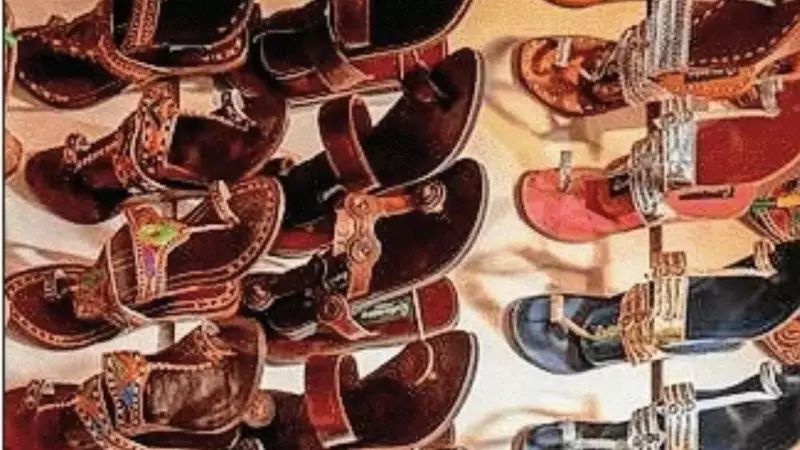
The Karnataka government's leather development corporation is now actively promoting a homegrown alternative to Kolhapuri footwear. This new initiative focuses on the royal heritage of Mysuru. The state-run Dr Babu Jagjivan Ram Leather Industries Development Corporation, known as Lidkar, is developing and scaling production of the 'Maharaja Maharani' chappals.
Early Success at the Airport Outlet
Lidkar recently introduced these handcrafted chappals at its exclusive outlet in Kempegowda International Airport. Each pair carries a price tag of approximately Rs 3,000. Although still in its early stages, the initiative has already shown promising results. Officials reported selling seven pairs over the past two months.
This encouraging response indicates potential demand for heritage-based Indian footwear. Both domestic and international buyers are showing increasing interest in such products. KM Vasundhara, the Managing Director of Lidkar, explained the current situation to reporters.

"Several artisans in and around the Mysuru region already make these chappals independently," Vasundhara stated. "Creating a dedicated production cluster will help organise and streamline this entire ecosystem."
Proposed Production Cluster in Dattagalli
The corporation has submitted a budget proposal to the government seeking Rs 25 crore for establishing a production cluster at Dattagalli in Mysuru. This proposed facility will occupy five acres of land already owned by Lidkar. It will complement the existing artisans' colony and commercial complex in the area.
The cluster will function on a factory-style production model. This represents a significant shift from the current individual artisan approach. Vasundhara detailed how the corporation currently supports artisans.
"At present, artisans work individually," she explained. "We support them by purchasing products worth up to Rs 1 lakh from each artisan under our marketing scheme. Many people also approach us seeking employment. A cluster-based ecosystem will provide sustained livelihood opportunities while ensuring consistent quality and scale."
Niche Market Positioning
Officials describe the Maharaja Maharani range as drawing direct inspiration from Mysuru's royal legacy. These ornate yet durable designs are increasingly being chosen to complement traditional Indian wedding attire. The corporation is positioning them as a niche option in a market dominated by mass-produced footwear.
Artisan Raju from Mysuru comes from a family that has crafted such chappals for generations. He confirmed the designs are deeply rooted in traditional royal imagery. "Lidkar holds meetings where we are asked to bring samples," Raju said. "Once finalised, the corporation procures them for production."
The production process requires significant craftsmanship. According to Raju, three artisans need a full day to produce about ten pairs. "We primarily work on bulk orders given by the corporation, along with limited retail sales through Lidkar's store," he added.
Raju also noted interesting customer interactions at their shop. "Many customers, especially foreigners, stop to watch us work and place custom requests. We see the highest footfall during the Dasara festival period."
Building on Traditional Craftsmanship
This initiative represents a strategic move to capitalize on growing global interest in authentic Indian footwear. While Kolhapuri chappals have gained international popularity, Lidkar sees an opportunity to promote Mysuru's distinct royal heritage through footwear.
The proposed production cluster aims to transform how these traditional chappals are made and marketed. By bringing artisans together in an organised facility, the corporation hopes to improve production efficiency while maintaining the handmade quality that makes these chappals special.
This development comes at a time when consumers are increasingly valuing products with cultural stories and artisanal origins. The early sales at the airport outlet suggest travelers appreciate having access to locally crafted heritage items as souvenirs or personal purchases.

The success of this initiative could potentially create a new category within India's footwear industry - one that blends traditional craftsmanship with organised production and marketing support from government institutions.