

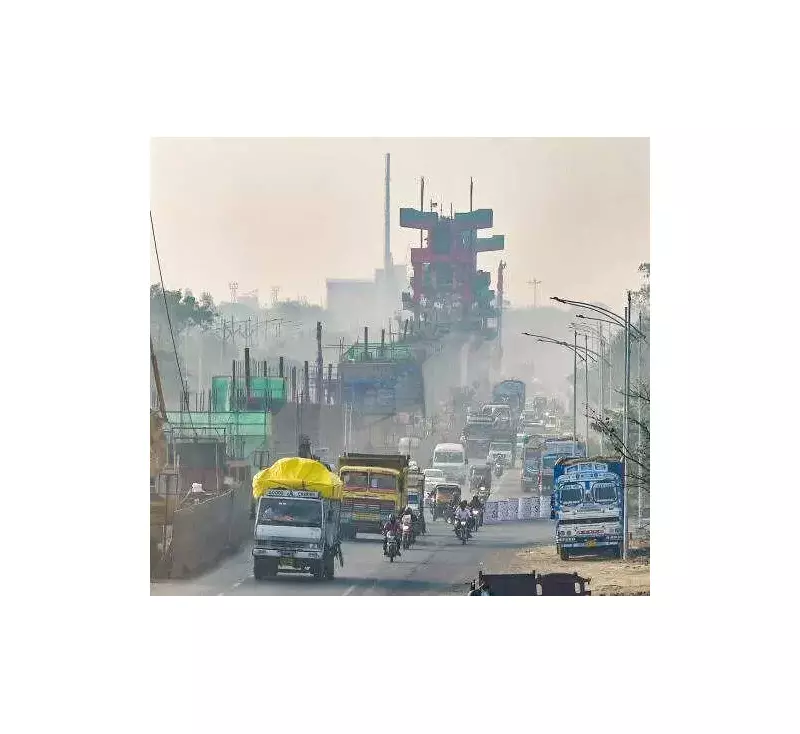
In a significant move to counter a crippling shortage of natural sand, the Nagpur Metro has officially started using crushed sand for its ongoing construction projects. The shift comes after weeks of slowed progress on all four stretches of Phase II, forcing the MahaMetro corporation to seek a reliable alternative to keep the ambitious infrastructure project on track.
A Necessary Shift to Keep Construction Moving
A senior MahaMetro official confirmed that the corporation began incorporating crushed sand into its concrete mix in November. This decision followed a partial slowdown in work during October when restrictions on extraction led to a sharp drop in the supply of naturally available riverbed sand. While the agency tried to maintain continuity, concrete and foundation works were severely impacted, slowing progress at multiple sites.
"The trials gave us confidence to begin using crushed sand on the ground," the official stated. He revealed that the current concrete mix uses 30% crushed sand and 70% natural sand, but plans are underway to reverse this ratio soon. Every batch is undergoing strict quality checks to ensure safety standards and technical benchmarks are not compromised.

From Temporary Fix to Long-Term Solution
What began as a necessity-driven adaptation may now become a permanent feature of Nagpur Metro's construction strategy. Internal trials conducted over the past fortnight evaluated the feasibility of crushed sand—manufactured by crushing stones and debris—for Metro infrastructure. The results have been encouraging.
Sources indicate that if positive performance indicators continue, dependency on natural sand could drastically reduce from the new year. This mirrors practices in southern cities like Chennai, where Metro corporations have relied on crushed sand for nearly a decade, especially in regions lacking riverbed sand deposits.
"Natural sand will still be used, but the pressure on it will reduce significantly. We want a stable, long-term supply model so that construction does not stop because of a single resource," a senior official explained.
Challenges and Advantages of the New Material
Despite the optimistic shift, challenges remain. Sources point out that not many crushed sand manufacturing plants are available in the Nagpur district, which could pose a threat to ensuring an uninterrupted supply chain as demand increases.
However, experts highlight several advantages of crushed sand beyond mere availability. When processed correctly, it offers controlled particle size and lower impurity content, allowing for better predictability in concrete composition. They caution that any alternative supplier must meet strict parameters for transportation moisture, sieve analysis, and strength before bulk procurement can begin.
With the labour force returning after festival holidays and clear post-monsoon weather reviving site activities in November, the sand shortage became the critical bottleneck. Now, with crushed sand performing satisfactorily, officials anticipate smoother continuity of civil works in January.
Looking ahead, if results continue to meet expectations, crushed sand is likely to become a major component of Nagpur Metro's construction mix in 2026. This transition promises to reduce vulnerability to supply disruptions and strengthen the overall material sustainability of the crucial urban transit project.






