

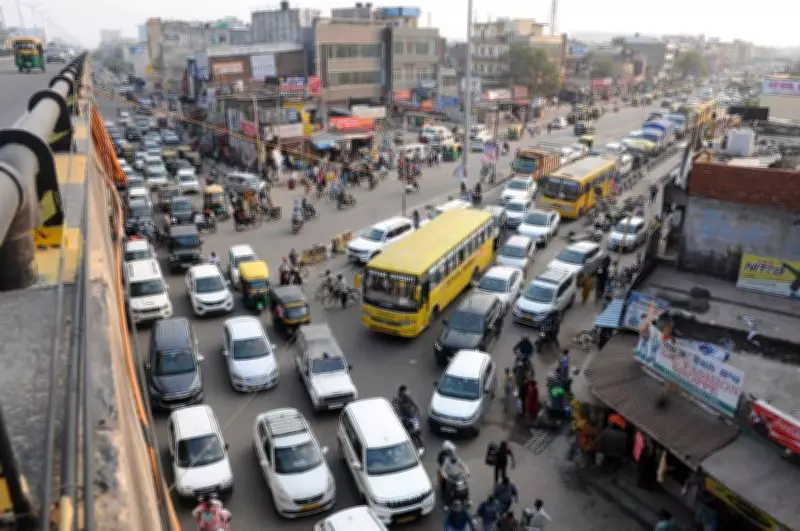
NHAI Set to Award Rs 3,342-Crore Zirakpur Bypass Project to Alleviate Traffic Congestion
In a significant move to address chronic traffic issues, the National Highways Authority of India (NHAI) is poised to award the work for two major greenfield highway projects in Zirakpur on Thursday. The projects, with a combined cost of approximately Rs 3,342 crore, include the 19.2-kilometer Zirakpur-Panchkula Bypass and a 10.3-kilometer spur linking it to the Ambala-Chandigarh Expressway. This initiative aims to provide much-needed relief from the traffic chaos that has long plagued the region.
Project Details and Bidding Outcomes
Senior NHAI officials have confirmed that letters of award (LOA) will be issued to the lowest eligible bidders for both projects. The financial bids were opened on March 20, attracting a total of 19 bids—nine for the bypass and ten for the spur. RKCPL Limited emerged as the lowest bidder for the Zirakpur-Panchkula bypass, quoting Rs 1,380 crore, which is 3.79% above the project reference cost of Rs 1,329.59 crore. Other notable bidders included Gawar Construction at Rs 1,407.99 crore and GR Infraprojects at Rs 1,429.27 crore.
For the spur project, Ceigall Infra Projects Private Limited submitted the lowest bid of Rs 603 crore, just 1.23% above the reference annuity of Rs 595.68 crore. Gawar Construction followed closely with a bid of Rs 606.99 crore. Both projects are being executed under the hybrid annuity mode (HAM), ensuring a structured approach to funding and implementation.

Completion Timelines and Expected Impact
The Zirakpur-Panchkula bypass has a completion period of two years from the date of work award, while the spur is expected to be ready within 18 months. If work commences by April, commuters could see the bypass operational by early 2028 and the spur by late 2027. This timeline promises to transform mobility across the southern and eastern corridors of the Tricity, which includes Chandigarh, Mohali, and Panchkula.
Zirakpur, known as the most congested pinch-point in the Tricity, experiences severe traffic overload due to its strategic location at the junction of routes from Delhi, Ambala, Patiala, Panchkula, and Shimla. The new bypass will feature a 6.195-kilometer elevated section, multiple flyovers, and a railway overbridge, creating a dedicated six-lane, access-controlled corridor. This will allow through-traffic to bypass Zirakpur entirely, connecting directly to Panchkula and onward to Himachal Pradesh.
The spur will further enhance this by intercepting Ambala and Delhi-bound traffic near Rajo Majra village and channeling it directly onto the bypass, ensuring such vehicles avoid Zirakpur's internal streets altogether. Key components of the corridor include two major bridges across the Ghaggar river, two interchanges, and 14 underpasses for seamless movement.
Broader Context: The Tricity Ring Road Project
This award marks a pivotal milestone in the larger Rs 12,000-crore Tricity ring road project, a 244-kilometer orbital network designed to redirect non-local traffic away from urban cores. Other components of the ring road are already progressing well:
- The 61.23-kilometer Ambala-Chandigarh Greenfield Corridor is 80% complete, with a target completion in May.
- The IT City-Kurali stretch is already open to traffic.
- The 27.37-kilometer Mohali-Sirhind corridor is 78% complete.
Once fully operational, the ring road is expected to divert thousands of vehicles daily from Chandigarh's internal arteries, significantly reducing travel times, lowering emissions, and strengthening freight and passenger connectivity across Punjab, Haryana, Himachal Pradesh, and Delhi-NCR.

Bid Snapshot and Key Figures
- Zirakpur-Panchkula Bypass: 19.2 km length, project cost of Rs 1,878.31 crore, 9 bids (with one non-responsive), lowest bidder RKCPL Limited at Rs 1,380 crore (3.79% above estimate), completion period of 2 years.
- Spur to Zirakpur Bypass: 10.3 km length, project cost of Rs 1,463.95 crore, 10 bids, lowest bidder Ceigall Infra Projects at Rs 603 crore (1.23% above estimate), completion period of 18 months.
This development underscores NHAI's commitment to enhancing India's infrastructure, particularly in high-traffic urban areas, and is set to bring substantial relief to commuters and boost regional economic growth.





