

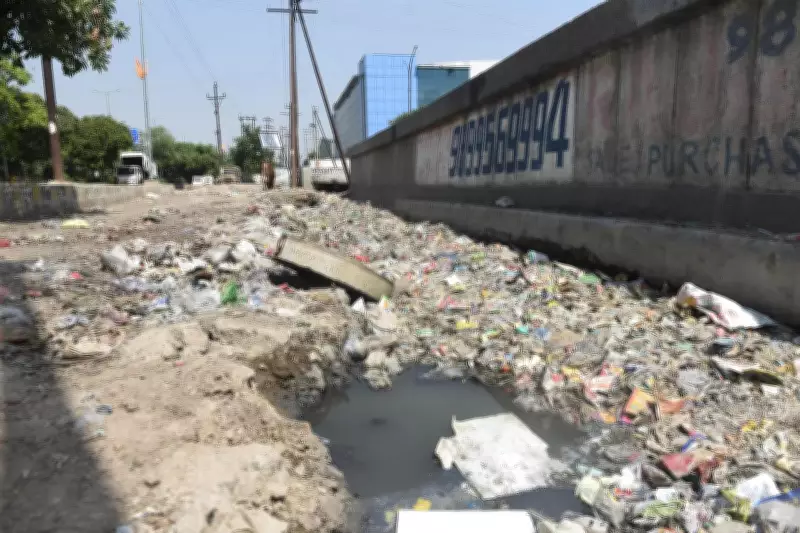
Noida Industrial Zone Grapples with Severe Sanitation Crisis
Over recent days, Noida's Phase 2 industrial sector has become a focal point of unrest and civic neglect. The area has experienced stone-pelting incidents and widespread protests by factory workers, accompanied by significant police deployment and barricading. However, amidst this turmoil, more persistent problems have remained unaddressed: drains clogged with garbage, plastic waste littering roadsides, and construction debris accumulating without intervention.
A Geography of Neglect
For residents and industrialists in sectors 81, 83, 84, and 85, shambolic civic conditions have become normalized—an unfortunate part of the local geography. These sectors host over 1,200 industries spanning hosiery, electronics, garments, pharmaceuticals, auto components, and plastic molding units. Despite this industrial density, sanitation remains a nightmare.
Vacant plots in neighboring Nayagaon, Yakubpur, and Salarpur villages are strewn with waste, while stray cattle graze through trash, consuming harmful substances including plastic. The Noida Authority recently penalized a sanitation contractor with a Rs 1 lakh fine for substandard work in the area, yet blocked drains and accumulated waste persist.

Industrialists Voice Frustrations
Arun Sharma, an LED light manufacturer operating from an 800-square-meter unit in B 61, Sector 83, Phase 2, directly blames sanitation workers for the mess. "They dump waste on vacant plots and leave it for days," Sharma stated. "Their visits are irregular—sometimes once a week or once every two weeks. The waste simply rots where it lies."
Sharma explained that without proper waste management systems in nearby villages, residents resort to dumping garbage in vacant plots, outside industrial unit boundaries, and into surrounding drains. However, he noted that most industrial units in the area treat waste within their compounds before disposal.
Mohan Singh, a plastic molding unit owner in Sector 80 who manufactures coolers and washing machines, echoed Sharma's concerns. "Sanitation is a major problem here because garbage isn't collected regularly," Singh said. "If you examine the dumped waste, you'll find it's mostly domestic—plastic wrappers, polybags, shopping bags, old clothes, and bottles. The core issues stem from village areas."
Village Residents Describe Systemic Failures
Madan Bhati, a Nayagaon village resident, highlighted erratic waste collection van timings. "Sometimes they come at 10 AM, 11 AM, or past noon. Sanitation workers don't show up regularly either. We're left with no choice but to dump waste in open spaces," Bhati explained.
Hari Bhati from Yakubpur village described similar challenges: "Garbage collection here isn't streamlined. Irregular timing and staff negligence cause frequent sanitation issues."
Ranjan Tomar, president of the Noida Village Residents Association, provided context: "These villages are mostly inhabited by industrial workers who leave early for work. Even if collection vans arrive at 10 AM, workers have already departed. Nobody wants garbage in their homes, so it ends up in vacant plots."
Authority Response and Ongoing Challenges
A senior Noida Authority official acknowledged that regular sanitation is conducted in industrial sectors, with several areas cleaned recently. The official cited multiple disruptions: staff absences due to Baisakhi on April 13, Ambedkar Jayanti on April 14, and worker protests over two days that further hampered routine sanitation.
"Today we penalized the contractor and directed thorough cleaning of the entire area. Drains and sewers will be cleaned soon," the official assured. Meanwhile, large and medium-sized industries claim compliance with bulk waste management rules, reporting no sanitation issues within their compounds.
The sanitation crisis in Noida's industrial zone underscores deeper civic management challenges, where worker protests and systemic neglect converge, leaving drains clogged and waste accumulating despite regulatory actions.






