

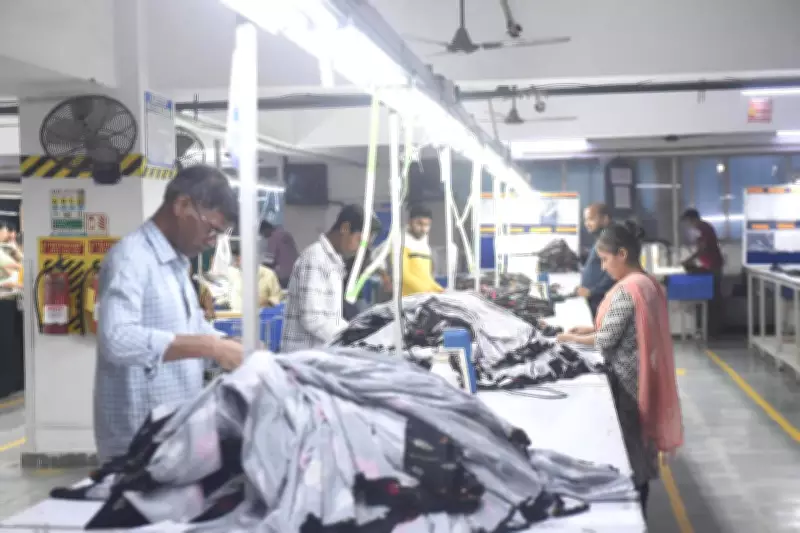
Noida Factory Workers Battle Extreme Heat Amidst Industrial Challenges
In the industrial sectors of Noida, factory workers engage in pressing, welding, cutting, and stitching tasks under summer temperatures that often surpass those experienced under direct sunlight. Tin roofs absorb intense heat, while cooling facilities are scarce, and ventilation is frequently limited to meet production demands. When shifts conclude, minimal relief is available as most workers return to cramped, poorly ventilated single rooms in colonies located in sectors 57, 58, and 59.
Heat Stress Emerges as Key Driver of Worker Discontent
While wage demands have captured headlines, researchers and labor experts assert that heat stress, endured silently, compounds financial pressures and poor living conditions, serving as a significant factor in recent unrest alongside pay disputes. A recent study conducted by HeatWatch and the Tata Institute of Social Sciences, based on interviews with 115 garment factory workers in the National Capital Region and Tamil Nadu, revealed alarming findings.
On a 100-point Heat Stress Index, factory workers recorded an average score of 59, classified as 'high stress.' For one in four workers, the HSI reached 70, a threshold categorized as 'critical.' The study noted that 87% of workers reported heat-related symptoms over the past year, including headaches, dizziness, weakness, and muscle cramps. Additionally, 88% felt completely drained by the end of the day during peak summer months.

Factory Conditions and Worker Testimonies Highlight Severe Challenges
The study further indicated that 73% of factories have metal or asbestos roofs. Nearly half lack instruments to monitor temperature or humidity, and one in three factories has no medical clinic or doctor on-site. When access was sought to garment factories in Noida, entry was denied. However, workers shared their experiences anonymously.
Satyendra, a worker from Hardoi employed at BKF Exports, described working in the ironing section where heated plates and steam maintain high temperatures and humidity year-round. "We perspire all through the day," he said, noting that conditions sometimes become so severe that workers fall ill or take unscheduled leave, forfeiting daily wages.
Shahida, who works in a stitching department at another garment factory, mentioned that her room remains unbearably hot during summer. While a few ceiling fans are installed in her section, workers in adjacent cutting areas are denied even this basic amenity. "We are told that windy conditions can disrupt the cutting work," she explained.
Sandeep, a laborer from Chhapra in Bihar working for a fabrication company, recounted feeling dizzy after fitting overhead metal sheets on a rooftop in scorching heat. "Heat exposure comes with the nature of my job. We are the ones who make these tin roof factories and cannot expect cool working conditions," he stated.
Factory Management Responses and Living Conditions
Factory managers claim to take measures for worker comfort. Amar Nagar, HR manager at Basant India Inc., a garment manufacturer in the NCR, asserted, "The workers are getting all the facilities inside." However, he did not confirm whether temperature monitors were installed or specific cooling arrangements were in place.
The burden persists beyond the factory gate. Most garment factory workers reside in Bishanpura village in Sector 58, where single-room tenements are arranged in rows, with every two or three rooms sharing a toilet. Typically, four to five workers share a room, each paying between Rs 1,000 and Rs 1,500 per month.
For families, the situation is more stark. Sandhya Devi, living with her husband and two children in one such room, pays Rs 5,500 monthly. "Summer months are pathetic when four members sleep in a small matchbox-like room," she said. Newer buildings offer air-conditioned accommodations at rents of Rs 10,000 per month, exceeding what most unskilled workers earn. "How can a worker afford a room for Rs 10,000 when he is earning Rs 15,000 a month?" she questioned.

Expert Analysis and Recent Wage Revisions
Prabal K Sen, a member of the board of governors at MDI Gurgaon and former professor at XLRI, highlighted the direct link between working conditions and recent unrest. "The recent unrest of the workers might have links with poor working and living conditions, which are indirectly linked with their income as well," he said. He noted that a wage increase could at least enable workers to access better housing, offering a modest but meaningful improvement.
Following protests, factories in Noida have revised wages, with new rates displayed at their gates. The revised monthly minimum salary now stands at Rs 13,690 for unskilled workers, Rs 15,059 for semi-skilled, and Rs 16,868 for skilled workers.
Satyendra welcomed the revision, stating, "It is a significant increase from the Rs 7,000 to Rs 10,000 that unskilled workers were previously paid." However, he remained cautious, adding, "It is good that the rates are fixed now. But whether they will pay double for night shifts and overtime is still to be seen."





