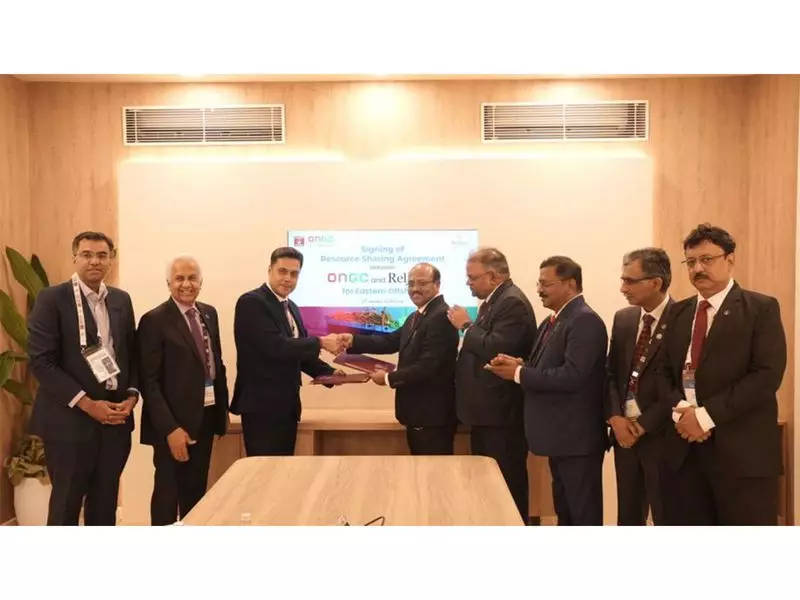
ONGC and Reliance Industries Forge Strategic Alliance for East Coast Deepwater Resources
In a significant development for India's energy sector, Oil and Natural Gas Corporation (ONGC), the state-owned oil and gas major, has entered into a strategic agreement with Reliance Industries Limited (RIL), the country's largest private conglomerate. This landmark pact focuses on the collaborative sharing of deepwater resources and infrastructure along India's East Coast, marking a pivotal step towards enhancing domestic hydrocarbon production and ensuring energy security for the nation.
Details of the Collaborative Agreement
The agreement, signed recently, enables both entities to leverage their respective expertise and assets in the challenging deepwater regions of the East Coast. Under this arrangement, ONGC and Reliance will share critical infrastructure such as pipelines, processing facilities, and other logistical resources. This collaboration is expected to optimize operational efficiencies, reduce capital expenditure, and accelerate the development of untapped deepwater reserves, which are crucial for meeting India's growing energy demands.
Strategic Importance for India's Energy Landscape
This partnership holds immense strategic importance as it aligns with the Indian government's broader objectives of increasing domestic natural gas production and reducing reliance on costly imports. The East Coast, particularly the Krishna-Godavari (KG) basin, is a prolific hydrocarbon region, and pooling resources here can lead to faster monetization of discoveries. By working together, ONGC and Reliance aim to overcome technical and financial challenges associated with deepwater exploration, thereby boosting the overall output and contributing to the nation's Atmanirbhar Bharat (self-reliant India) vision in the energy domain.

Potential Benefits and Future Implications
The collaboration is anticipated to yield multiple benefits, including:
- Enhanced Production: By sharing resources, both companies can expedite the development of deepwater fields, leading to increased gas production in the coming years.
- Cost Optimization: Joint utilization of infrastructure will help in minimizing operational costs, making deepwater projects more economically viable.
- Technological Synergy: ONGC's extensive experience in upstream operations combined with Reliance's advanced technological capabilities can drive innovation in deepwater exploration and production.
- Environmental Sustainability: Efficient resource sharing can reduce the environmental footprint by minimizing redundant infrastructure development.
This agreement sets a precedent for future public-private partnerships in India's oil and gas sector, potentially encouraging similar collaborations to harness the country's vast offshore potential. As India strives to meet its climate goals and transition towards cleaner energy sources, such initiatives are crucial for ensuring a steady supply of natural gas, which serves as a bridge fuel in the energy mix.
Conclusion
The ONGC-Reliance agreement represents a forward-looking approach to tackling the complexities of deepwater exploration on India's East Coast. By fostering cooperation between a public sector giant and a private industry leader, this pact not only aims to boost domestic production but also strengthens India's position in the global energy arena. Stakeholders and industry experts are closely watching this development, as its successful implementation could pave the way for a more resilient and self-sufficient energy future for the country.