

Panic Buying Fuels Dramatic Sales Spike in Gujarat
A short-lived but intense wave of panic buying at the end of March 2026 led to a sharp and significant surge in fuel sales across Gujarat, pushing monthly growth rates for petrol and diesel to more than double their annual pace. This unexpected spike created queues at fuel stations and temporarily disrupted normal consumption patterns.
March Sales Data Reveals Extraordinary Growth
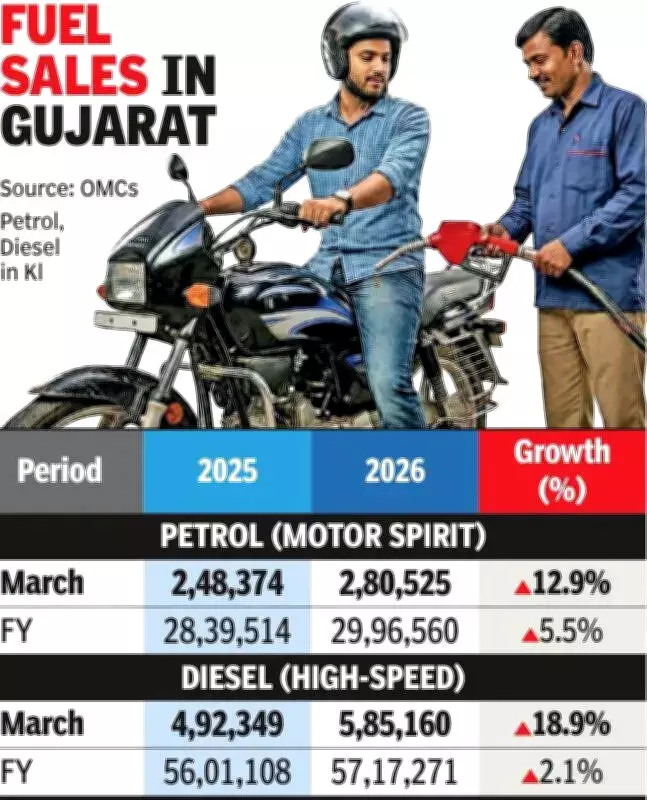
Data from public sector oil marketing companies reveals that petrol sales in Gujarat grew by 13% year-on-year in March 2026, reaching 2.8 lakh kilolitres. Diesel sales showed an even more dramatic increase of 19% to 5.85 lakh kilolitres. These figures stand in stark contrast to the much more modest annual growth rates of 5.5% for petrol and 2.1% for diesel recorded during the entire fiscal year 2026.
The March numbers grew significantly faster compared with the entire year's performance, indicating a temporary but powerful deviation from normal consumption trends. Oil company officials and petroleum dealers confirmed that March sales were driven by a short-lived demand spike that continued into the subsequent week.

Rumors Trigger Widespread Panic Purchases
Sanjib Behera, Executive Director and state head of the Gujarat state office for Indian Oil Corporation Limited, explained the situation clearly. "The rumour-triggered panic buying led to a marked rise in the fuel sales in Gujarat in March. Some of the units reported two or three times their average daily sales in a single day. This was pure panic purchases even though there was no shortage during these two days. In fact, stocks are very much in place at depot and refinery levels."
The speculation about potential fuel shortages triggered a rush at fuel stations throughout the state. Motorists queued up to fill their tanks completely, with many stocking extra fuel beyond their immediate needs. This frenzy lasted approximately three to four days before supplies normalized and public panic gradually subsided.
Dealers Confirm Abnormal Sales Patterns
Padmajay Rathod, a petroleum dealer based in Ahmedabad, provided additional context. "The sale in March was certainly abnormal due to the ongoing geopolitical situation. Rumours of an impending shortage due to limited oil supplies led to panic buying of petrol and diesel. The situation prevailed for about two days wherein most customers opted to get their vehicle fuel tanks full. As a result, volumes were significantly high."
The scale of the panic buying becomes particularly clear when examining specific daily figures. On March 23 alone, fuel retailers across Gujarat sold a total of 17,798 kilolitres of petrol, representing a staggering 119% increase over average daily sales. Diesel sales on the same day reached 26,935 kilolitres, which was 67% higher than normal sales volumes.
Broader Annual Trends Remain Subdued
Despite the dramatic March jump, the broader trend for fiscal year 2026 remained relatively subdued, especially for diesel consumption which is closely linked to economic activity levels. Analysts noted that the muted annual growth indicates stable but not accelerating fuel consumption across the state.
Efficiency gains in vehicles and evolving mobility patterns have also contributed to tempering overall demand growth. Dealers observed an increasing trend of customers refilling their vehicle tanks completely during every visit, a behavior that may have been amplified during the panic buying episode.
The March 2026 fuel sales spike in Gujarat serves as a clear example of how rumors and perceived scarcity can dramatically alter consumer behavior in the short term, even when actual supply conditions remain stable and adequate to meet normal demand levels.






