Perfect Weather Mix Keeps India's Food Prices Low in 2025-26
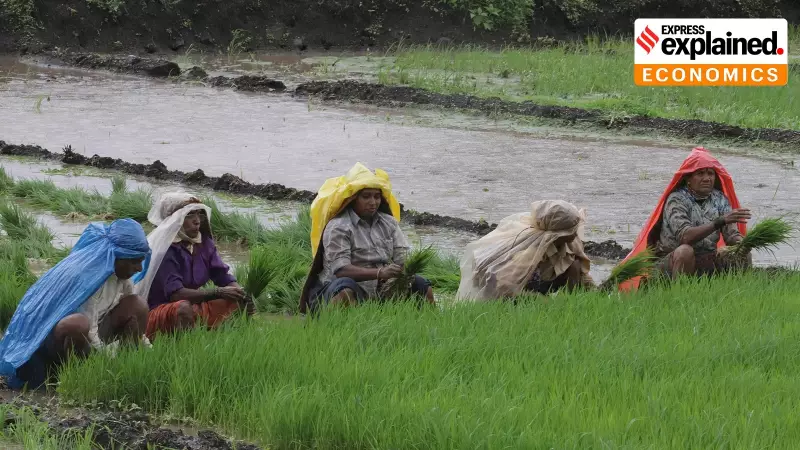
The year 2025-26 has turned into a bumper crop season for India. Surplus monsoon rains and moderate temperatures have created an ideal environment for farming. This combination has effectively kept food inflation in check across the country.
A Goldilocks Scenario Unfolds
India experienced above-normal rainfall from May through October in 2025. The monsoon delivered plenty of water to farms. At the same time, temperatures remained relatively moderate throughout the year.
The annual mean land surface air temperature in 2025 was only 0.28°C above the 1991-2020 average. High temperature departures occurred mainly during January to April. For the remaining eight months, mean temperatures stayed near or below normal levels.

This situation contrasts sharply with 2024. That year set records as the warmest since 1901, with an annual mean temperature anomaly of 0.65°C. High temperatures in 2024 combined with El Niño effects to hurt agriculture.
Impact on Agriculture and Inflation
The poor monsoon and high temperatures of 2023 severely affected India's agricultural production. This led to prolonged retail food inflation, averaging over 8.5% year-on-year from July 2023 to December 2024.
Although 2024 brought a good monsoon, its benefits were delayed due to record temperatures. Food inflation remained elevated until December 2024.
The turnaround came in 2025. Annual consumer food price inflation averaged minus 0.2% during the year. For July to December 2025, it dropped to minus 2.7%. Above-normal monsoon rains and below-normal temperatures from May onward made this possible.
Current Rabi Season Shows Promise
The benefits of favorable weather are now visible in the current rabi cropping season. Water levels in India's 161 major reservoirs reached 90.8% of full storage capacity by end-October. Surplus rains filled farm ponds and recharged groundwater tables.
Cool temperatures aided germination, leading farmers to sow record areas under several crops:
- Wheat: 334.17 lakh hectares, up from 328.04 lh in 2024-25
- Mustard: 89.36 lh, up from 86.57 lh
- Rabi maize: 25.24 lh, up from 23.49 lh
- Red lentil/masoor: 18.12 lh, up from 17.66 lh
Crop Status and Expert Views
Wheat sown in November is now in the tillering and stem elongation stage. Good germination and crop vigour point toward a potential record harvest.
Rajbir Yadav, principal scientist at the Indian Agricultural Research Institute in New Delhi, stated: "The germination, crop vigour and tillering have been excellent this time. As things stand and assuming no sudden jump in temperatures, we are headed for a record harvest."
The wheat crop will head in 80-95 days after sowing. Maximum temperatures should stay in the early-thirty °C range during grain formation. La Niña conditions currently prevailing suggest colder-than-normal winters, reducing risks of temperature surges.
For potatoes, production is expected to rise by 3-4% from the 58.1 million tonnes of 2024-25.
S. Soundararadjane, CEO of HyFarm, noted: "This season, both tuberisation and tuber bulking are good. And there's hardly any disease either."
Mustard faces some challenges from parasitic weeds in Haryana and Rajasthan, but overall conditions remain favorable.
Food Inflation Outlook Remains Positive
Potato prices in Uttar Pradesh mandis have halved to Rs 600-700 per quintal from Rs 1,200-1,300 a year ago. Retail inflation for vegetables was minus 18.5% year-on-year in December, while pulses saw minus 15.1%.
Bumper harvests from the Goldilocks weather combination are not the only factor. Domestic stocks and international supply positions also contribute to low inflation.
Government godowns held 95.4 million tonnes of rice and wheat as on January 1. This is nearly 4.5 times the required level and exceeds previous highs. Wheat stocks have improved compared to the last three years.
Globally, the US Department of Agriculture projects record or near-record production for several crops in 2025-26:

- Wheat driven by Argentina
- Rice from India
- Corn/maize from the US
- Barley from the European Union
- Soyabean from Brazil
- Palm oil from Indonesia
Unlike 2021 and 2022, no major supply shocks from pandemics, wars, or export controls are pressuring world prices today. Disturbances in Iran and Venezuela have caused minimal disruptions to global agri-commodities trade.
Barring sudden extreme weather events like a new El Niño, a resurgence of food inflation appears unlikely. The Goldilocks combination continues to benefit Indian agriculture and consumers alike.