

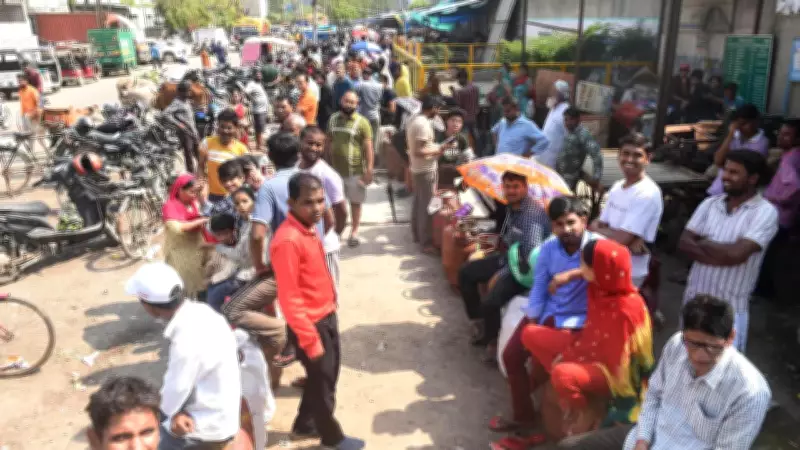
PNG Connection Applications Skyrocket Across NCR Amid LPG Supply Crisis
Residents and businesses in the National Capital Region (NCR) are rushing to secure piped natural gas (PNG) connections as a severe crisis in liquefied petroleum gas (LPG) cylinder availability unfolds. This supply chain disruption, directly linked to escalating tensions between the United States and Iran, has triggered an unprecedented surge in demand for PNG alternatives since the beginning of March.
Record-Breaking Application Numbers in Noida and Ghaziabad
In Noida alone, authorities have received more than 4,000 applications for PNG connections since March 1. The neighboring district of Ghaziabad has recorded an even higher figure, with approximately 5,000 applications submitted during the same period. Officials directly attribute this dramatic spike to the ongoing supply constraints and growing uncertainty surrounding LPG cylinder availability.
"Typically, Ghaziabad receives around 70 to 80 applications in a single day," explained Amit Tiwari, the district supply officer. "This number has now skyrocketed to over 200 applications daily. The surge in PNG connection requests began noticeably around March 4, and we are prioritizing their processing at the earliest possible opportunity."

Delhi Witnesses Significant Registration Increase
The trend extends beyond the immediate NCR districts into the national capital. The official IGL Connect mobile application has registered more than 22,000 new user registrations in just the first fifteen days of March. This represents a substantial 14 percent increase in the registration rate compared to February, clearly indicating a sharp rise in consumer interest and a proactive shift toward PNG infrastructure.
LPG Cylinder Delivery Doubles to Meet Soaring Demand
In response to the crisis, district administration officials have ramped up LPG cylinder distribution efforts. Currently, over 40,000 domestic LPG cylinders are being delivered daily across both Noida and Ghaziabad to meet the overwhelming demand. This delivery volume is double the number of cylinders distributed before the West Asia conflict intensified. Noida is home to roughly 10 lakh LPG consumers, while Ghaziabad has an estimated consumer base of 12 lakh.
Government Incentives Aim to Boost Commercial PNG Adoption
To encourage commercial establishments to transition from LPG to PNG, the Ministry of Petroleum and Natural Gas has introduced a new policy. The ministry has issued an order allowing any commercial unit that applies for a PNG connection to retain 50 percent of their existing LPG cylinder quota until the new PNG connection is fully installed and operational.
"The Ministry of Petroleum and Natural Gas has approved an additional 20 percent commercial LPG quota, bringing total state allocations to 50 percent," stated Smriti Gautam, Noida District Supply Officer. "This initiative is designed to promote PNG adoption and alleviate sector-wide shortages. Priority for these quotas is being given to restaurants, hotels, and industrial canteens that formally register for PNG connections."
District Magistrate Medha Roopam affirmed the administration's commitment, noting that officials would actively assist commercial units in securing the necessary approvals and facilitating a smooth transition to PNG connections.
Commercial Sector Response Remains Tepid Despite Incentives
Despite these government incentives, uptake among commercial users has been surprisingly limited. Official data reveals that since March 1, the district supply department has received only 164 such applications in Noida and approximately 100 in Ghaziabad. Currently, the two districts cumulatively have around 1,000 commercial PNG connections each, highlighting the vast potential for growth.

Industry Leaders Cite Procedural Hurdles as Major Barrier
Industry representatives point to significant bureaucratic and procedural challenges as the primary reason for the slow commercial adoption. Varun Khera, President of the National Restaurant Association of India's Noida chapter, emphasized that a large number of eateries and food service establishments still heavily depend on traditional LPG cylinders.
"For commercial establishments such as restaurants and canteens, obtaining local municipal approvals or building plan clearances is often necessary before they can even apply for PNG connections," Khera explained. "We sincerely hope the administration can help streamline and facilitate this transition at the earliest. Many restaurants are already struggling to stay afloat during this ongoing LPG cylinder crisis, and these procedural delays only exacerbate the situation."
The confluence of geopolitical tensions disrupting supply chains and the subsequent consumer pivot toward PNG underscores a critical shift in energy consumption patterns within the NCR. While domestic users are rapidly embracing the change, the commercial sector's transition faces tangible hurdles that require immediate administrative attention and support.





