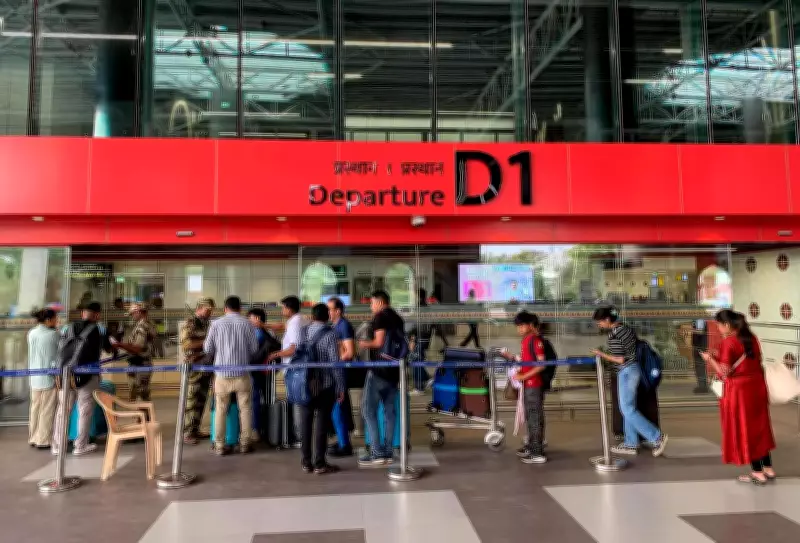
Several slots for airlines at the Pune airport are likely to remain vacant for the time being, contrary to earlier assurances that all 15 additional slots allotted to the facility by the Indian Air Force (IAF) last year would become operational from May 1, 2026.
Current Situation at Pune Airport
Airport director Santosh Dhoke on Wednesday said the prevailing aviation scenario, marked by airlines cutting routes and trying to reduce fuel costs, had slowed down the process.
“We have opened all the slots for airlines and some have already been taken up. Air India has started its Bagdogra service and FLY91 is expected to launch its Mangaluru flight next month. However, some slots are still vacant and airlines can utilise them whenever they want. Carriers are moving cautiously at present and will expand only when they feel the conditions are favourable,” Dhoke told TOI, without specifying the exact number of unoccupied slots.

In March this year, airport authorities had stated that flights would commence in all 15 slots. But the slots, allotted by the IAF in June 2025, have largely remained unused since then.
Reasons Behind Vacant Slots
Airport officials said the current rise in aviation fuel costs had forced airlines to rethink expansion plans. “Air India has already announced a temporary reduction of around 15% in its domestic operations for three months from June 1. Other airlines may also follow suit because of rising fuel prices. In such a scenario, new flights from airports, including Pune, are unlikely over the next few months. Several slots may continue to remain vacant until the situation improves,” another airport official said, choosing anonymity.
In an official statement, Air India said: “In continuation of our previously announced adjustments to select international services between June and Aug 2026, we have temporarily rationalised operations on certain domestic routes during the same period, with a reduction in frequencies on select routes. These adjustments are driven by the sustained impact of high fuel prices on overall operations. Air India will continue to monitor demand and operating conditions closely, with a view to restoring frequencies as conditions stabilise.”
Impact on Airfares
Travel industry representatives said the reduction in flights was already pushing up domestic airfares.
“The impact has begun. I had booked IndiGo tickets to Srinagar for clients at reasonable fares for travel last week, but the flight got cancelled. Now, when I am trying to book tickets for July, usually considered a non-peak period, fares are touching Rs 18,000,” said Santosh Gupta, owner of Shree Vinayak Holidays, adding, “With airlines reducing frequencies, demand will remain high while supply drops sharply. We expect fares on several domestic routes to rise by 30-35%.”
Another travel company representative said expensive domestic fares could once again push travellers towards international destinations. “There have been many occasions when international fares were cheaper than domestic routes. If domestic ticket prices continue to rise sharply, many travellers may prefer overseas destinations instead. However, those with urgent or unavoidable domestic travel plans will suffer the most,” he said.
Expert Analysis
Aviation analyst and expert Dhairyashil Vandekar said that when airlines face these pressures, one of the first steps is to trim flights that are less profitable. “The decision will reduce the total number of seats available in the domestic market. If fuel and currency pressures don’t ease, more Indian airlines may follow. The net effect will be a supply crunch on popular routes and an airfare spike. To protect both passengers and airlines interest, the ministry of civil aviation (MoCA) must address root costs like uniformity in VAT across states, and upgrading airport infrastructure to reduce ground delays,” he told TOI.