Pune's Commercial LPG Cylinder Shortage Cripples Institutional Kitchens, Hits Industry
A critical shortage of commercial LPG cylinders has escalated into a full-blown crisis for institutional kitchens across Pune, severely disrupting meal services for patients undergoing medical trials and workers in factory canteens. The situation has become so dire that it is now threatening attendance and production in the industrial sector, with industry representatives sounding alarms about broader economic consequences.
Impact on Medical Trials and Factory Operations
Aditi Ambavane, co-partner of Thee CCS, a corporate catering firm with 25 years of experience supplying approximately 5,000 meals daily to manufacturing units, children's centers, and clinical research facilities, described the situation as "extremely difficult." She explained that cooking staff are enduring significant physical strain by switching to induction cookers and traditional wood-fired stoves just to keep kitchens operational.
"Without regular LPG supply, we are somehow managing," Ambavane stated. "The shortage is even affecting kitchens serving clinical research centers, where patients undergo medical trials and require carefully tailored diets. This disruption could compromise critical health research."

Manpower Crisis and Industrial Fallout
The manpower situation has deteriorated sharply following the Holi festival, with numerous kitchen workers refusing to return from their hometowns after learning about the LPG shortage. Many institutional kitchens are now operating with reduced staff while struggling to maintain alternative cooking arrangements.
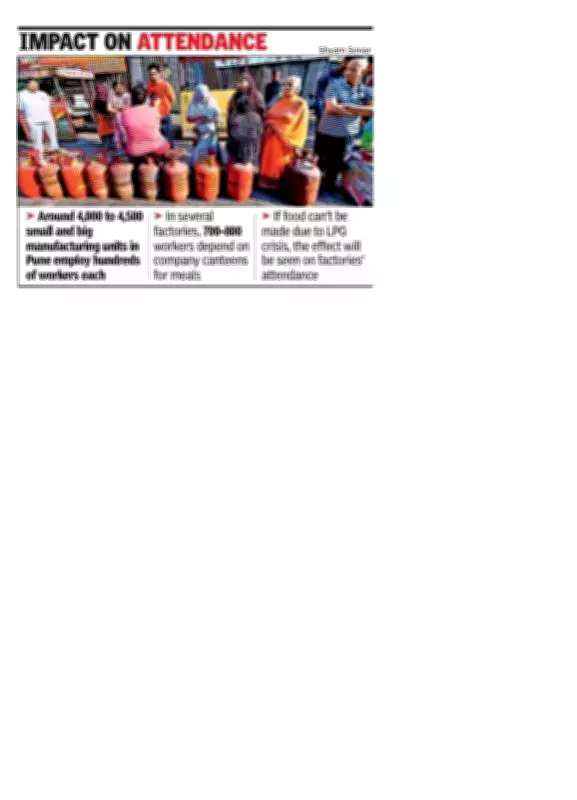
Dilip Gupta, vice-president of the Mahratta Chamber of Commerce, Industries and Agriculture (MCCIA) in Pune, confirmed that the shortage is affecting factory canteens across the entire industrial sector. "A substantial portion of India's automobile component manufacturing is concentrated in Maharashtra, with Pune playing a major role in that industry," Gupta noted. "Approximately 4,000 to 4,500 small and large manufacturing units in Pune employ hundreds of workers each. In several factories, 700–800 workers depend entirely on company canteens for their meals."
Gupta warned of serious consequences: "If food cannot be prepared adequately, the effect will be directly visible on worker attendance and overall production output. This isn't just a catering problem—it's an industrial productivity issue."
Catering Businesses Forced to Scale Back
Harsh Manoj Murarka, owner of Elite Stuff Catering in Baner, reported that his business has been forced to stop supply to some corporate clients due to the unavailability of commercial cylinders. "Our staff strength has reduced significantly because workers have returned home due to lack of work," Murarka explained. "The business is almost down to minimal operations, and we're struggling to maintain even basic services."
Ksshetij Shimpi, partner at The Corporate Catering Services, highlighted the potential for broader economic disruption. "If food services continue to be disrupted, migrant workers may decide to return to their home states permanently," Shimpi cautioned. "This could have severe repercussions for local industry and the Pune economy. Authorities must recognize this as an emergency and ensure priority supply for such essential services."
Alternative Cooking Methods and Physical Strain
The shift to alternative cooking methods has placed extraordinary physical demands on kitchen staff who are unaccustomed to working with traditional chulhas (wood-fired stoves) for extended periods. This transition has not only reduced cooking efficiency but also raised concerns about workplace safety and employee wellbeing in institutional kitchens.
The crisis has exposed vulnerabilities in Pune's supply chain for essential cooking fuel, particularly for institutions that serve vulnerable populations like medical trial patients and industrial workers who depend on employer-provided meals. Industry observers note that the timing is particularly problematic as factories seek to maximize production during peak manufacturing seasons.

As the situation continues to unfold, catering businesses and industrial representatives are calling for immediate intervention from authorities to prioritize commercial LPG cylinder distribution to institutional kitchens, warning that prolonged disruption could have cascading effects on healthcare research, industrial output, and the local economy.