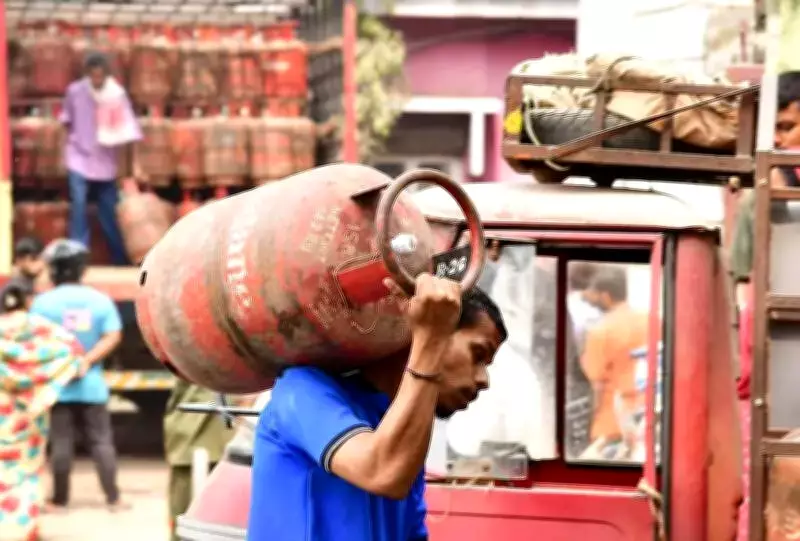
Pune Restaurants Receive Partial LPG Relief Amid Ongoing Supply Challenges
Commercial LPG cylinders have begun arriving at select restaurants across Pune, offering a measure of relief to the city's beleaguered hospitality sector. This development follows recent government directives that authorized an additional allocation of cooking gas. However, this relief remains partial and inconsistent, with many establishments still grappling with severe shortages that continue to disrupt their daily operations.
Government Allocation Provides Limited Respite
The state government, acting on instructions from the Union petroleum ministry, has increased commercial LPG availability by approximately 20% beyond the previously restricted supply levels. This allocation operates on a priority-based distribution system, which has initiated some flow of cylinders to eateries. Despite this positive step, the supply remains uneven and inadequate, as essential services continue to receive precedence in the distribution chain.
Rahul Ramnath, a founding member of the United Hospitality Association in Pune, highlighted the ongoing challenges. "Restaurants are currently receiving only about 25% of their earlier quota. If our requirement was around seven cylinders a week, we are getting hardly two," he explained. Ramnath further noted the inconsistency in supply, stating, "Last week, we got around three cylinders, but this week we have received only one so far, and there is no assurance on the remaining supply."

Operational Difficulties and Menu Adaptations
The uncertainty surrounding LPG availability has forced restaurants to make significant operational adjustments. Many establishments are reluctant to fully restore their original menus, particularly dishes that require extensive cooking time or high heat. "We have not reintroduced many items yet as supply is not assured. Instead, we are adapting. For example, dishes like chilli chicken are being modified into tandoori versions that rely less on LPG," Ramnath elaborated.
This adaptation strategy reflects the broader struggle within the industry to maintain service quality while coping with limited resources. The situation has created a challenging environment where restaurateurs must balance customer expectations with practical constraints.
Many Establishments Still Await Supplies
Despite the government's allocation efforts, numerous restaurants and hotels in Pune have yet to receive any commercial cylinders. Saili Jahagirdar, a restaurateur and chapter head of the National Restaurants Association of India (NRAI) in Pune, shared her experience. "I have not received any commercial cylinders for my restaurant so far. My distributor is saying supply may start in the next three to four days, so I'm waiting for that," she said.
Jahagirdar also revealed insights from meetings with local authorities. "When we met the collector and deputy collector, they told us clearly that restaurants are not a priority right now. They said whatever limited supply is there is going to hospitals, hostels, schools, ashrams and crematoriums." This prioritization framework explains why many hospitality businesses continue to face supply challenges.
Even for those who eventually receive cylinders, the outlook remains difficult. "Even when supply starts, it's going to be very limited — maybe one or two cylinders a week — and at a much higher cost, which makes it very difficult for us to manage operations and break even," Jahagirdar pointed out.
Broader Impact on Hospitality Operations
The LPG shortage has created a ripple effect across Pune's hospitality landscape. A manager at a prominent city-based hotel, who requested anonymity, described the grim situation. "The situation is very grim right now. Most distributors have stopped taking calls as they don't have any clear answers. We haven't received any LPG supplies yet. We are somehow managing on induction and firewood, but it's not sustainable."

The impact extends beyond daily restaurant operations to larger events and celebrations. "There has been a major impact on weddings and banquets. For live cooking, you need cylinders, and without that we are forcing guests to stick to fixed menus. Even events like bhandaras have been cancelled," the hotel manager added.
Concurrent Fuel Price Increases Add to Burden
Compounding the supply challenges, state-run oil companies have announced significant price increases for commercial LPG cylinders. The 19kg commercial cylinders have seen hikes ranging between Rs195 and Rs218, while 5kg mini cylinders have become costlier by Rs51. These price adjustments add financial pressure to establishments already struggling with limited supply.
Additionally, premium fuel prices have also risen. According to the latest Indian Oil Corporation (IOC) rate revision, XP100 premium petrol now costs Rs160 per litre, up from Rs149, while XTRAGREEN premium diesel has increased to Rs95.59 per litre from Rs94.03. These concurrent price hikes across different fuel categories create additional operational challenges for the hospitality sector.
The combination of inconsistent supply, prioritization of essential services, and rising fuel costs creates a complex challenge for Pune's restaurant industry. While the recent government allocation represents a step toward addressing the LPG shortage, the hospitality sector continues to navigate significant operational and financial hurdles as it seeks to maintain service standards amid these constraints.