

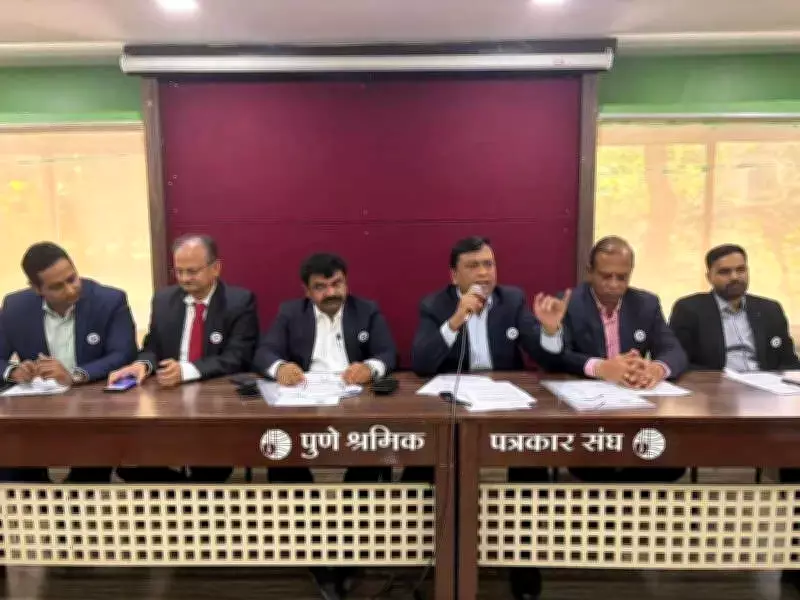
Pune RMC Industry Halts Operations, Demands Regulatory Clarity
In a significant development affecting Pune's construction sector, ready mix concrete (RMC) operators across the city have voluntarily suspended manufacturing activities. This pause comes as industry representatives seek the establishment of comprehensive, unified guidelines from all concerned authorities. Simultaneously, the Pune Municipal Corporation (PMC) has intensified its enforcement campaign against non-compliant facilities.
PMC Demolition Drive Targets Illegal RMC Plants
On Wednesday, the PMC's anti-encroachment department executed a major demolition operation. Officials razed illegal constructions, including seven ready mix concrete plants, covering an expansive area of 52,000 square feet. These facilities were located in prominent Nagar Road localities such as Lohegaon and Kharadi. According to Somnath Bankar, head of PMC's anti-encroachment department, "The constructions were carried out without proper permission from the corporation. The administration demolished them after issuing appropriate notices."
This recent action is part of a broader three-month crackdown during which PMC has sealed or demolished approximately 30 RMC plants that failed to meet compliance standards. The civic body initiated these measures following numerous complaints from residents about excessive dust pollution emanating from these operations.

Industry Voices Concerns Over Regulatory Fragmentation
Pradeep Walhekar, president of the Pune RMC Association, explained the rationale behind the production halt. "RMC units in and around Pune face enforcement actions from multiple authorities, including the PMC, Pimpri Chinchwad Municipal Corporation, local police, and the Maharashtra Pollution Control Board. Each of these entities operates with different norms and procedures," Walhekar stated.
The association, representing 150 RMC units with a collective annual turnover of Rs 5,000 crore, emphasizes that the core issue is not regulation itself but the "lack of coordination, clarity, and uniform implementation" across various governing bodies. Walhekar clarified that this suspension is not a strike but a "structured improvement phase" designed to address systemic issues.
Industry representatives highlight practical challenges, including restricted supply windows. A member of the RMC association revealed, "We have only four hours, between 12 PM and 4 PM, to deliver concrete to construction sites. This creates severe logistical problems and fosters unhealthy competition among operators, sometimes leading to norm violations. Nighttime supply is impossible due to bans on construction activity during those hours."
Formal Requests for Standardized Procedures
The Pune RMC Association has formally communicated with key authorities, including the PMC, Pimpri Chinchwad Municipal Corporation, police departments, and the Maharashtra Pollution Control Board. In these communications, the association has urgently requested the establishment of uniform operating procedures for all RMC plants in the region.
"We have previously engaged in discussions with developer organizations and contractors' associations," Walhekar added, indicating ongoing efforts to build consensus among stakeholders in the construction ecosystem.
Broader Implications for Pune's Construction and Real Estate Sectors
The Credai Pune chapter has expressed serious concerns about the potential ripple effects of the RMC production pause. Developers may be compelled to revert to traditional on-site concrete mixing methods, which typically generate significantly more dust pollution. This shift also presents substantial challenges in storing essential materials like sand, cement, aggregates, and fly ash, complicating quality control processes.
A Credai official warned, "Halting RMC operations will likely increase heavy vehicle traffic on Pune's roads. A single RMC truck would be replaced by multiple material transport vehicles. The current disruption is already affecting project timelines and could create cascading effects throughout the real estate value chain."

The situation underscores the critical need for coordinated regulatory frameworks that balance environmental concerns, urban development needs, and industrial operational efficiency. As Pune continues its rapid urbanization, the outcome of this standoff between RMC operators and municipal authorities will have lasting implications for the city's infrastructure growth and real estate dynamics.





