

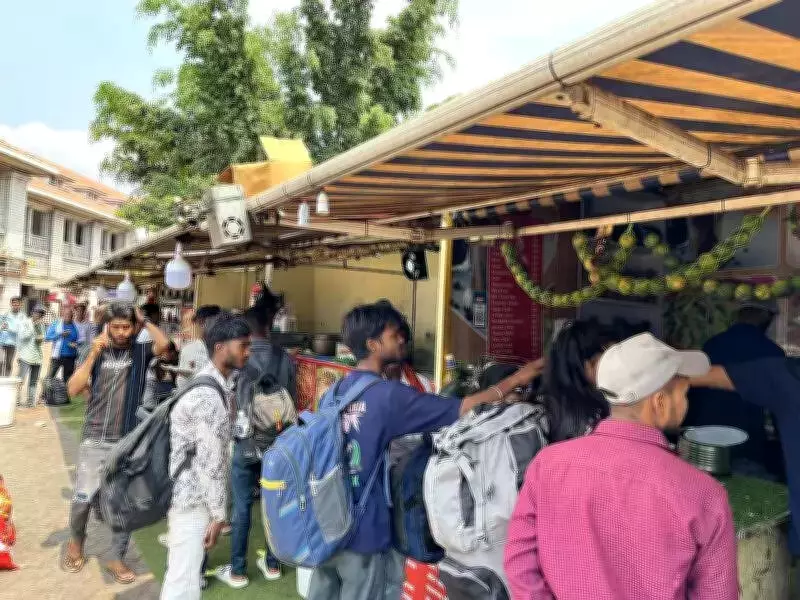
Pune Railway Station Eateries Face Imminent Closure Amid Severe LPG Shortage
Scores of food outlets that serve thousands of passengers daily at Pune railway station are facing an escalating struggle amid the ongoing LPG crisis. Those operating these eateries, both inside the station premises at platform number 1 and outside in the front circulating area, have claimed that the situation is becoming increasingly grim. Many have stated they may even have to close their outlets soon if the supply issues are not resolved.
Critical Supply Shortage Threatens Daily Operations
Virat Tomar, manager of around 10 outlets in the circulating area, revealed the precarious nature of their current situation. "We have just one extra commercial cylinder left in each of our outlets, and are somehow managing. These will sustain for two or three days at the maximum. Thereafter, we may have to shut shop. Things are looking bad," Tomar explained. The station eateries typically sell popular food items like vada pav, samosa, biryani, chole bhature, tea, coffee, Chinese food, and fruit juices to the massive daily passenger traffic.
Another eatery representative detailed their operational adjustments: "We sell both snacks and meals, but we are now rationing the menu. Items that take a long time to cook are being made just once or twice in large batches. There are ways by which one can procure a cylinder at a very high price, but we cannot afford to do this consistently."

Passenger Impact and Migrant Worker Concerns
Pune railway station records the movement of more than 160,000 passengers per day, creating substantial demand for affordable food options. On a recent Thursday, the junction was bustling as usual with many passengers being migrant workers headed back home to states like Bihar, Uttar Pradesh, and Jharkhand.
One such migrant worker, Ramesh Ojha, who was at the station since morning to catch the Pune-Danapur Express scheduled to depart at 9 PM, expressed his dependence on these eateries. "I work in Talegaon as a daily wage worker and have limited funds for a meal, which will buy items like samosa or vada pav. For people like me, it is not possible to bring our own food. We have to depend on the eateries here," Ojha stated, highlighting how the crisis directly affects vulnerable travelers.
Black Market Purchases and Pricing Constraints
At platform number 1, a representative running the Jan Ahaar food outlet admitted that they are being forced to buy commercial LPG from the black market to continue operations. "The cost is nearing Rs 5,000 or more per cylinder against the regular MRP of Rs 1,700. We are trying hard to remain open but it is difficult to provide hot food to customers. The costs of items we serve are set by the railways and Indian Railway Catering and Tourism Corporation (IRCTC). We cannot increase them," he explained.
This financial pressure has led to reduced operating hours. "As a result, we are forced to close outlets early. People understand that an LPG crisis is going on, but they are hungry, too. We are trying to cope with the demand," the representative added, illustrating the difficult balance between customer needs and operational viability.
Railway Administration Response and Monitoring
Hemant Kumar Behera, the divisional commercial manager and PRO of the Pune rail division, stated that authorities are monitoring the LPG situation each day. "Food rates at outlets inside the railway station are ascertained by the IRCTC. The prices at the 10 outlets located in the front circulating area are fixed by the railway board. We are talking to all outlet managers and authorities daily about the LPG problem," Behera claimed.
He further noted that "a WhatsApp group has been created for the same, but no one has flagged any concerns till now. We are in touch with our three base kitchens as well, from where food goes to different trains," suggesting a potential communication gap between ground-level operators and administrative authorities regarding the severity of the crisis.
The situation remains tense as both food outlet operators and passengers await a resolution to the LPG supply issues that threaten to disrupt essential services at one of Maharashtra's busiest transportation hubs.






