From Factory Worker to Lakhpati Didi: Pune Woman's Sweet Corn Success Story
In Perne village, Pune district, Nilofar Amjad Mujawar has carved out an inspiring entrepreneurial journey over the past five years. As a member of a self-help group, she operates a thriving sweet corn business that not only sustains her family but also empowers dozens of local women.
A Transformative Business Model
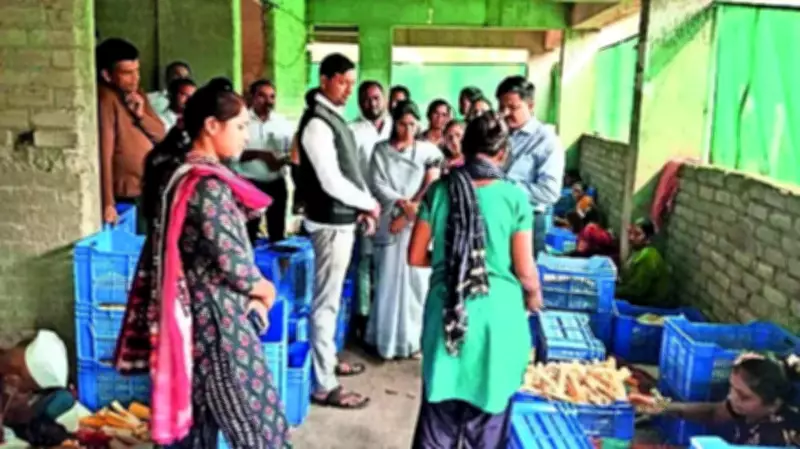
Nilofar's unit procures nearly 7,000 kilograms of sweet corn daily, with the 45 women employed there processing and supplying three to four tonnes of corn to food companies every day. This enterprise provides a sustainable income, earning Nilofar the esteemed title of Lakhpati Didi. Her remarkable transition from working in a factory for Rs 300 per day to becoming a business owner with over Rs 1 lakh monthly income showcases the power of determination and community support.
Building Trust and Efficiency
Nilofar, now 35, studied until Standard XII in her village school in Daund before marrying an autorickshaw driver. Prior to moving to Perne, she worked in a corn company earning Rs 300-350 daily. "In Perne, I decided to go into the corn business myself and the 10 women in my SHG concurred," she recalls. Despite knowing husking, cutting corn, and stripping kernels, she lacked networks for raw material and product supply.

She approached her former employer with a proposition: give her one tonne of corn daily, and she would deliver finished products. "They gave it to us on trial and we delivered. For a year, we did that. The company paid the women and I got Rs 2 per kg by selling waste from cobs to dairy farmers," Nilofar explains, noting she started in a building's basement.
Strategic Growth and Community Impact
Realizing that managing the entire business would yield more profit and better work, Nilofar expanded operations. Her husband supported her as she built industry contacts and negotiated with farmers and food processing companies. "Our work was systematic. We didn't care what time the truck arrived, we would unload cobs and maintain efficiency. Farmers like people who pay upfront. Companies want timely products. We checked all boxes," she adds.
Today, her business handles 8,000kg of raw material daily. She buys specific sweet corn seeds for farmers, ensuring quality harvests. "We are thorough with finances, payments, and work. We don't waste time. Now we're starting a tamarind cleaning and packaging business with ordered machines," Nilofar states, emphasizing reinvestment over loans or vehicles.
Government Support and Wider Inspiration
Shalini Kadu, Project Director of District Rural Development Agency, highlights the zilla parishad's role in forming SHGs and facilitating loans. "The agency helps prepare bank documents and counsels on government schemes. In buyer-seller meets, these groups expand their market," Kadu notes. She adds that women like Nilofar inspire others, offering flexible work in shade instead of farms, allowing them to manage jobs while children are in school.
Nilofar's story is a testament to how grassroots entrepreneurship can drive financial independence and community upliftment in rural Pune.