

Punjab Government Confronts Urban Infrastructure Strain with Major Budget Allocation
In a significant admission during the Punjab Vidhan Sabha session on Wednesday, the state government acknowledged that the swift expansion of cities across Punjab is exerting immense pressure on essential civic services, particularly water supply. This revelation came in response to a query raised by Kapurthala MLA Rana Gurjeet Singh, highlighting the urgent challenges posed by a rapidly growing urban population.
Minister Details Infrastructure Challenges and Solutions
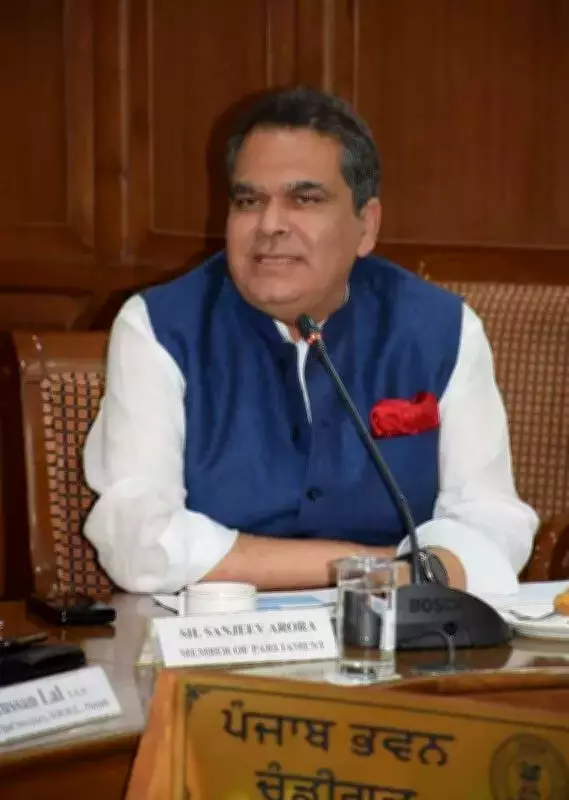
Local Government Minister Sanjeev Arora elaborated on the escalating demand for basic amenities such as water supply, sewerage, solid waste management, roads, and drainage. To address these critical issues, the Punjab government has earmarked Rs 1,000 crore under the Municipal Development Fund (MDF) in the recent budget, aimed at bolstering urban infrastructure statewide.
"The fast-growing population in urban areas has significantly increased the need for reliable civic services," Arora stated, underscoring the government's proactive measures.

Comprehensive Water Supply and Sewerage Initiatives
Under the Atal Mission for Rejuvenation and Urban Transformation (AMRUT 2.0) and other state schemes, extensive works are underway in approximately 148 towns to enhance the water supply system. These projects include:
- Installation of new water works, tubewells, overhead tanks, and pipelines.
- Replacement and upgrading of aging pipelines.
- An estimated outlay of Rs 3,626 crore to ensure clean drinking water for the next 30 years.
Additionally, 90 water treatment plants with a combined capacity of 608 million litres per day (MLD) are in various stages of implementation, leveraging surface water sources.
For sewerage network strengthening, the Swachh Bharat Mission (SBM 2.0) is facilitating new sewerage systems and sewage treatment plants (STPs) in 58 towns, with an estimated cost of Rs 1,647 crore. Arora noted that 58 STPs with a cumulative capacity of 213 MLD are currently being developed, based on long-term population projections to ensure effective wastewater management and environmental protection.
Enhanced Sanitation and Road Development Efforts
To improve sanitation and solid waste management, the government is implementing a door-to-door waste collection system under the SBM Urban initiative, alongside strengthening waste processing plants and material recovery facilities (MRFs) in various towns.
Under the MDF, 1,307 development works worth Rs 416 crore are being executed, covering around 638 km of roads across urban local bodies. Furthermore, the Special Assistance Scheme is reconstructing 1,313.11 km of roads at an estimated cost of about Rs 896 crore. Urban local bodies are also utilizing their own municipal funds for additional development projects.
Strategic Planning for Future Urban Growth
Arora emphasized that infrastructure expansion and modernization are being continuously planned in alignment with city master plans. This strategic approach aims to systematically meet the needs of the burgeoning urban population, ensuring efficient provision of basic civic amenities like water supply and sanitation.
"Our planning is forward-looking, designed to accommodate projected growth over the next three decades and deliver sustainable urban living conditions," he concluded, reaffirming the government's commitment to addressing the infrastructure crisis head-on.






