

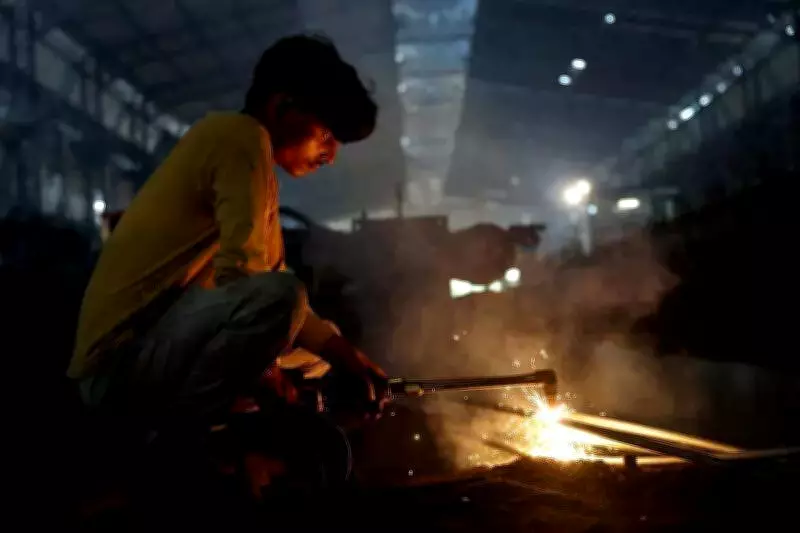
Punjab's Steel Hub Reels Under PNG Supply Curtailment
Mandi Gobindgarh, renowned as the 'Iron and Steel Town of Asia', is grappling with a deepening industrial crisis following a 20% reduction in Piped Natural Gas (PNG) supply. This curtailment has compelled rolling mills to drastically scale down production and initiate widespread layoffs, threatening the economic stability of one of Punjab's key manufacturing centers.
Geopolitical Tensions Trigger Supply Disruptions
The supply cut is directly linked to escalating geopolitical tensions in the Middle East, which have severely disrupted global energy chains. These disruptions have had a cascading effect on gas-dependent industrial units in Mandi Gobindgarh, jeopardizing both livelihoods and overall output.
Government-mandated restrictions have capped gas supply at 80% of the average industry-wide consumption recorded over the past six months. Bhavya Gupta, manager at IRM Energy, explained, "We are currently authorized to supply only 80% of the average consumption. As the domestic and CNG segments are being prioritized for full supply, the industrial usage remains capped."

Rolling Mills Bear the Brunt
Rolling mills have been hit particularly hard due to their reliance on continuous high-temperature heating processes. Vinod Vashisht, President of the All India Steel Re-roller Association, highlighted the challenges posed by the newly implemented daily averaging system. "If a unit exceeds its allotted consumption, it faces penalties. If it consumes less, that unused portion cannot be carried forward. The system effectively punishes both excess and under-utilization," he stated.
Industry estimates reveal alarming consequences:
- Nearly 20% of the workforce, primarily daily-wage laborers, has already been laid off.
- Overall output has dropped by at least 20%, with some mills fulfilling only half of their customer commitments.
- In at least one major unit, workers are reportedly sitting idle due to insufficient gas supply.
Vashisht warned, "With a 20% cut in gas supply, output at re-rolling mills reduces by up to 50%. If PNG supply is further reduced to 50%, the industry will have to shut operations as it cannot function at that level. Daily-wage workers have been laid off by up to 20%."
Compounding Factors: Green Transition and Rising Costs
The crisis is exacerbated by compliance with National Green Tribunal directives, which required nearly 160 industrial units to transition from coal-fired furnaces to PNG to curb air pollution. This shift has proven financially burdensome:
- Installation of gas-based furnaces costs between Rs 1 crore and Rs 2.5 crore per unit.
- Coal prices have surged to nearly Rs 24 per kilogram.
- PNG rates have escalated to approximately Rs 49.50 per Standard Cubic Meter (SCM) after recent surcharges.
Industrialist Abhay noted the lock-in effect, "Once you shift to gas, reverting to coal is neither easy nor economical. It could take six months and an additional Rs 3 crore, besides regulatory approvals."
Vashisht added, "The rates of PNG recently increased by Rs 6 per SCM, reaching Rs 49.5 per SCM. Previously, the industry paid Rs 6 per kg extra for using PNG above the allotted monthly quota. This has changed to a daily quota with Rs 45 per kg extra cost for exceeding daily allotted consumption."
Industry Voices and Proposed Solutions
K K Jindal, general secretary of the SCCI in Mandi Gobindgarh, emphasized the broader impact, "Although the steel and furnace industry is affected by a shortage of commercial cylinders, re-rolling mills, already struggling, are now on the verge due to the PNG crisis. There are around 150 re-rolling industries in Mandi Gobindgarh contributing significantly to employment, including daily wagers."
In response, IRM Energy has proposed a zonal operational model. Bhavya Gupta detailed, "We are ready with a proposal to divide the industry into different zones and provide gas thrice a week zone-wise at full capacity instead of 80% supply daily." This approach aims to allow mills to operate efficiently for three to four days a week rather than at reduced capacity every day.

Uncertain Future and Call for Relief
As of the latest updates, no formal revision in supply curtailment has been announced. With nearly 120 gas-dependent industrial units in Mandi Gobindgarh facing uncertainty, industry leaders caution that without prompt relief measures, the crisis could inflict lasting structural damage on this vital manufacturing hub. The situation underscores the urgent need for balanced policies that support both environmental goals and industrial sustainability.





