

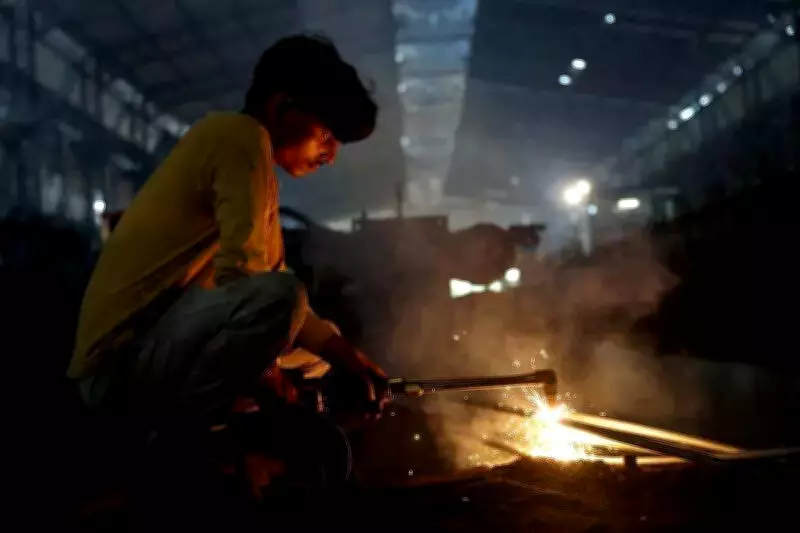
Punjab's Steel Hub Faces Existential Threat Amid Unprecedented Gas Shortage
The steel rerolling mills of Mandi Gobindgarh, Punjab's primary steel manufacturing cluster, have escalated their demand for immediate "fuel flexibility" as an unprecedented natural gas shortage threatens to trigger widespread industrial collapse. Industry representatives warn that rigid single-fuel policies could devastate the region's economic backbone.
70% Supply Reduction Cripples Operations
The All India Steel Rerollers Association (AISRA) has urgently petitioned Punjab's Industry Minister, Sanjeev Arora, requesting a temporary policy mechanism that would allow Micro, Small, and Medium Enterprise (MSME) steel units to switch from Piped Natural Gas (PNG) to approved cleaner alternative fuels. According to industry data, the steel cluster is currently experiencing an effective 70% reduction in PNG supply, leaving most rolling mills operational for only a few hours each day.
This severe supply curtailment has been compounded by a recent price hike of approximately Rs 6 per standard cubic metre (SCM), dramatically escalating production costs. Industry representatives argue that under the existing monopoly supply framework, there exists no effective regulatory mechanism to check pricing, forcing manufacturers to absorb daily losses running into lakhs of rupees.

Industry Seeks Temporary Regulatory Relief
AISRA has specifically requested a special, time-bound waiver that would permit industries to temporarily bypass exclusive dependence on PNG. The association has also sought intervention from the Punjab Pollution Control Board (PPCB) to authorize the use of verified cleaner alternative fuels while ensuring environmental compliance remains intact.
AISRA National President Vinod Vashisht emphasized, "We have urged the Industry Minister and PPCB for temporary relaxations and flexibility to use alternative fuels like coal gasifiers and bio-fuel, which create less pollution. We are not seeking a return to highly polluting fuels, but rather a regulated, environmentally compliant shift to transitional energy sources until gas supplies stabilize."
Contractual Provisions Versus Operational Reality
Vashisht further explained the contractual disconnect affecting operations: "Under the Gas Sale Agreement (GSA), units are technically permitted to utilize up to 120% of their Daily Contract Quantity (DCQ). Despite this 120% provision, industries were initially directed to reduce consumption to only 50% of their Fixed Demand. The situation has since deteriorated significantly, with units now facing an effective reduction of nearly 70%. This level of reduction is neither fair nor acceptable for operational survival."
Domino Effect Threatens Regional Economy
The association has issued stark warnings that failure to grant fuel flexibility could initiate a domino effect across the region's entire industrial ecosystem. A prolonged shutdown of the steel cluster would significantly dent state revenues and jeopardize thousands of jobs, with daily wage workers already experiencing income loss due to reduced operational hours.
Industrialists have requested an urgent meeting with the minister to discuss what they describe as "extremely critical" circumstances threatening the viability of Punjab's steel manufacturing backbone. If approved, the proposed waiver would represent a significant policy shift from a rigid single-fuel mandate to a multi-fuel approach during periods of energy disruption, potentially establishing a precedent for crisis-driven industrial reforms in the state.
Government Response and Regulatory Considerations
Administrative Secretary for Industries and Commerce, Gurkiratpal Singh, acknowledged the situation, stating, "We are looking into the matter and studying it thoroughly as this issue is related to the National Green Tribunal (NGT). There are certain competent authorities which can allow this to be done. We are studying past orders related to this to come out with a final decision after discussions."

The crisis highlights the vulnerability of industrial clusters dependent on single energy sources during supply disruptions. Industry stakeholders emphasize that their proposal balances environmental responsibility with economic survival, seeking only temporary measures until gas supplies return to sustainable levels.





