Punjab Sugar Mills Grapple with Severe Cane Supply Shortage
Punjab's sugar industry faces a critical supply crisis this crushing season. Mills across the state report dramatically reduced sugarcane arrivals. The primary cause is an acute shortage of harvesting labour. Industry officials estimate labour availability has dropped by 35 to 40 percent. This severe disruption forces many mills to operate far below their installed capacity.
Labour Shortage Disrupts Traditional Harvest Patterns
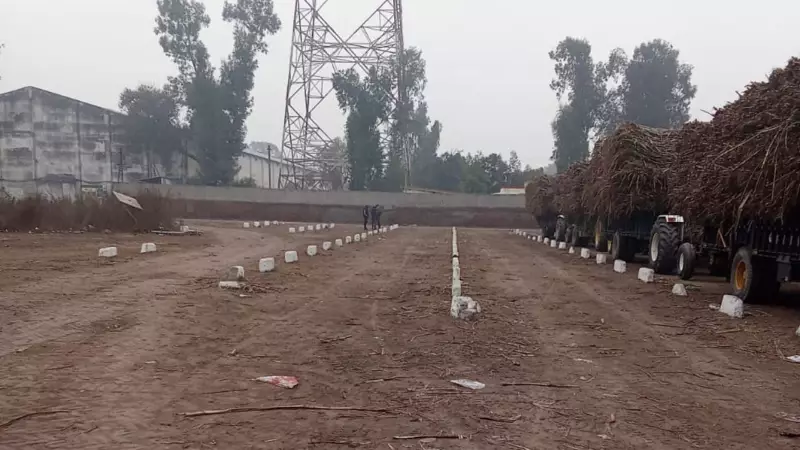
The situation marks a stark departure from normal seasonal trends. Traditionally, peak months see congestion at factory gates with long queues of tractor-trolleys. Mills face heavy pressure to issue harvesting slips quickly. This year, however, most sugar factories report no such pressure. Farmers are getting their cane harvested without waiting. This unusual ease of access itself signals the severe shortage of cane.
Sanjay Singh, Vice President (Cane) at Indian Sucrose Mill in Mukerian, Hoshiarpur, confirms the unprecedented situation. "This is the first cane shortage in my 17-year tenure," he states. His mill normally receives around 700 trolleys daily during peak harvest. This season, arrivals fluctuate between just 400 and 475 trolleys per day.

Multiple Factors Drive Labour Scarcity
Mill officials identify the reduced inflow of migrant labour as the principal reason. Uttar Pradesh and Bihar traditionally provide the backbone of cane harvesting crews in Punjab. Nearly 40 percent of these labourers did not return this season.
Pankaj Kumar, General Manager (Cane) at AB Sugars Limited in Dasuya, Hoshiarpur, cites multiple contributing factors.
- Many labourers returned home for the Bihar elections and did not come back.
- Aadhaar-related issues in several villages created additional hurdles.
- Significant diversion of labour to other states like Maharashtra, Karnataka, and Tamil Nadu worsened the situation.
Sanjay Singh adds another dimension. "Following certain incidents in Hoshiarpur, some panchayats took a strict view on migrant settlements," he explains. This stance discouraged many labourers from coming to Punjab this season.
Declining Yields and Shrinking Cultivation Area Compound Crisis
Beyond the immediate labour crisis, structural issues plague the sector. Cane yields have taken a severe hit this year. Average yields previously reached around 350 quintals per acre. This season, they have dropped sharply to 200–225 quintals per acre in several areas.
Sanjay Singh attributes the poor yields to specific weather conditions. "Poor ripening and a shortened growth period due to excessive rain in the rainy season caused the drop," he notes.
The area under sugarcane cultivation has also been shrinking steadily. Punjab once had nearly 1 lakh hectares dedicated to cane. Over recent years, this area has declined to between 88,000 and 95,000 hectares. Farmers cite multiple reasons for shifting away from sugarcane.
- Rising input costs make cultivation less profitable.
- Uncertainty over labour availability creates operational headaches.
- Delayed payments in earlier years eroded trust.
- A perceived lack of policy push from the state government discourages commitment.
Satnam Singh, a cane grower and general secretary of the Bharatiya Kisan Union (Doaba), confirms the trend. "In my village, the area under sugarcane declined from 600 acres to just 350–400 acres," he reports. Many farmers in Hoshiarpur have now moved to agroforestry, which offers better returns.
Mills Across Punjab Report Similar Challenges
The crisis is widespread. At the Nawanshahr sugar mill, General Manager G C Yadav observes a changing labour demographic. Younger generations from UP and Bihar increasingly opt for education and non-farm employment. This shift reduces the available pool of agricultural labour.
Morinda Cooperative Sugar Mill faces a nearly 30 percent drop in labour availability. General Manager Tranvir Singh reports yields declining from 350–400 quintals per acre to 290–310 quintals this season. Daily trolley arrivals have dropped from 200 to about 150–160. The mill has engaged private mechanical harvesters, but high costs limit their widespread use.

V P Verma of Golden Sandhar Sugar Mill in Phagwara also confirms a shortage. He attributes it mainly to labour scarcity and reduced yields, which have kept cane supply below previous years' levels.
Early Closures and Reduced Operations Become the Norm
The combined impact forces mills to revise their operational schedules. The Mukerian mill began crushing in late November 2025. It now expects to operate only until April 10–15, possibly extending to April 20, but at suboptimal capacity.
AB Sugar Mill in Dasuya illustrates the operational slowdown. "Earlier, we would reach full capacity within four to five days of starting the mill in December," says Pankaj Kumar. "This year, even after 45 days, arrivals have remained stuck at 400–410 trolleys per day, compared to 500 trolleys earlier." The mill now expects to crush only around 90 lakh quintals, with operations likely ending by April 7.
Across Punjab, a majority of mills are now likely to shut by February. This timeline is much earlier than usual and reflects the severity of the supply crunch.
Calls for Government Intervention and Sector Support
Industry stakeholders urge state action to sustain the sugarcane sector. Satnam Singh emphasizes the crop's benefits. "Sugarcane is an eco-friendly crop, consumes relatively less water, generates employment and boosts farmers’ income," he states. "To sustain this sector, the state must actively promote the expansion of the cane area."
Punjab Cane Commissioner Dr Amrik Singh acknowledges the problem officially. He confirms that almost all sugar mills in the state have reported labour shortages this season. This shortage has directly affected cane supply and crushing operations.
The current crushing season stands as one of the most challenging in recent memory. The triple threat of labour shortages, falling yields, and a shrinking cultivation area creates a perfect storm for Punjab's sugar industry. Immediate and structural solutions are needed to prevent long-term damage to this vital agricultural sector.