

Punjab's Wheat Procurement Maintains Strong Momentum, But Lifting Remains a Concern
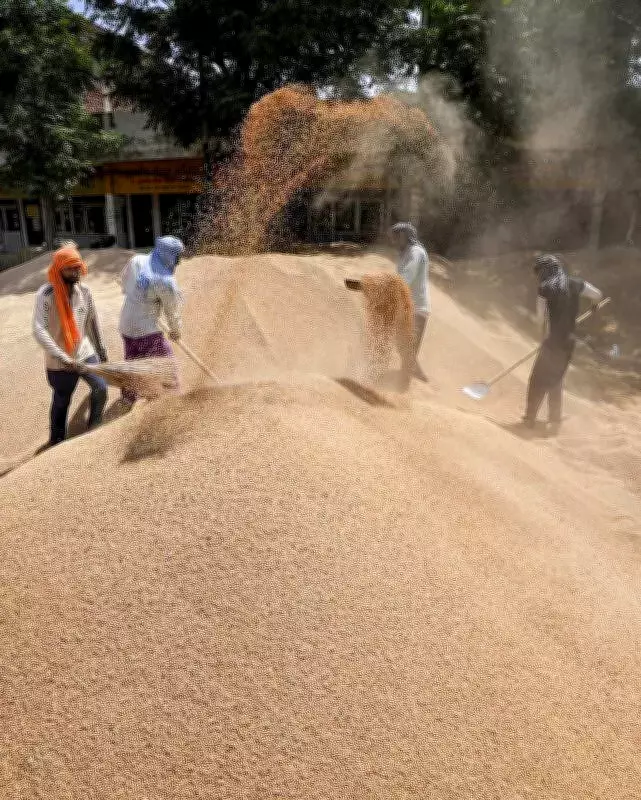
For the fourth consecutive day, wheat arrivals and procurement in Punjab's agricultural markets, known as mandis, have impressively crossed the 10 lakh metric tonnes (MT) threshold. This sustained high volume underscores the robust flow of the Rabi season harvest into the state's procurement system. However, a significant bottleneck persists, as the lifting of procured grain from these markets continues to lag considerably behind the purchase rates.
Procurement Data Shows Consistent Strength
On Wednesday, the latest data revealed arrivals of 10,09,438 MT of wheat into the mandis. Procurement figures were even higher, reaching 10,37,403 MT for the day, indicating that purchases slightly exceeded the incoming crop. This trend has contributed to a cumulative total procurement of 67,34,981 MT from total arrivals of 71,58,218 MT as of the evening of April 22.
The Food Corporation of India (FCI), a key central agency, has procured 1,16,561 MT of wheat so far. This represents approximately 1.73% of the total wheat purchased in Punjab during this season. The remaining procurement is primarily handled by state agencies and other designated buyers.

The Persistent Challenge of Grain Lifting
Despite the strong procurement numbers, the process of physically removing the purchased wheat from the mandis, known as lifting, remains sluggish. By Wednesday evening, only 15,33,877 MT of the total procured grain had been lifted. This includes 4,25,816 MT that was cleared during the day.
This lifting rate translates to just 22.77% of the procured wheat being moved out of the markets, leaving a substantial stockpile. As of April 22 evening, unsold wheat waiting in the mandis stood at 4,23,236 MT. This backlog poses logistical and storage challenges, potentially affecting grain quality and market operations if not addressed promptly.
Seasonal Context and Expectations
The current Rabi Marketing Season 2026-27 began with some uncertainty following untimely rains, which initially subdued wheat arrivals. However, procurement activities gained significant momentum after the Central Government implemented eased procurement norms, facilitating smoother operations for farmers and agencies.
Authorities anticipate that total wheat arrivals in Punjab's mandis for the entire season will reach approximately 122 lakh MT. The current procurement pace suggests the system is actively engaging with this expected volume, though the lifting efficiency will be crucial for the season's overall success.
The situation highlights the dual dynamics of agricultural procurement: successful purchase initiatives must be matched by equally efficient logistics for transportation and storage to ensure a seamless supply chain from farm to distribution networks.






