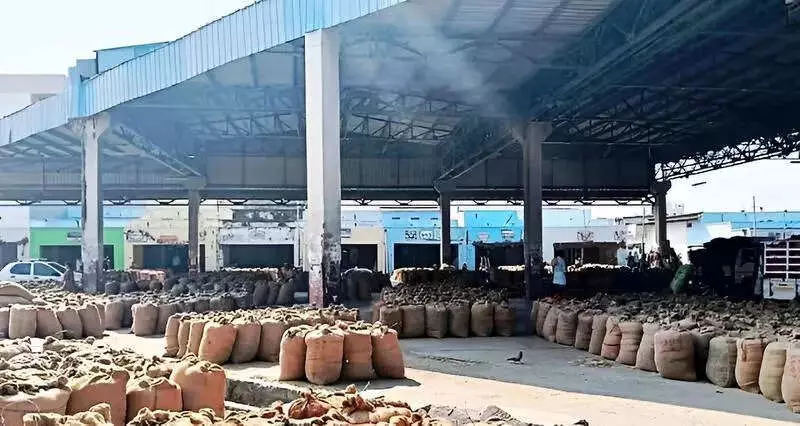
The Raichur Agricultural Produce Market Committee (APMC), renowned as Karnataka's largest paddy market, is facing an unprecedented surge in arrivals, compelling officials to adopt an intermittent procurement system. The market is receiving a staggering 50,000 quintals of paddy daily, with the bulk of the influx originating from the neighbouring states of Andhra Pradesh and Telangana.
Why Farmers Are Bypassing Their Own States
Despite both Andhra Pradesh and Telangana governments announcing attractive Minimum Support Prices (MSP) for paddy, farmers are choosing to transport their produce to Raichur. While the Union government's support price is Rs 2,300 per quintal, the two state governments added a bonus of Rs 500, offering Rs 2,800 per quintal. However, this came with stringent quality checks, where even minor discrepancies led to crop rejection.
In contrast, the Raichur APMC offers a more flexible and farmer-friendly environment. Traders here are purchasing popular varieties like RNR and Sona Masuri at prices ranging between Rs 2,700 to Rs 2,950 per quintal. A key incentive is the practice of spot settlement for purchases, providing immediate payment to farmers, a significant draw for those from adjacent states facing stricter norms and delayed payments.

Storage Crisis Forces On-Off Procurement
The sheer volume of daily arrivals, as confirmed by APMC secretary Adeppa, has exceeded the market's storage capacity. This logistical challenge has forced officials to implement an on-off purchasing system. Procurement is now conducted on alternate days, with tender processes halted until the existing stockpile is cleared and space is made available for new arrivals.
This intermittent approach is a direct response to the market being overwhelmed, a rare situation for a yard of its scale. Officials are managing the influx but acknowledge the strain on infrastructure.
Additional Factors Driving the Paddy Wave
Another critical factor contributing to the high procurement activity is a pre-emptive move by local rice mills. The government has announced that water will not be released from the Tungabhadra reservoir for summer crops this year due to necessary replacement work on the crest gates. Anticipating a potential shortage in the coming season, rice mills have begun stockpiling paddy in substantial quantities. This proactive buying has further amplified the inflow into markets like Raichur.
The situation at Raichur APMC highlights the complex dynamics of inter-state agricultural trade, where price, ease of transaction, and immediate liquidity often outweigh the announced support prices in a farmer's home state. It also underscores the need for robust market infrastructure to handle such peak flows efficiently.