Indian Railways to Absorb Rs 90,000 Crore Cost Escalation for Ahmedabad-Mumbai Bullet Train
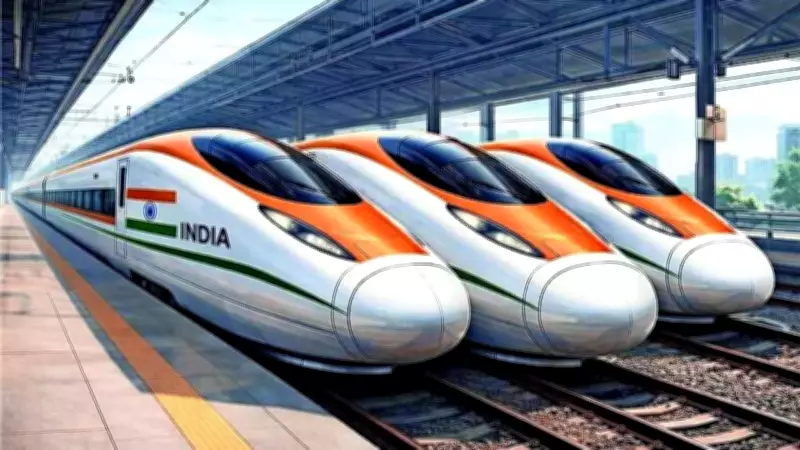
In a significant development for India's high-speed rail ambitions, the railways has decided to bear the nearly Rs 90,000 crore additional cost for the Ahmedabad-Mumbai Bullet Train project, marking an 83% escalation from the original estimate. The ministry will not seek further loans from the Japan International Cooperation Agency (JICA) to cover this increase.
Revised Project Cost and Funding Strategy
The total project cost has surged from Rs 1.1 lakh crore to Rs 1.98 lakh crore due to delays and other operational factors. The railway ministry is preparing to present a revised cost estimate for the 508-km high-speed corridor and will seek Cabinet approval for the necessary funding to ensure timely completion. Officials familiar with the plan indicate that the ministry will request additional financial support from the finance ministry to bridge the gap.
JICA's Existing Loan and Concessional Terms
JICA is currently providing approximately 81% of the original estimated cost through an Official Development Assistance (ODA) loan, which features highly concessional terms. The loan carries an interest rate of just 0.1% per annum, with a repayment period of 50 years and a 15-year grace period, making it a favorable financial arrangement for the project.

Expansion Plans and Funding Models for Future Corridors
At a recent webinar discussing seven new Bullet Train corridors covering over 4,000 km with an estimated investment of Rs 16 lakh crore, the Railway Board outlined diverse funding options. These include multilateral support, Special Purpose Vehicles (SPVs), and Centre-state partnerships. Railway Board chairman Satish Kumar emphasized the importance of Transit Oriented Development (TOD) along these corridors to enhance viability, which experts suggest could generate non-fare revenue.
Indigenous Manufacturing and Standardization Efforts
During the post-budget webinar, BEML CMD Shantanu Roy highlighted India's push for self-reliance in Bullet Train manufacturing. The public sector unit has begun producing the first two trains domestically, with plans to increase their speed from 280 kmph to 350 kmph in the future. Railway officials and experts are also focusing on standardizing systems—from construction to signaling and train manufacturing—across all future projects to achieve economies of scale.
This strategic shift underscores Indian Railways' commitment to advancing high-speed rail infrastructure while managing financial risks and promoting domestic capabilities in this critical sector.