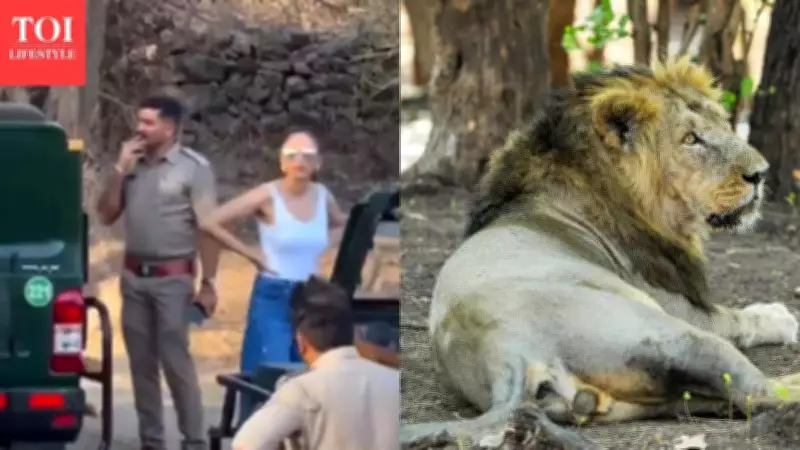
Actor Rakul Preet Singh recently found herself at the center of a social media controversy after videos from her visit to Gir National Park went viral online. In the clips, the actor was seen outside a safari vehicle inside the forest area, triggering criticism from social media users who questioned whether wildlife tourism rules had been violated and whether celebrities were receiving special treatment in protected zones.
Following the backlash, forest department officials clarified that the actor had stepped out only at a designated location and under the supervision of authorized staff members. A statement from the DCF Sasan-Gir helped clarify the confusion: “This video being broadcast is from outside the campus gate and is not from the restricted area.” Officials reportedly stated that no wildlife protection norms had been breached and that the visuals circulating online were being interpreted without proper context.
Wildlife Tourism Rules and Guidelines
The incident has served as a reminder of the stringent rules and guidelines that apply to tourism within national parks and wildlife sanctuaries in India. Wildlife tourism is one of the fastest-growing tourist categories in India, with places like Jim Corbett National Park, Ranthambore National Park, Kaziranga National Park, and Gir attracting lakhs of tourists annually. Nonetheless, these forests constitute environmentally delicate regions where tourism can be practiced only under controlled circumstances. Forest authorities in India impose strict laws not only for the protection of the environment but for the safety of tourists as well.

Wild animals are unpredictable creatures whose behavior can change due to human presence, noise, and movements. Animals can alter their habits when observed. Any form of disturbance can influence them, especially during breeding periods or when they are eating and sleeping. It has been advised on several occasions that wildlife tourism should focus on observation and preservation rather than interaction.
5 Things Travelers Should Know About Rules for Visiting National Parks and Wildlife Sanctuaries
Stepping out of safari vehicles is prohibited
In most Indian wildlife sanctuaries, tourists are advised to always stay within authorized safari vehicles unless the forest authorities give explicit permission otherwise. This safety measure prevents unnecessary disturbance to animals and potential danger from unexpected reactions from predators or other wildlife due to human interaction.
No loud noises and music are permitted
Tourists are advised to remain quiet during their tour in Indian forests. Shouting, making music, clapping, or attempting to attract animals for photographs is not advisable, as such activities cause noise pollution that interferes with wildlife.
Feeding wildlife animals is strictly prohibited
Feeding animals is discouraged because it is harmful to wildlife in Indian national parks. Human food is not only harmful to animal life but also causes animals to lose their natural instincts.
Littering can invite fines and penalties
Most parks and wildlife sanctuaries have strict no-littering guidelines. Litter like plastic bottles and wrappers can harm animals and the environment. Some national parks even prohibit single-use plastic. Travelers are advised to use reusable water bottles and carry their waste back.
Follow safari timings and routes
National parks operate during specific timings decided by the forest department, and safari vehicles must follow only authorized tracks. Straying from set tracks can damage the fragile ecosystem and affect animal life. Visitors should follow instructions given by the guide and driver during the safari.
Since wildlife tourism is gaining popularity in India, there is an increasing need for tourists to follow norms that help conserve forests. It should always be remembered that national parks are protected ecosystems first. Visitors should try to follow guidelines to preserve nature for future generations.