

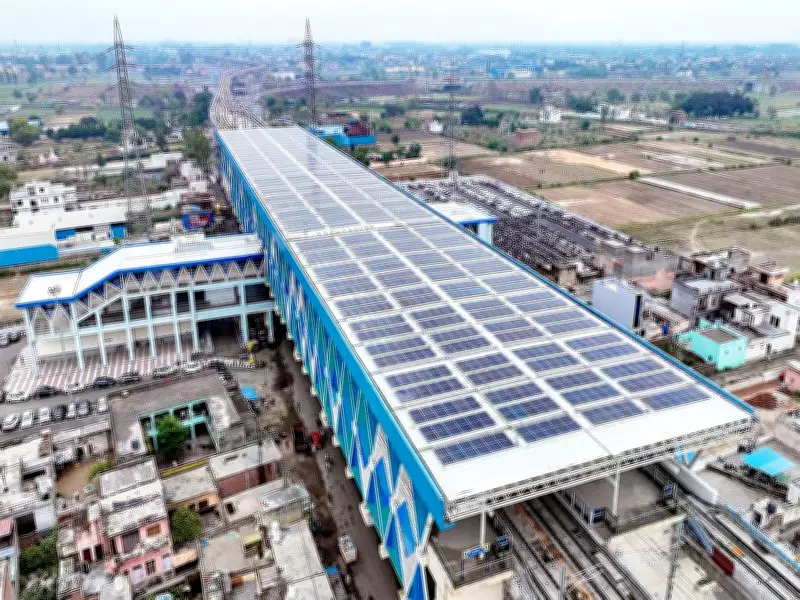
Renewables to Drive Bulk of Global Power Capacity Expansion, Solar and Wind Lead Growth: Centrum Report
Renewable energy sources, particularly solar and wind, are projected to drive the majority of power capacity expansion worldwide in the coming years, according to a recent report by Centrum Institutional Research. The analysis highlights a structural shift in the global power sector towards cleaner energy systems, with renewables leading new installations and significantly increasing their share in electricity generation.
Global Power Capacity and Renewable Dominance
The report notes that as of December 2025, global installed power capacity stands at 9.7 terawatts (TW), with non-fossil sources contributing 60% of this capacity. Renewables are driving the bulk of new capacity additions, accounting for approximately 70% of global installations. Solar power is expected to add roughly 500-550 gigawatts (GW) annually, while wind power is projected to contribute about 120-160 GW per year, depending on policy cycles and supply-chain conditions.
Projected Growth in Renewable Electricity Generation
By 2030, renewables are forecasted to reach around 40% of global electricity generation, up from approximately 32% currently. This growth is fueled by declining costs, supportive government policies, and rising electricity demand as economies increasingly electrify sectors such as transportation, heating, and industrial processes. The report emphasizes that renewable energy, especially solar, has become the cheapest source of new power generation in many regions, including India, where tariffs consistently range between ₹3-3.5 per kilowatt-hour.

Focus on India's Renewable Energy Expansion
Highlighting the Indian power sector, the report states that capacity expansion in the country is also expected to be largely renewable-led over the next decade. India's power capacity addition is increasingly driven by renewables, with solar and wind anticipated to contribute the majority of incremental capacity through 2030. The government's ambitious target of 500 GW non-fossil fuel capacity by 2030 implies a massive build-out from current levels, requiring annual additions of about 50 GW.
Solar power remains the dominant technology in India due to its cost competitiveness, while wind energy is gaining traction through hybridization and improved turbine efficiencies. The rapid expansion of renewable capacity is set to create opportunities in related sectors such as energy storage, grid infrastructure, and transmission systems, which are essential to support higher penetration of clean energy in the power mix.
The Centrum report underscores the global momentum towards renewable energy, driven by economic and environmental factors, positioning solar and wind as key drivers of future power capacity growth.






