The Critical Role of Safety Helmets in Construction and Real Estate
Construction sites and real estate development environments present numerous safety hazards that require comprehensive protective measures. Among the most crucial safety equipment are specialized helmets designed to mitigate risks of head injuries from falling objects, electrical exposure, and accidental collisions. These protective gears are engineered according to rigorous standards established by organizations like the Occupational Safety and Health Administration (OSHA) and the American National Standards Institute (ANSI), ensuring workers receive appropriate protection based on their specific workplace conditions.
Type I Safety Helmets: Defending Against Overhead Threats
Type I helmets provide essential protection against impacts that strike the top of the head. These helmets feature sophisticated internal suspension systems that effectively dissipate impact forces, reducing the energy transferred to the wearer's skull. Construction professionals typically utilize Type I helmets in building construction and infrastructure projects where tools, debris, or building materials might fall from elevated positions. Their design prioritizes defense against vertical impacts, making them indispensable for workers operating in multi-story developments and areas with overhead work activities.
Type II Safety Helmets: Comprehensive Lateral Protection
Type II helmets offer enhanced protection that extends to both the top and sides of the head. These advanced helmets are particularly valuable in complex construction environments where workers face risks of colliding with structural beams, machinery components, or moving equipment. Industrial and commercial real estate developments frequently require Type II helmets due to confined spaces and the presence of heavy machinery. The extended coverage area provides crucial protection in settings where lateral impacts represent significant safety concerns.

Electrical Protection Classifications: G, E, and C Helmets
The electrical protection categories represent specialized helmet classifications designed for varying electrical environments. Class G (General) helmets provide basic electrical resistance, typically tested to withstand up to 2,200 volts. These versatile helmets serve well in standard construction projects where workers encounter conventional electrical installations while maintaining impact and penetration protection.
Class E (Electrical) helmets deliver superior electrical resistance, rigorously tested to handle up to 20,000 volts. These specialized helmets prove essential for professionals working with high-voltage systems, electrical installations, and utility connections across residential, commercial, and industrial real estate projects. Beyond impact protection, Class E helmets significantly reduce electrical shock risks in hazardous electrical environments.
Class C (Conductive) helmets prioritize comfort and ventilation while providing impact protection. Unlike their electrical-resistant counterparts, these helmets lack electrical insulation properties. Their lightweight, well-ventilated design makes them ideal for construction activities without electrical hazards, such as interior finishing, painting, and carpentry work in real estate developments. Class C helmets help prevent heat stress while maintaining essential head protection.
Color-Coded Helmets: Enhancing Site Coordination and Safety
Construction sites implement color-coded helmet systems to streamline communication and improve safety management. While specific color assignments may vary between organizations, common conventions include:
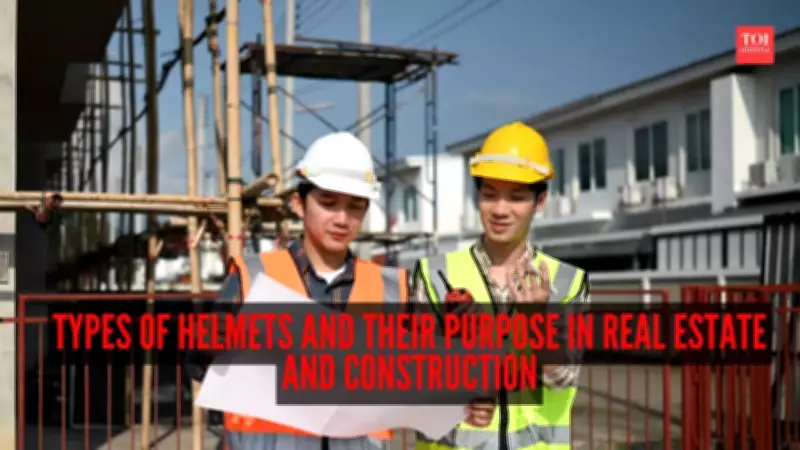
- White helmets for engineers, architects, and supervisors
- Yellow helmets for general laborers and construction workers
- Blue helmets for skilled tradespeople and technical specialists
- Green helmets for safety officers and environmental personnel
This visual identification system enhances coordination across large-scale real estate developments, enabling quick recognition of personnel roles and responsibilities while promoting efficient communication among diverse project teams.

Implementing Proper Helmet Selection Protocols
Selecting appropriate safety helmets represents a critical component of comprehensive workplace safety programs in construction and real estate sectors. Proper helmet selection involves careful assessment of specific job hazards, including impact risks, electrical exposure possibilities, and environmental conditions. Beyond mere regulatory compliance, choosing the correct helmet type contributes to creating safer, more organized work environments that prioritize worker wellbeing. Regular inspection, proper maintenance, and employee training further enhance the effectiveness of helmet safety programs, ensuring maximum protection throughout project lifecycles.