The temporary closure of the Haryana-Punjab interstate Shambhu border on July 21, 2026, has sent shockwaves through the trading community in Ambala. Although the border was reopened the same day, the incident reignited painful memories of the 2024 farmers' protest when the border remained sealed for over a year, causing devastating losses to local businesses. Traders, still struggling to recover, fear a repeat of that economic disaster.
Border Sealed as Farmers Try to Reach Delhi
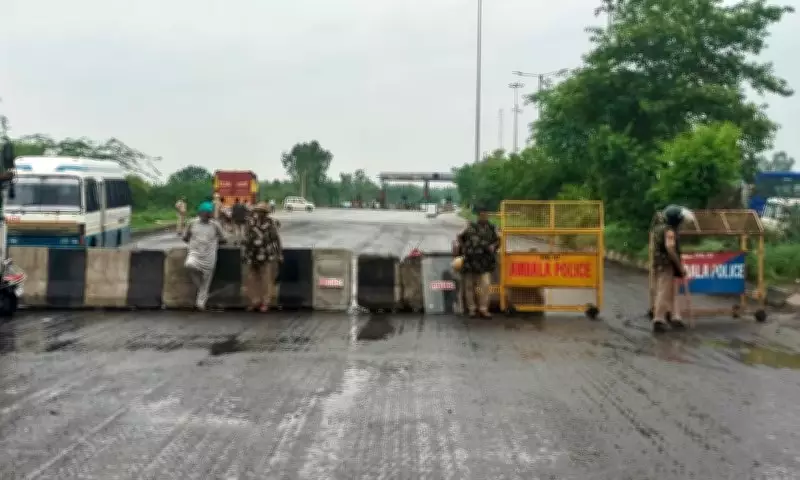
Farmer unions under the banner of the Desh Bachao Morcha launched a nationwide movement against the India-US trade deal. As part of their agitation, Punjab farmers heading to a Mahapanchayat in Delhi were stopped by Haryana Police at the Shambhu border, where barricades were installed and the border completely sealed for several hours. The move caused major traffic disruptions and forced commuters to take alternative routes.
Ambala, a major trading hub with an estimated annual turnover of over Rs 2,000 crore, relies heavily on customers from Punjab, Chandigarh, Himachal Pradesh, and Rajasthan. During the prolonged closure in 2024, sales plummeted, businesses struggled to pay salaries, and many were forced to reduce their workforce. The repeat of even a short closure has raised alarm.

Trader Associations Express Fear of Unrecoverable Losses
Viplove Singla, a businessman and president of the Jan Jagriti Sansthan, said, “The traders and businessmen in Ambala suffered heavily during the last agitation when the borders remained closed for over a year. The government should stop taking the protests lightly and also avoid delaying a resolution. We all saw what happened during the students’ protest at Jantar Mantar, as after all the protests and police action, the government eventually had to accept the demands.” He urged the government to listen to farmers' grievances sympathetically and resolve them in time, warning that closing the border only increases trouble.
Gunnu Bhatia, president of the Wholesale Cloth Merchant Association, highlighted the impact on the cloth and maniyari markets, which he described as major revenue generators and employers. “The closure of the Shambhu border is nothing short of a disaster for us. There are about 1,500 shops providing employment to thousands of people. A major portion of Ambala’s clientele comes from other districts, and once a customer starts going to other towns, it is not easy to bring them back,” he said. Bhatia noted that customers, often on tight schedules for special occasions, avoid traffic jams and unfamiliar routes.
Electrical Goods Sector Also Hit Hard
Rakesh Makkar, past president of the Ambala Electrical Dealers Association, explained that the city's market serves customers from Punjab, Himachal, Chandigarh, and Rajasthan. “There are around 70 wholesalers involved in the electrical goods business and around 250 other electrical shops. Sales declined drastically during the last agitation, and people found it difficult to pay salaries and bills. Many clients have already shifted to Delhi and other markets to avoid supply chain disruptions,” he said. The market is already facing tough times due to rising prices and stiff competition.
Farmers' Union Blames Government for Situation
Tejveer Singh, spokesman of the Bharatiya Kisan Union (Shaheed Bhagat Singh), defended the farmers' actions, stating that the government closed the border both in 2024 and 2026, not the farmers. “Farmer unions announce their programmes well in advance and request discussions, but it is the government’s responsibility to call the unions for talks and not create such situations. Traders and businessmen associated with political parties should raise these issues at party meetings. Farmers are consumers too and have no intention of disrupting markets,” he said.
Despite the brief duration of the latest closure, traders are on edge. The incident has underscored the fragile economic recovery in Ambala and the urgent need for a permanent resolution to farmer-government tensions. Without swift action, the trading community fears another prolonged disruption that could cripple the local economy.