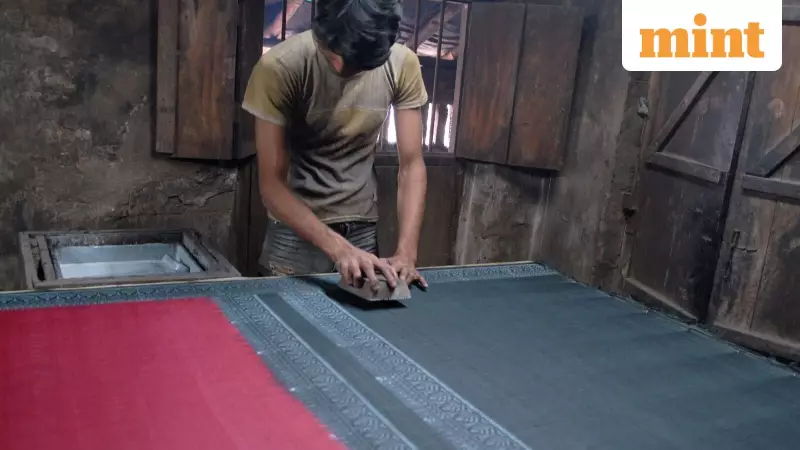
Government Raises Central Silk Board's Approval Limit to ₹1 Crore
The Indian government has taken a significant step to streamline operations in the silk sector. It has increased the Central Silk Board's financial approval limit from ₹50 lakh to ₹1 crore. This move aims to cut delays in project clearances and improve scheme implementation.
Accelerating Project Approvals
The Ministry of Textiles amended Rule 22 of the Central Silk Board Rules, 1955, through a notification issued last Friday. This change allows the board to clear higher-value proposals independently without repeated escalations for approvals.
Officials stated that the previous approval process often slowed project implementation. With the new limit, the board can now make quicker financial decisions. This is expected to reduce administrative bottlenecks significantly.

Supporting Exports and Livelihoods
This decision comes as the government pushes for value-added textile exports and aims to reduce dependence on imported raw silk. The silk sector is a crucial source of livelihood, employing approximately 9.76 million people across rural and semi-urban areas in India.
India is the world's second-largest silk producer. In FY25, the country produced 41,121 metric tonnes of silk, up from 38,913 metric tonnes in FY24. Mulberry silk accounts for the largest share of this production.
Major silk-producing states include:
- Andhra Pradesh
- Assam
- Bihar
- Gujarat
- Jammu and Kashmir
- Karnataka
- Chhattisgarh
- Maharashtra
- Tamil Nadu
- Uttar Pradesh
- West Bengal
Addressing Rising Project Costs
Officials explained that the revision was necessary due to increasing project costs. Infrastructure creation, technology upgrades, and research undertaken by the Central Silk Board now require higher funding. The previous limit had remained unchanged for decades despite rising expenditures on seed development, disease control, modern reeling units, testing facilities, and digital systems.
One official highlighted that project sizes have expanded, but approval limits were stuck at old levels. This created avoidable delays as proposals moved through multiple layers of approval. The higher threshold will help speed up execution without altering overall budgetary control.
Impact on Exports and Quality
India's silk and silk product exports stood at $246 million in FY25. The country exports various items, including raw silk, natural silk yarn, fabrics, readymade garments, silk waste, and handloom products to over 30 countries. Key destinations include the UAE, US, China, UK, Italy, Singapore, Australia, France, Hong Kong, and Canada.
Industry representatives believe the move could positively impact exports by improving quality, productivity, and consistency across the silk value chain. However, India's share in global silk exports remains modest due to challenges in quality standardization, processing infrastructure, and timely modernization.
Raja M. Shanmugam, former president of the Tirupur Exporters' Association, noted that while the impact may not be immediate, smoother project implementation and faster decision-making could gradually enhance competitiveness.
Addressing Delayed Upgrades
An industry executive pointed out that approval delays often hindered efforts to upgrade production and processing facilities. Upgrading reeling and processing units, improving seed quality, or setting up testing facilities requires timely decisions. Faster approvals can help address quality gaps, which is critical for exports to demanding markets like Europe and Japan.
The executive added that the higher approval limit is expected to benefit various stakeholders, including silkworm rearers, reelers, weavers, researchers, and small industry clusters. Faster procurement of equipment and services will also support productivity improvement and quality enhancement programs, especially in major silk-producing states.

Clarification on Financial Allocations
Officials clarified that the changes do not introduce new schemes or increase financial allocations. Instead, the move aims to improve administrative efficiency and ensure existing programs are implemented without delays. This approach aligns with broader efforts to give statutory boards greater operational flexibility while retaining financial oversight.
The government's decision reflects a focused strategy to strengthen the silk sector, support millions of livelihoods, and boost India's position in the global textile market.